Get Full Government Meeting Transcripts, Videos, & Alerts Forever!
Get email alerts on the Labor Policy topic
No spam. Unsubscribe anytime.
D.C. Council pauses next phase of tipped-wage rollout after divisive debate
Summary
On June 3 the Council voted 8–4 to approve an emergency declaration pausing the July 2025 phase of Initiative 82 (the tipped-wage phaseout) to allow more data-gathering and discussion amid pending federal tax changes and concerns about restaurant viability and worker incomes.
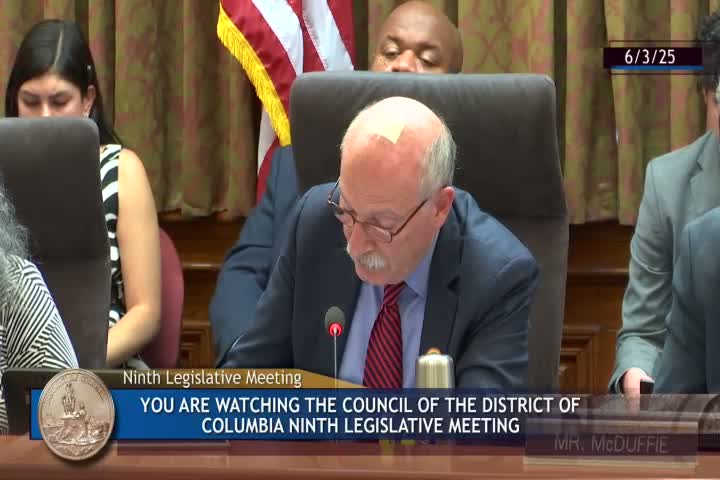
The D.C. Council voted 8–4 on June 3 to approve an emergency declaration pausing the next scheduled phase of Initiative 82 — the city’s phaseout of a separate tipped minimum wage — saying the pause will allow more time for analysis and stakeholder discussion.
Councilmember Phil Mendelson put the declaration before the body after Councilmember Charles Allen and others argued for a short pause to align the next phase with the city’s fiscal calendar and to consider recent federal tax proposals affecting tipped income. Councilmember McDuffie framed the declaration as a limited, data-driven pause; Councilmember McDuffie said the measure would “allow the council additional time to craft how the phasing out of the tip minimum can continue to move forward” while the budget process advances.
Opponents strongly objected, saying a pause undermines the will of voters who twice approved changing the tipped-wage schedule. Councilmember Lewis George said, “Let’s stand by the will of the voters,” arguing that altering the timetable amounts to rolling back a ballot initiative. Councilmember Nadeau told colleagues that workers have been counting on the July increase and urged a vote against the pause.
Supporters countered that recent economic and policy shifts — including a pending federal proposal to exempt some tip income from federal taxation — create genuine uncertainty that merits short-term alignment and additional analysis. Councilmember Fruman emphasized the Budget Office’s data showing strong restaurant employment and rising wages in recent months and said the pause is meant to “get the data we need to understand the right path forward.” Councilmember White described outreach to hundreds of hospitality workers documenting mixed effects on incomes and urged caution so the policy yields the “highest take home pay for our workers.”
After extended floor debate, a roll-call vote was held. The Secretary recorded 8 yes votes and 4 no votes; the emergency declaration passed. The Council then approved the underlying temporary measure on a subsequent voice vote.
The pause is temporary and framed as a means to give the Council time to evaluate new data, to coordinate with the FY2026 budget process and to consult restaurants, unions and worker groups. The transcript does not specify the exact duration of the pause or the precise next steps beyond additional review and stakeholder meetings, nor does it change the law permanently.
What’s next: Council members said they expect further work during budget negotiations and separate committee briefings. The Council did not adopt a permanent repeal; the action taken on June 3 was an emergency pause recorded for further study.