Get Full Government Meeting Transcripts, Videos, & Alerts Forever!
Get email alerts on the Mdt Panel Overview topic
No spam. Unsubscribe anytime.
Panel highlights state models for multidisciplinary teams to prevent and respond to elder abuse
Summary
Speakers from seven states described how multidisciplinary teams (MDTs/APTs/I‑teams) coordinate services, share specialists, use toolkits and training, and—in one program—operate a statewide remote capacity‑assessment network for adult protective services.
A national panel of multidisciplinary‑team practitioners on elder abuse described state approaches to coordinating services, sharing specialist resources and training, and using statutory or programmatic mechanisms to scale local teams.
At a conference session moderated by Talitha, panelists from Alabama, Minnesota, New York, North Carolina, Ohio, Texas and Wyoming summarized what has worked in their jurisdictions and what still poses challenges for Adult Protective Services (APS) and allied agencies.
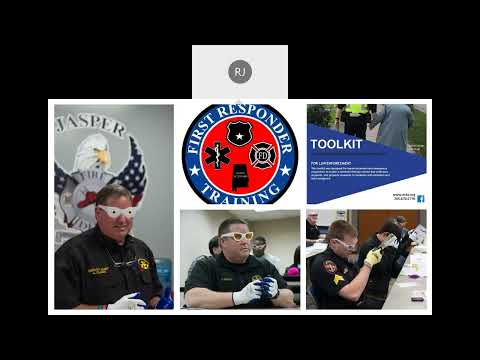
Robin James, director of the Elder Justice Center of Alabama, said her statewide interagency council (established in 2011 and codified in 2012) helped create county‑level MDT alliances and statewide products such as an elder‑abuse protection toolkit and a “dementia‑friendly Alabama” first‑responder training. "We've trained over 5,000 since 2018," she said, and the center uses small grants to produce outreach tools such as Project Life Connect magnets (about $1.41 apiece) distributed at events.
Shelley Carlson of the Minnesota Elder Justice Center described a statutory framework that dates to 1988 and emphasized work with tribal nations. She noted Minnesota’s large geography and tribal structures create unique service arrangements, pointing to cross‑state collaborations such as the Fargo–Moorhead Elder Abuse Forensic Network that must reconcile differing state statutes and services.
Allison Granada, director for EMDT initiatives at Lifespan of Greater Rochester, outlined a hub model funded originally by a 2012 federal Administration for Community Living grant and later supported by New York State agencies. Lifespan funds statewide access to specialty services—such as forensic accounting and a geriatric psychiatrist—through centralized contracts and coordinates 18 EMDT coordinators across hubs.
Christy Preston, director of the Adult Protection Network at UNC’s School of Government, described a public resource library, a 13‑module e‑learning series, five interactive webinars and a help desk that supports counties. Preston said North Carolina has grown from 34 teams in March 2023 to 66 teams now, and that many materials are publicly available on protectadults.sog.unc.edu.
Robin Young, APS policy developer at the Ohio Department of Job and Family Services, described how Ohio tied planning grants, memoranda of understanding (MOUs) and statutory requirements to create mandatory I‑teams in all 88 counties. Young said the state provides templates, MOU and confidentiality guidance, and ongoing technical assistance while allowing counties flexibility in meeting format.
Jason Burnett, associate professor at McGovern Medical School and director of the Texas Elder Abuse and Mistreatment Collaboratory and the Forensic Assessment Center Network (FACN), described a remote forensic capacity‑assessment model launched in 2017 that now supports APS across all 254 Texas counties via a HIPAA‑compliant portal. "We cover all 254 counties in the state of Texas, remotely from Houston," he said, and reported roughly 4,000 capacity assessments completed between 2017 and 2025 (about 600 per year through 2025). Burnett emphasized APS field staff set up confidential interviews and that the program provides detailed reports courts and APS can use.
Jane Carlson, APS program analyst for the Wyoming Department of Family Services, summarized Wyoming's APT (adult protection team) structure, required membership lists in APS rules, and state‑level advocacy to address local service gaps such as transportation and housing.
During a moderator‑led Q&A, panelists highlighted practical steps for building law‑enforcement partnerships (show up, offer CEUs and resources), the need for relationship building with tribal communities, and the administrative work of managing shared specialists through central contracts. Panelists repeatedly emphasized cross‑agency relationships, state support (toolkits, templates, help desks) and the need to tailor MDTs to local conditions.
The session closed with a reminder of the next steps and a 30‑minute lunch break.