Get Full Government Meeting Transcripts, Videos, & Alerts Forever!
Get email alerts on the Wildfire Insurance topic
No spam. Unsubscribe anytime.
Senate rules committee hears wildfire insurance bill to force insurer transparency on mitigation
Summary
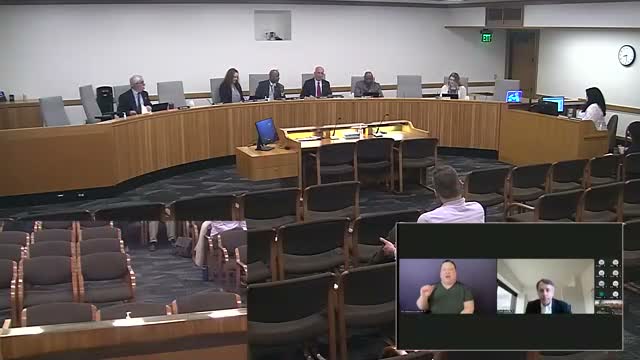
At a March 2 public hearing, proponents urged SB 1540 would require insurers to submit wildfire and catastrophe models to state review and reward property- and community-level mitigation; insurance trade groups warned the bill is premature for Oregon’s data environment and urged more time for stakeholder work.
The Senate Committee on Rules on March 2 heard testimony on Senate Bill 15 40, which would require insurers that use catastrophe or wildfire risk models to file those models with the Department of Consumer and Business Services for review, consider property- and community-level mitigation in underwriting, publish mitigation and appeal information, and support the creation of a statewide mitigation database.
Senator Golden, who introduced the bill in the committee, said SB 15 40 responds to an urgent problem: homeowners in fire-prone areas increasingly cannot find or afford insurance. "Oregonians who take every reasonable step to reduce wildfire risk on their property should be able to access adequate and affordable insurance," he said, urging the committee to support the bill as a practical step following Colorado’s recently enacted law.
Dave Jones, former California insurance commissioner, testified in support and described three core elements of the bill: requiring models to account for mitigation benefits, offering policyholders written notice of their risk classification and an appeals process, and directing state fire and forestry agencies to build a mitigation project database. "SB 15 40 simply says that the models they use to price and underwrite ... have to take into account where relevant property specific, community mitigation," Jones said.
Local fire officials and mitigation advocates also supported the measure. Todd Riley, fire chief at Bend Fire & Rescue, said insurers should provide clearer incentives for homeowners who harden structures and create defensible space. "When insurers recognize mitigation work, it motivates actions that help slow fire spread, reduce structure loss, and improve firefighter safety," Riley said.
The property‑casualty industry urged caution. Kenton Prepprein, president of the Northwest Insurance Council, said his members are not in support at this time because Oregon lacks the data infrastructure Colorado relied on and because overly prescriptive statutory language could raise costs or disrupt the market. "We continue to believe there are good things in this bill...but regrettably, we are not in a position to be supportive of the bill at this time," Prepprein said, and asked that the measure be made a study bill to allow further stakeholder negotiation.
The Oregon State Fire Marshal, Mariana Ruiz Temple, said the agencies do not take a position on the bill as drafted but flagged implementation challenges, including defining mitigation, constructing the database, and coordinating review and appeals. She noted that the bill would require rulemaking and fiscal-impact work by state agencies.
Committee members asked technical questions about timing, rulemaking, and whether insurers already account for mitigation in their vendor models. Industry and vendor representatives said models can and do incorporate mitigation in some cases, but the availability and granularity of Oregon data remain a barrier.
The hearing closed with no immediate committee action recorded; proponents and opponents both urged continued negotiation on specific statutory language and timelines for implementation.
The bill remains under consideration; if reported out it would move to a subsequent Senate floor vote or further work in committee.