Lifetime Citizen Portal Access — AI Briefings, Alerts & Unlimited Follows
Council approves temporary juvenile curfew after contentious debate over enforcement and youth supports
Loading...
Summary
The D.C. Council voted to approve a second emergency juvenile curfew measure authorizing the chief of police and, in emergency circumstances, the mayor to declare designated curfew zones; supporters cited recent violent gatherings while opponents warned of racial profiling and federal enforcement involvement.
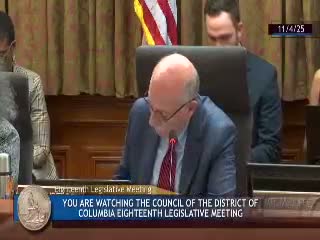
The Council of the District of Columbia approved a temporary extension of the juvenile curfew on Nov. 4, 2025, after hours of debate over whether the policing tool protects public safety or risks harming young people in the city.
Councilmember Pinto, who moved the emergency declaration, said the measure restores a tool used this summer to prevent violent mass gatherings and allows the chief of police to declare designated curfew zones when intelligence indicates planned violent meetups. Pinto said the prior 90‑day emergency had been used seven times with “0 violations and 0 arrests,” arguing the authority prevented violence and allowed D.C. Housing Authority renovations to proceed without delay.
The vote followed emotionally charged exchanges. Councilmember Lewis George said he would vote no, arguing the city is “occupied” and warning the expanded power risks federal enforcement and racial profiling if National Guard or federal forces become involved. Councilmember Robert White also voted no, saying a blanket curfew “punishes presence” and diverts officers from targeting violent actors. Councilmember McDuffie and others urged a balanced approach that pairs tools like curfews with investment in youth services.
Supporters including Councilmember Pinto, Councilmember Henderson and Councilmember Allen said the curfew is a narrow tool for limited circumstances. Pinto described recent violent gatherings—citing incidents in the Navy Yard and the Wharf—and said the ordinance’s consistent 11 p.m. hour and authority for the chief to declare short‑term zones will allow police to be proactive. Henderson, who said she had opposed earlier versions, said new information and committee hearings convinced her the measure is a needed, but not sole, tool.
On the declaration vote the clerk recorded several no votes: Councilmembers Lewis George, Robert White, Tran White and Nadeau were recorded as voting no; the declaration nevertheless met the required supermajority and was approved. The underlying bill (Bill 26‑459) was also moved and approved after further debate.
The Council repeatedly framed the curfew as a limited, time‑bound authority rather than a long‑term solution, and several members said they expected to press for complementary investments in late‑night programs, recreation access, mental health and mentorship. Pinto said permanent investments with budget implications would need a separate vehicle; opponents urged the Council to prioritize those investments alongside any enforcement tools.
The measure’s immediate effect is to restore an emergency authority previously used by MPD; council members signaled follow‑up work on guardrails, time limits and community investments ahead of any permanent legislation.