Senate committee backs temporary moratorium on local tax, fee and utility increases; cities and counties warn of bond and water risks
Loading...
Summary
The committee advanced a strike‑everything referral that would bar municipalities and counties from imposing new tax classes or increasing utility rates through 2030, prompting opposition from counties, water providers and municipal groups who said the measure would harm infrastructure financing.
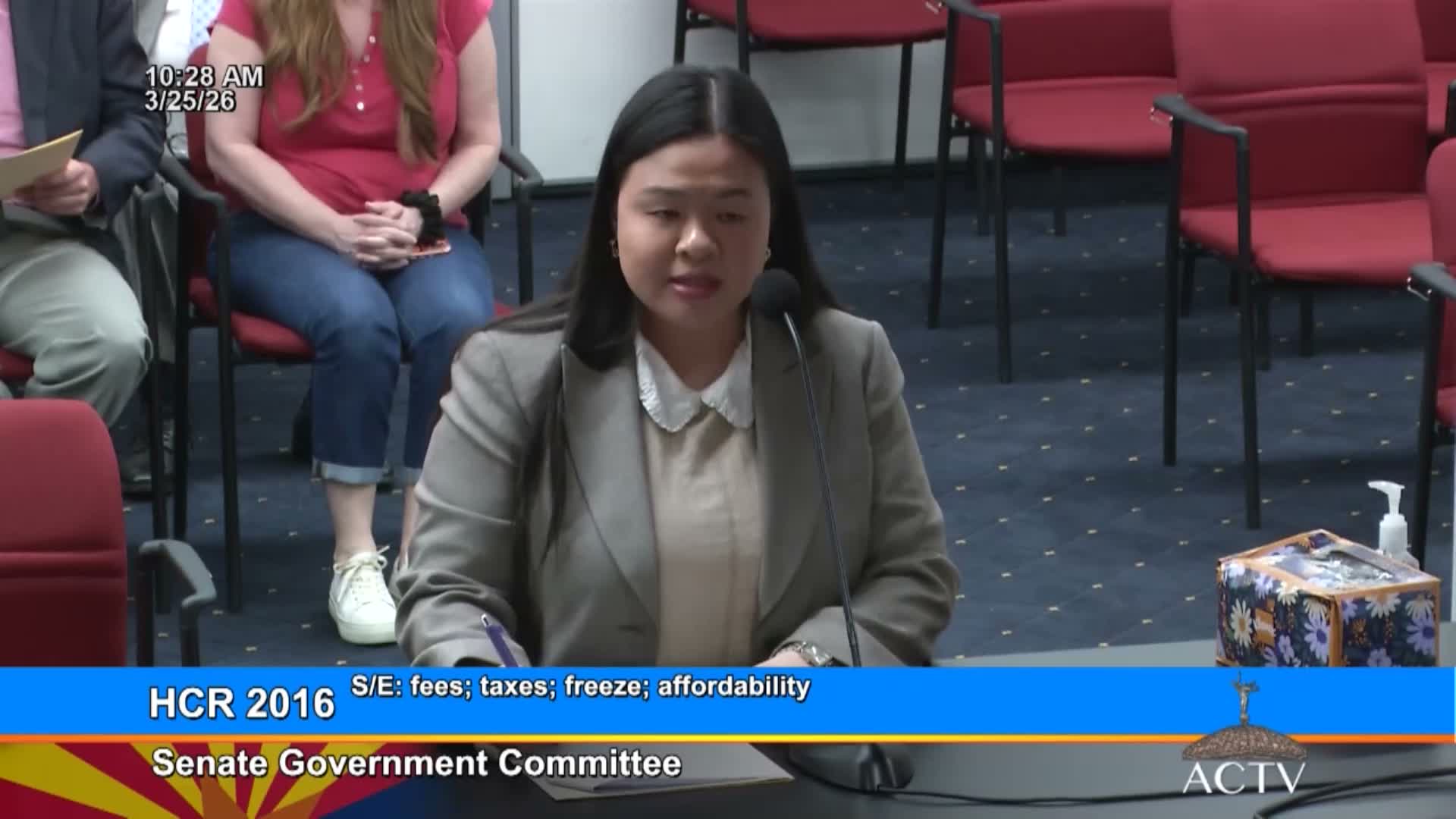
The Senate Government Committee adopted and forwarded a strike-everything amendment to HCR 2016, a constitutional referral that would impose a moratorium on new or increased local taxes, utility rates and similar charges through mid‑2030 unless a narrow set of exemptions applies.
Proponents, including taxpayer advocacy groups, argued the freeze is a necessary check on rapid local rate increases in recent years. Greg Blackie of the Arizona Free Enterprise Club characterized recent municipal budget growth as excessive and framed the moratorium as relief for ratepayers. "Cities will still collect more as populations grow; this is a pause for residents," he said.
Opponents from county and municipal associations warned the language is too broad and would unintentionally impair water-system financing, bond covenants and statutory county authorities. Jacob Emmett of the Arizona County Supervisors Association told the committee many counties lack direct control over sales-tax bases and rely on voter-approved sales taxes or fee structures to finance essential services; he urged exclusion of county property taxes and clearer exemptions for water infrastructure. Municipal water providers warned the provision would raise borrowing costs and create ambiguity about which costs qualify for exemptions.
Committee members debated fiscal fairness, infrastructure risk and local control. Some noted the moratorium's potential to shift costs or delay necessary work; others emphasized affordability concerns for households facing higher utility bills. After prolonged discussion, the committee passed the referral as amended and recommended it for transmittal (vote recorded in committee minutes).