
House approves four‑year tentative contract with CEUI NP‑2 after budgeted debate
Get AI-powered insights, summaries, and transcripts
Sign Up Free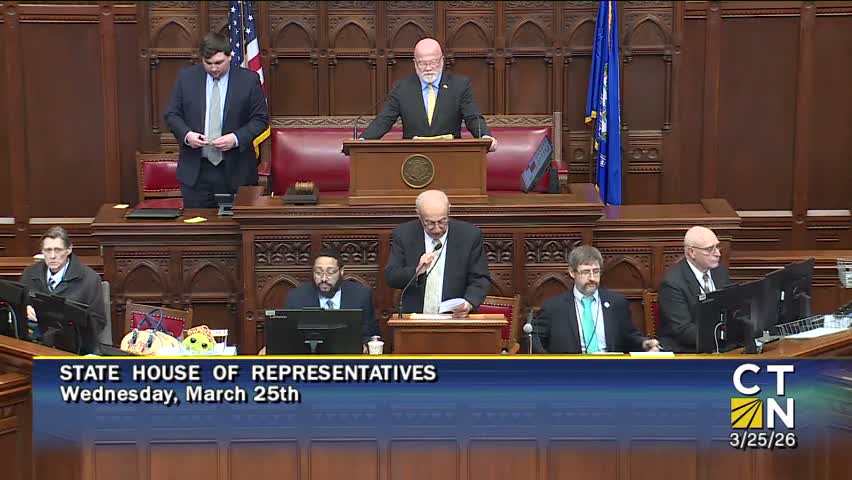
Summary
The Connecticut House approved a resolution backing a tentative four‑year contract with the Connecticut Employees Union Independent (CEUI NP‑2) covering roughly 3,600 service workers. Sponsors said the deal costs just over $45 million across four years; lawmakers warned of long‑term budget pressure and reliance on the RSA and transportation fund.
The Connecticut House voted to adopt a resolution approving a tentative four‑year contract between the state and the Connecticut Employees Union Independent (CEUI) NP‑2 bargaining unit covering roughly 3,600 maintenance, custodial and service workers. Representative Joseph Elliott, the bill proponent, told colleagues the deal provides 2.5% general wage increases each year plus step increases and includes a wage reopener in the fourth year; he said the current fiscal note estimates the cost at just over $45,000,000 over four years and about $12,000,000 in the current fiscal year.
Supporters said the contract recognizes essential state workers who maintain hospitals, campuses and transportation infrastructure. "We are here to ensure that the people that make our state run get compensated for the service they provide," Elliott said during debate.
Opponents pressed the House on budget tradeoffs and long‑term liabilities. Representative Corpus (speech) said Connecticut state employee compensation has grown faster than private‑sector wages and warned the contract adds to an already large fiscal burden: "If this contract passes, state employee pay will have risen almost 60% in 10 years," she said, and raised concerns about the Special Transportation Fund’s solvency and the size of the state’s pension and bonded debt.
Lawmakers discussed how the contract would be paid. Elliott and other proponents said the state can apply money from an RSA fund set aside to cover known raises; opponents noted the RSA balance is finite and that dozens of additional contracts are pending and could draw on the same fund.
The contract changes include making a class of employees eligible for overtime pay rather than comp time. Representative Ackert highlighted how some job classifications will see combined step and percentage increases that can produce larger first‑year raises for lower‑paid titles.
A roll‑call vote followed extended debate. The clerk announced the tally and declared the resolution adopted. The transcript records the fiscal figures and the clerk’s adoption announcement and also contains the roll‑call tallies as read into the record (see provenance). Members who pressed the House for more precise overtime head counts noted that the proponents did not have a ready breakdown for how many employees would newly become eligible for overtime. The fiscal note and committee explanations cited in debate list the RSA balance and the special‑transportation fund as partial funding mechanisms but also flagged a wage reopener in the fourth year.
What’s next: The resolution directs final ratification steps for the tentative agreement and the contract’s fiscal implementation will be reflected in upcoming budget updates and any further collective‑bargaining items before the General Assembly.