
Senators spar over menhaden bill as department warns of quota, enforcement and equity risks
Get AI-powered insights, summaries, and transcripts
Sign Up Free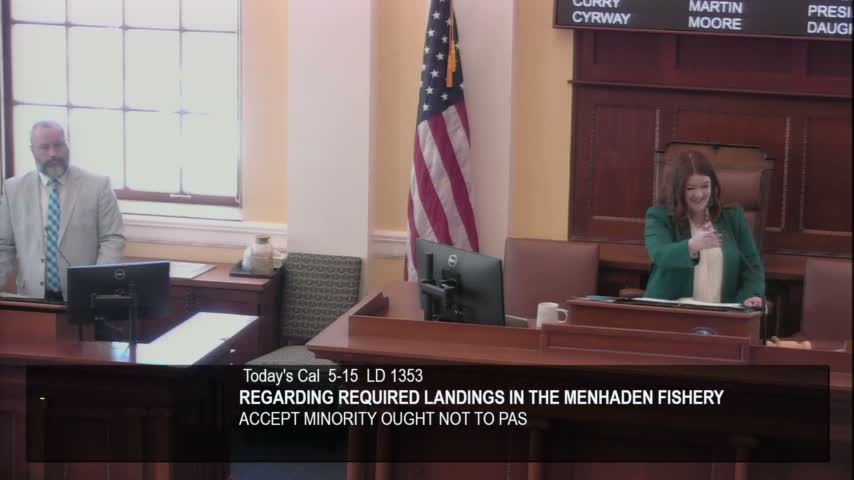
Summary
Lawmakers debated a bill to change entry and required landings in the menhaden (pogie) fishery, with supporters saying it restores access for fishermen excluded in 2019–2021 and opponents and DMR warning it could complicate enforcement and shrink shares for incumbents; vote outcome not specified on the transcript.
The Maine Senate spent substantial floor time on a bill to change entry and required landings in the menhaden (pogie) fishery, where lawmakers disagreed over retroactive eligibility, regional equity and the fishery’s quota management.
Senator Moore urged the chamber to let previously shut‑out fishermen reenter the fishery, saying the bill would add 20 positions to the current field (from about 356 to 376) and establish an entry system that would later operate on a 1‑for‑1 replacement basis. Moore said that targeted changes would help fishermen who lost access between 2019 and 2021 and that the Department of Marine Resources (DMR) had indicated enforcement would be feasible.
Senator Rennie and other coastal senators warned that menhaden are a shared resource managed interstate through the Atlantic States Marine Fisheries Commission (ASMFC). Rennie said Maine’s reliance on menhaden has increased and urged caution about changing the baseline because adding entrants reduces each incumbent’s share; he emphasized regional equity concerns for Down East fishermen.
Senator Tepler raised operational concerns echoed by DMR, noting that daily catch reporting and quota management would become more complicated if the number of licensees increased and that the department might respond by tightening season days or per‑vessel poundage to meet interstate agreements.
Supporters framed the bill as a limited, narrowly targeted fix for fishermen who were displaced, while opponents portrayed it as a retroactive reset that could undermine a fair, forward‑looking entry system. The transcript records extended debate and requests for clarification; the floor proceeded with procedural motions but the final roll-call outcome for the menhaden bill is not specified in the available segments.