
Oklahoma House approves resolution saying courtrooms must follow U.S. and state constitutions
Get AI-powered insights, summaries, and transcripts
Sign Up Free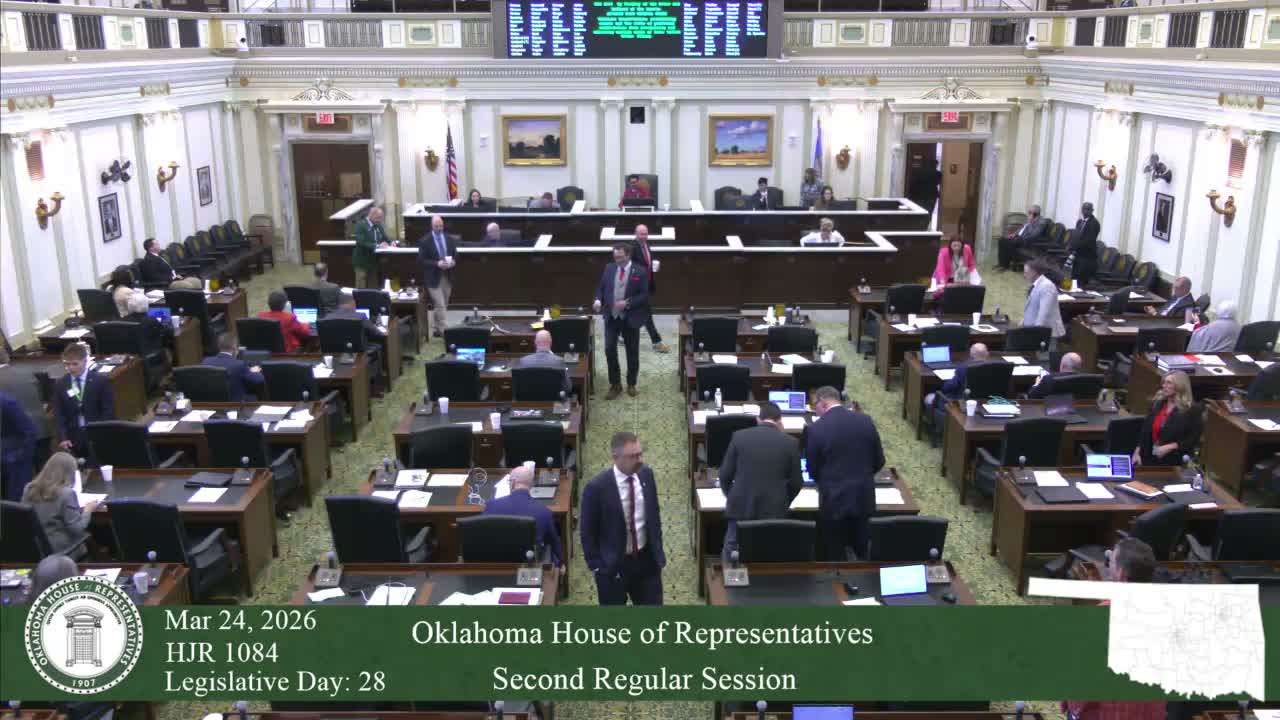
Summary
The Oklahoma House passed House Joint Resolution HAR 10-84 after lawmakers debated whether the measure would change judicial practice or simply restate existing constitutional standards. Sponsor Rep. Wooley said it is a safeguard for lower courts; colleagues asked for concrete examples and First Amendment and appellate‑review clarifications.
Representative Wooley introduced House Joint Resolution HAR 10-84, saying the measure “just reaffirms that the Oklahoma and United States constitution are the standard in the courtroom.” She described the resolution as a safeguard intended to ensure lower courts do not apply practices she called “repugnant” to constitutional principles.
Lawmakers repeatedly asked for concrete examples and legal consequences. Representative Waldron asked, “Why do we have a need to reaffirm that the constitution is in effect?” and later pressed whether the resolution would affect voluntary private agreements such as religious marriage contracts; Wooley replied twice that the resolution does not address marriage and that it targets courtroom practices rather than private contracts.
Representative Fugate and Representative McCain questioned the practical difference between the resolution and existing appellate review, with Fugate noting the state’s appellate and retention processes. Wooley said the point was to “deal with it immediately in front of us even if in a lower court” and to give voters a say by placing an amendment before the people rather than relying solely on later court or retention remedies.
The resolution moved without extended floor debate and was recorded as passing on the floor. The House roll-call reflected majority support; the sponsor said she sought to give the public a direct vote on the constitutional amendment rather than leave the matter solely to judges and appellate procedures.
The next procedural step is transmission of the resolution for the Senate and, if adopted, placement on the ballot as a proposed amendment to the Oklahoma Constitution.