
House backs nonprofit security grant program after debate over federal gaps, eligibility and cost
Get AI-powered insights, summaries, and transcripts
Sign Up Free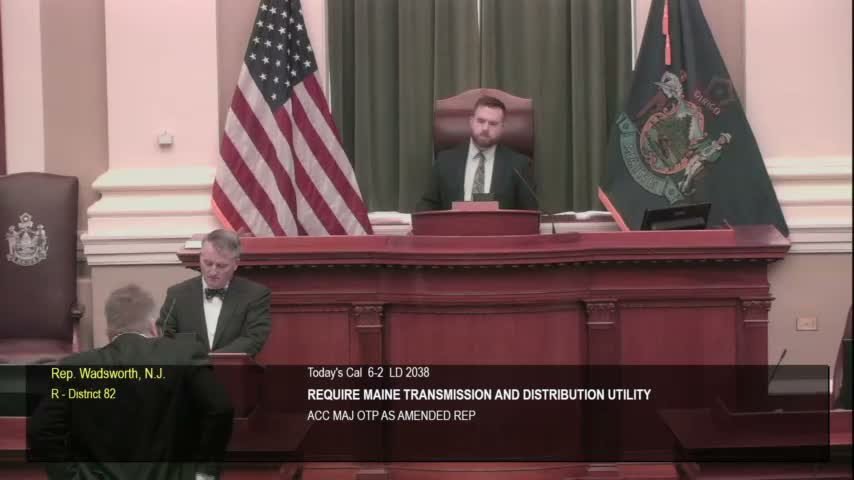
Summary
Lawmakers approved creation of a state nonprofit security grant program to pay for physical security, security personnel and planning after members debated gaps in federal funding, eligibility rules, and how grants would be administered; the measure passed on a divided vote.
The Maine House on March 19 approved legislation to establish a nonprofit security grant program intended to help religious institutions and other nonprofits pay for security upgrades and personnel after members debated eligibility, duplication with federal programs and fiscal oversight.
Supporters argued federal grant criteria have narrowed and left many congregations and community groups without critical funding. A representative from Brunswick described congregations that are “scraping together what they can to bring in off‑duty police officers” and urged the body to “help keep us alive,” saying state support could replace grants that are no longer available under changed federal criteria.
Representative Brennan of Portland, who sponsored the measure, said the bill would allow use of state funds where federal resources fall short, including paying off‑duty police for events and reimbursing security measures when federal rules do not apply. He said he had spoken with the public‑safety commissioner and that off‑duty officers are often the best available option.
Opponents warned the bill creates a new state program without adequate guardrails and could duplicate the U.S. Department of Homeland Security’s Nonprofit Security Grant Program. Representative Wadsworth urged caution about creating an ongoing state grant program with broad discretion for awarding funds and questioned whether the bill includes sufficient criteria, transparency and training standards for security personnel.
During floor exchanges members asked whether grant awards would include standards for security personnel training, who would be eligible, and whether the program could be administered consistently and equitably. Floor remarks noted the bill provides for rule‑making and technical rule development to operationalize program guidelines and criteria.
The House passed the measure on a divided vote, 76–68. Members said implementation questions would be addressed through rule‑making and later administrative guidance should the bill become law.
The House sent the enrolled bill to the Senate for further consideration.