
House approves bill to let renters use small plug-in solar devices after heated debate
Get AI-powered insights, summaries, and transcripts
Sign Up Free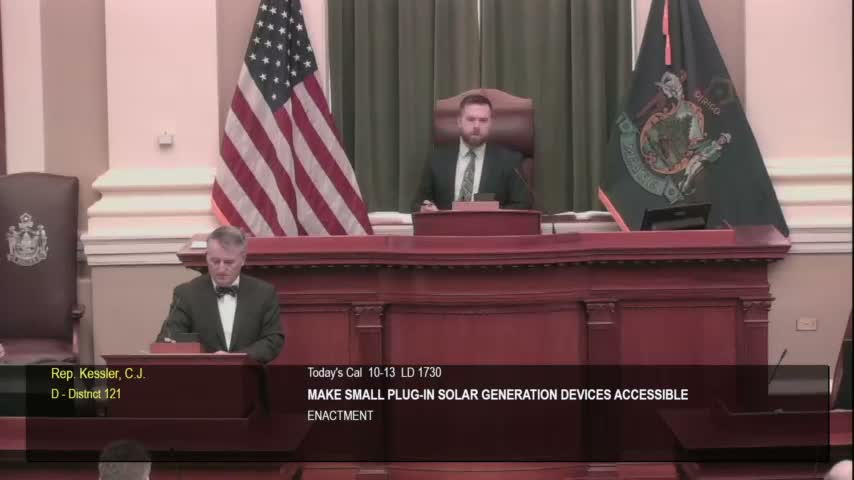
Summary
The Maine House voted to pass a bill allowing small plug-in solar generation devices to be used by residents, including renters, after members sparred over property rights, safety and payback periods. Supporters say it expands access to clean energy; opponents warned of landlord liability and safety risks.
The Maine House on March 19 passed legislation intended to make small plug-in solar generation devices accessible to more residents, including renters, after a contested debate that focused on property rights, safety and projected savings.
Representative Kate Kessler of South Portland urged support for the measure, saying it would let households “purchase their own plug in solar generators and produce electrons themselves to reduce their cost of energy.” She told colleagues that an 800‑watt system could save roughly $266 a year and could pay back in about four years if purchased for about $1,300–$1,400.
Opponents warned the bill would shift risks to property owners and create liability gaps. A representative from Winterport argued the measure “allows tenants to install electrical generation equipment on property they do not own without the property owner's consent” and said the proposal contains “no insurance requirements, no clear liability structure, and no enforcement mechanism to make property owners whole.” Other members raised practical concerns about older housing stock, window‑run extension cords and uncertain payback periods.
Supporters described the bill as a narrow, equity‑focused step aimed mainly at renters and people in multifamily housing who lack permanent rooftop access. Representative Webb said the proposal resulted from multiple work sessions and technical input from electricians and regulators and characterized it as “a narrow advancement in our clean energy transition.”
The House voted on enactment after debate; the motion prevailed, 79–65. The bill was ordered signed by the Speaker and sent to the Senate.
The bill’s supporters and critics urged next steps that would refine safety standards, liability language, and landlord‑tenant protections during the Senate consideration and any subsequent rule‑making. The House record shows the debate focused on balancing access to distributed solar with protections for property owners and renters.
The measure now heads to the Senate for consideration.