
Assembly committee rejects bill that would limit holes on mail ballot envelopes
Get AI-powered insights, summaries, and transcripts
Sign Up Free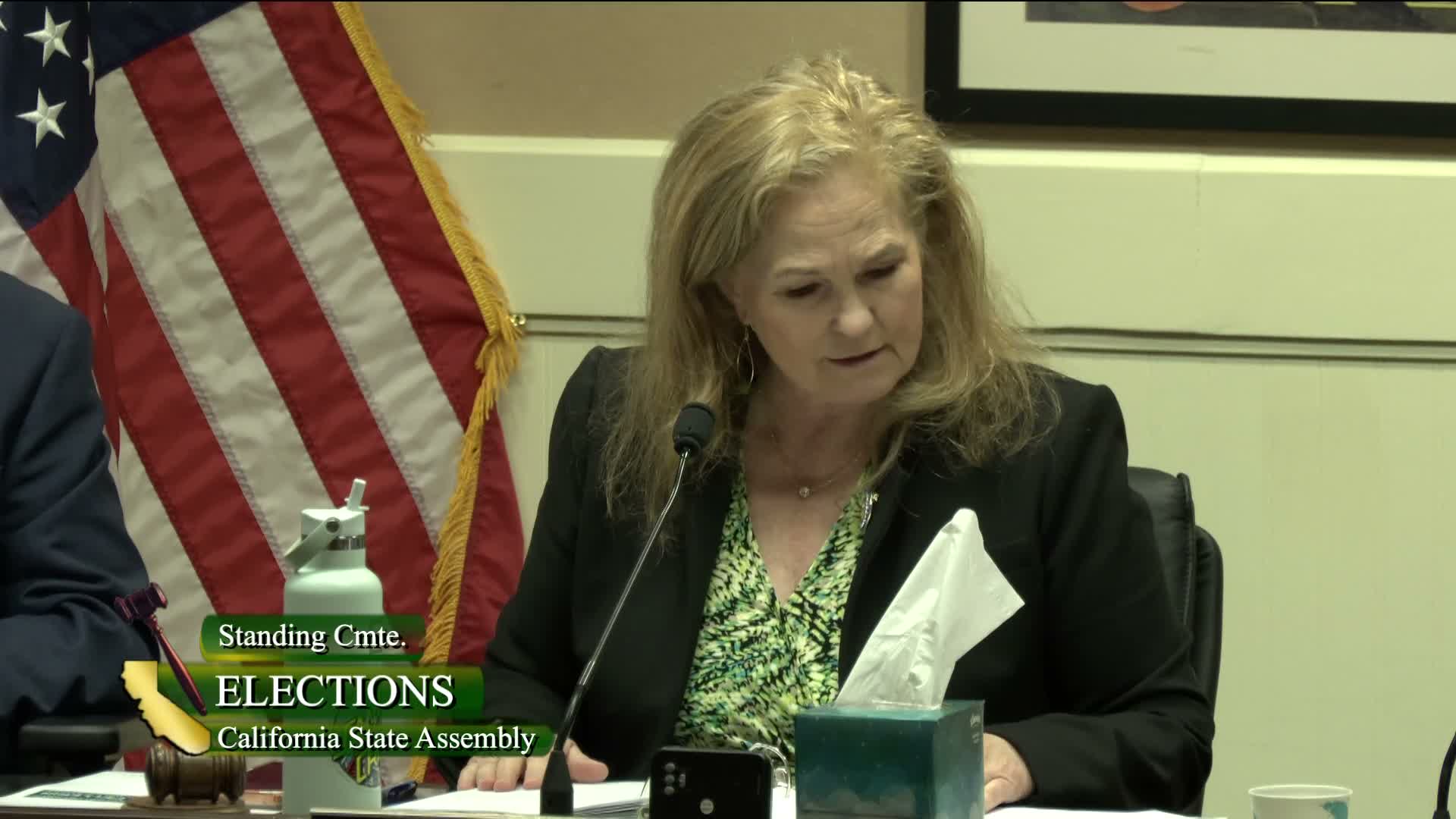
Summary
The Assembly Elections Committee on March 25, 2026, failed AB 19 93, a measure that would have required election officials to ensure mail‑ballot envelope holes could never reveal votes. Supporters called it a common‑sense fix to restore public confidence; county clerks and the secretary of state warned of accessibility and implementation problems.
Assemblymember De Maio urged the Elections Committee to approve AB 19 93, saying the bill would prevent voters’ selections from being visible through holes sometimes cut in vote‑by‑mail envelopes. “The results were 92% in support, 6% unsure, and 2% opposed,” De Maio said, urging a bipartisan response to restore voter confidence.
Opponents, led by James Coos of the California Association of Clerks and Election Officials, said the bill would create process and accessibility problems. “This bill reverses the process requiring us to adjust our envelopes for something that isn't even made yet,” Coos told the panel, noting counties typically purchase envelopes months before ballots are finalized and that the signature‑guide holes help voters with visual or manual dexterity impairments.
Tim Cromartie, representing the Secretary of State, said his office had no formal position but raised implementation concerns: voters can be instructed to fold ballots or insert a blank sheet to avoid visibility, the SOS does not oversee envelope printing, and the bill could create an unfunded mandate and a rulemaking timeline unlikely to be met before the next primary. “This bill is a significant addition to the Secretary of State’s mandate and the SOS does not currently oversee the development or printing of ballot envelopes,” Cromartie said.
Members split over the tradeoffs between privacy and accessibility. Vice Chair James Gallagher and others displayed examples circulated online of envelopes that reportedly revealed marked bubbles and said fixes were necessary to preserve trust. Other members warned that a prescriptive design mandate could reduce accessibility for blind or low‑vision voters and impose new costs and certification challenges on counties.
After extended questioning, the committee took the bill on call. The motion to pass and refer AB 19 93 to the Committee on Appropriations ultimately failed, 2–6. The chair and several members cited practical difficulties and a preference for targeted operational solutions such as voter instruction or discussions with envelope manufacturers rather than a statutory design mandate.
The committee left open the record for absent members to sign on to other measures and adjourned.