Get Full Government Meeting Transcripts, Videos, & Alerts Forever!
Get email alerts on the Charter Amendments topic
No spam. Unsubscribe anytime.
Charter Review Commission to send five proposed charter changes — including ethics, compensation and vacancy rules — to town council
Summary
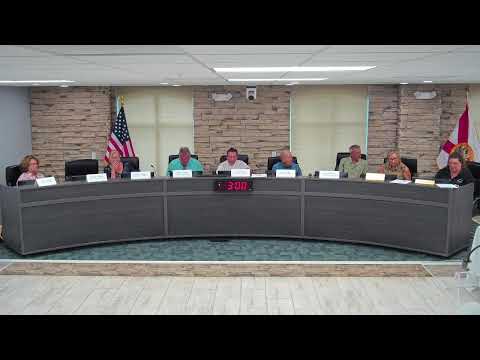
The Fort Myers Beach Charter Review Commission on March 3 reviewed proposed charter language and agreed to forward five substantive changes and several scrivener corrections to town council for placement on the November ballot; members debated ethics language, compensation-review cadence and how long appointees should serve before an election.
The Fort Myers Beach Charter Review Commission on Tuesday reviewed proposed amendments to the town charter and approved a matrix of five substantive recommendations and several scrivener corrections to forward to town council for consideration for placement on the November ballot.
The commission’s chair opened the meeting at 2 p.m. and said the group had pared the charter to three remaining substantive articles and a consolidation matrix to present at a working session on April 7 and to town council on April 20. The chair read proposed language that would place ethics requirements — including prohibitions on unlawful gifts and a requirement to disclose ex parte communications in quasi‑judicial hearings — into the charter itself. “Pursuant to its municipal powers, the town of Fort Myers Beach shall adopt ordinances, promote transparency and ethics in government by the adoption of an ordinance prohibiting the acceptance and unlawful gifts and disclosure of ex parte communication in quasi judicial hearings,” the chair read aloud.
Why it matters: If council advances the recommendations and voters approve them, the charter would explicitly emphasize ethics and ex‑parte disclosure at the town level. The commission also addressed several governance items that would affect how quickly appointees face voters and how elected officials’ pay is reviewed — decisions that could change who runs for office and when.
Legal counsel and procedure Nancy, the commission’s town attorney, told members the proposed ethics language largely restated existing law and town ordinances and recommended that the charter reference state law and existing town ordinances rather than restating technical definitions. “There is a Florida statute that prohibits putting land use type decisions on the ballot for review by the electorate,” Nancy said, noting that the town already has ordinances and that Chapter 112 of Florida law addresses standards of conduct and permitted gifts.
The commission asked staff to mark which items could be corrected through an ordinance (scrivener errors) and which should be charter amendments. Counsel explained that scrivener errors could be handled administratively and that a separate ordinance process (first and second readings) and transmittal to the Lee County Supervisor of Elections would be required for charter changes to reach the ballot.
Ethics, gifts and ex parte communications Members debated whether the charter should ban only “unlawful gifts” or prohibit gifts more broadly. One commissioner suggested, “no gifts,” while counsel warned that putting specific monetary thresholds into the charter (for example, a $25 threshold) risks becoming inconsistent with future changes in state law and recommended leaving the charter language general and using ordinance for precise limits. A commissioner quipped about social situations, asking whether accepting a small meal or a drink could be considered a gift; the exchange illustrated members’ concerns about how particular exceptions would be interpreted.
Compensation The commission reviewed proposed Section 4.05 to establish a five‑member compensation committee appointed by council to recommend pay for the mayor and council. The charter text under discussion included historical base pay figures and a mechanism to revise compensation over time. Members worried about politicizing pay decisions and debated a schedule for reviews. After discussion, the commission tentatively agreed to a three‑year review cadence (to be finalized at the next meeting), with the chair asking staff for a professional recommendation on the most appropriate interval.
Vacancies and election timing A substantive change discussed would alter the length of appointed terms: the commission reviewed language that an appointment to fill a vacant council seat would be effective until the next regular scheduled election rather than to the end of the vacated term. Members signaled this was a major policy choice because it shortens the time an appointee can serve before the voters decide. Counsel also noted practical constraints — qualifying periods and court orders handled by the Supervisor of Elections — that can affect special‑election timing.
Next steps Commissioners will reconvene for a working session on April 7 to finalize wording in the matrix; the chair plans to present the commission’s final recommendations to town council on April 20 for council consideration and potential transmittal to the Supervisor of Elections for placement on the November ballot. The commission approved routine motions during the meeting (including allowing a member to participate by Zoom and approval of prior minutes) and adjourned the session after confirming assignments.
What the commission did not finalize The commission did not take a formal vote to place charter changes on the ballot; it voted only to adopt a working matrix and send recommendations to council. Specific numeric thresholds and other precise regulatory details were left to ordinance language or to further drafting so the charter would remain general while ordinances handle implementation specifics.
The commission adjourned after agreeing on assignments and the dates for the next working session.