
Assembly panel backs ban on commercial text ads between 9 p.m. and 9 a.m. Pacific
Get AI-powered insights, summaries, and transcripts
Sign Up Free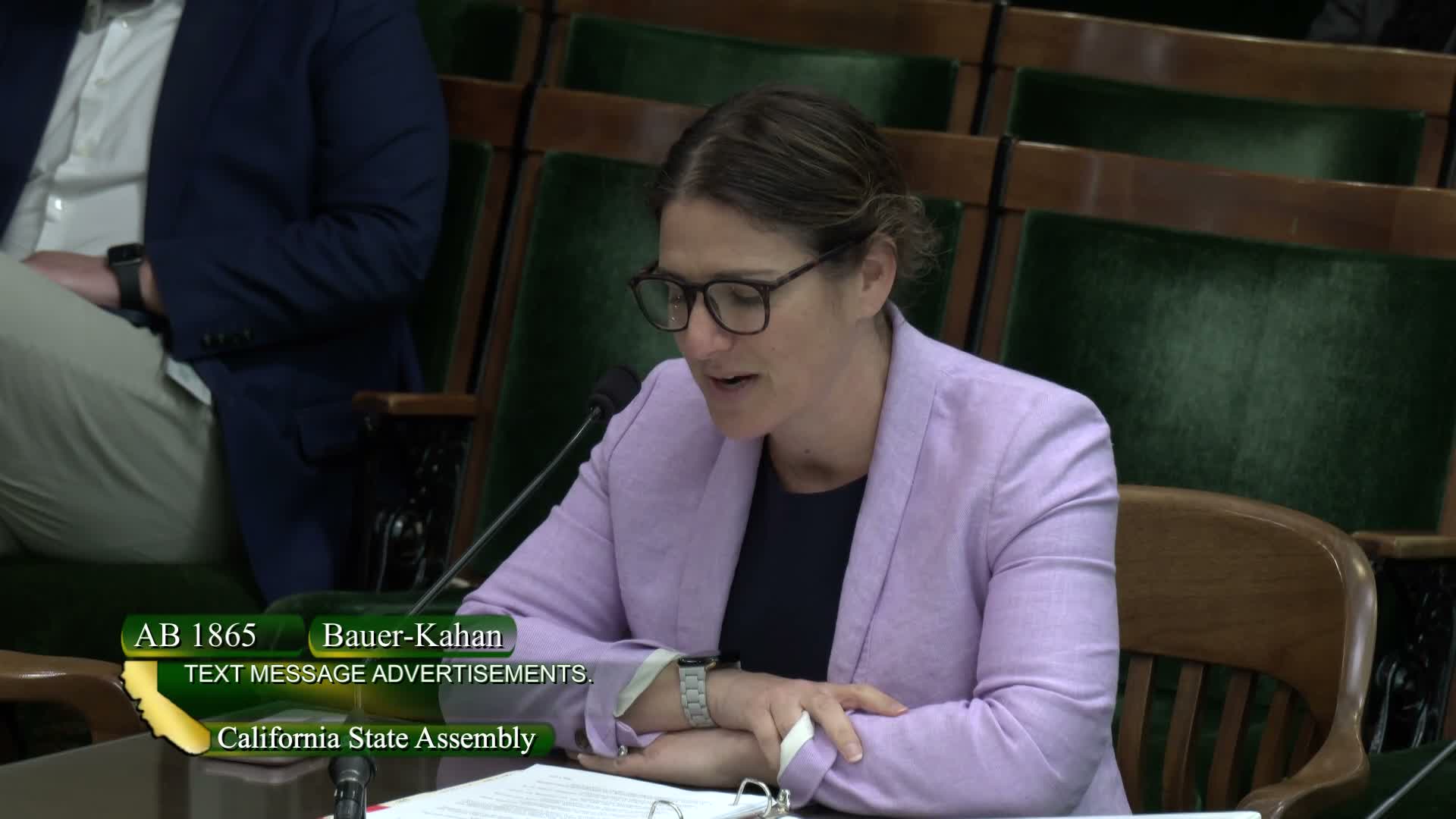
Summary
AB 18‑65 would bar commercial advertising text messages from 9 p.m. to 9 a.m. Pacific Time; sponsors cited nuisance and privacy harms, while business groups sought clarifications for shift workers, exempt messages (e.g., timely event cancellations), and safe harbors for platform glitches.
The Privacy and Consumer Protection subcommittee voted to advance AB 18‑65, a bill that would prohibit commercial advertising text messages between 9 p.m. and 9 a.m. Pacific Time. Assemblymember Bauer‑Kehan, the author, said the measure follows Texas' example and aims to give Californians restful hours free from unwanted marketing texts.
"Unwanted marketing text messages have become increasingly intrusive," the author said, noting Federal Communications Commission complaint data and individual anecdotes about trigger leads and relentless post‑application contacts. Supporters described real consumer harms when phone numbers are recycled or used in marketing lists after mortgage applications or other sensitive transactions.
Opponents — including the California Chamber of Commerce, the Self Storage Association and industry trade groups — asked for clarifications about time zones for numbers with out‑of‑state numbers, exceptions for urgent transactional messages (for example, cancellations or safety alerts), and safe harbors for inadvertent scheduling or carrier delivery glitches. Committee members raised practical concerns for shift workers who may prefer receiving texts outside conventional hours, and suggested the author consider narrow exemptions or a morning hour adjustment for certain opt‑in transactional messages.
The bill was placed on the committee record and advanced; the author said she would work with stakeholders to address concerns such as early‑morning exceptions, political solicitation definitions, and safe harbors for inadvertent late deliveries.
Next steps: AB 18‑65 moves forward for further review; sponsors intend to confer with industry and legal counsel to refine exceptions and safe‑harbor language.