
Panel advances bill requiring 90‑day notice before employers deploy AI that surveils workers
Get AI-powered insights, summaries, and transcripts
Sign Up Free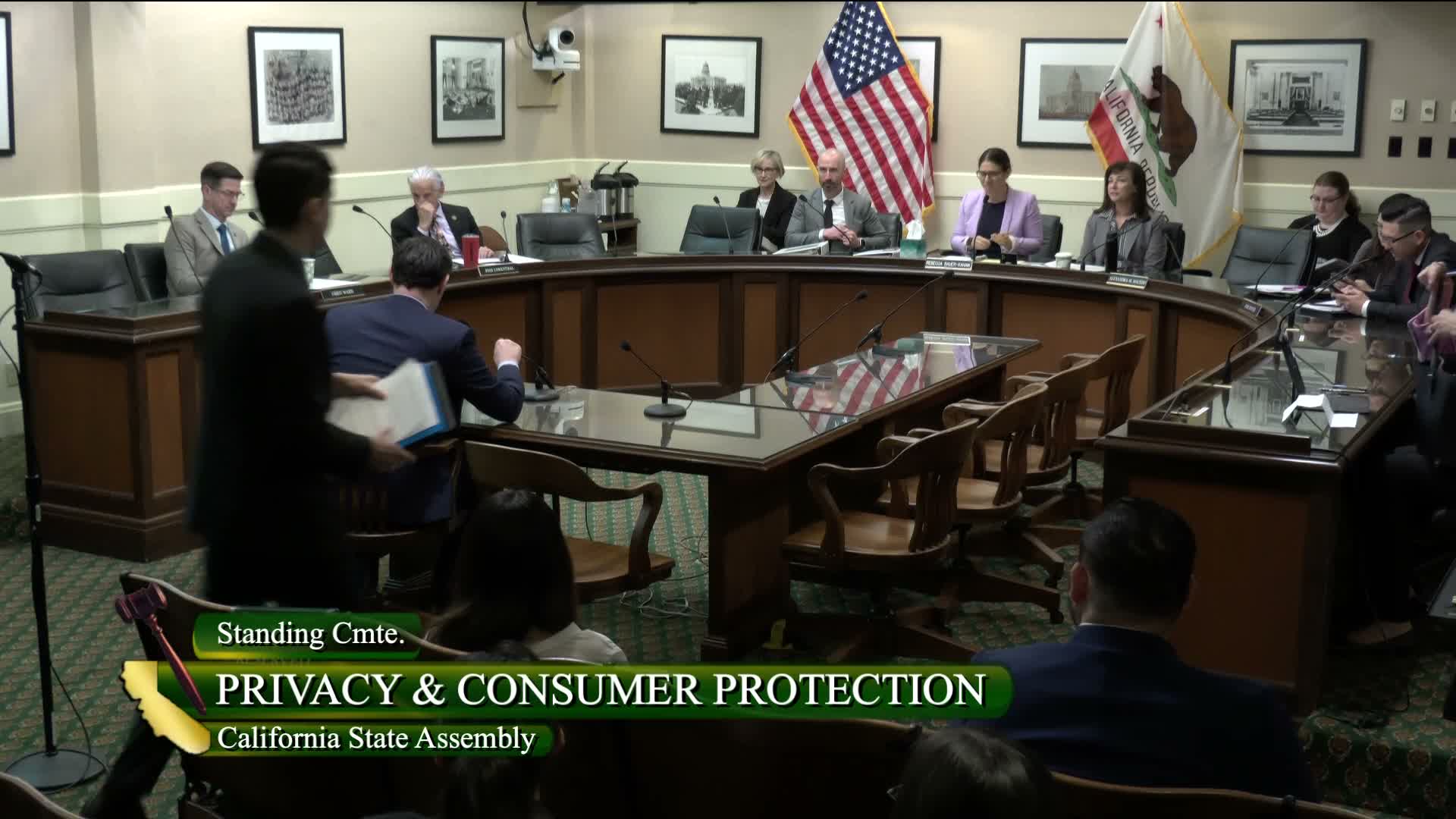
Summary
AB 18‑98 would require employers to notify workers at least 90 days before deploying AI tools used to surveil or manage employees and to disclose purpose, categories of worker data collected, affected employment decisions, and general locations of use; labor unions supported the transparency measure while business groups warned of broad definitions and cybersecurity risks.
Assemblymember Schulz's AB 18‑98 advanced from the Privacy and Consumer Protection subcommittee after a robust debate over scope and definitions. The bill would require employers to provide workers with at least 90 days' advance notice before deploying AI‑powered workplace tools that surveil or manage employees and to disclose the tool's purpose, the categories of worker data collected, employment decisions potentially affected, and general locations where the tool will be used.
"This bill does not prohibit the use of artificial intelligence in the workplace," Assemblymember Schulz said. "What it does say is that workers have a right to know." Labor supporters told the committee that opaque surveillance increases psychological distress and chills protected activity. Yvonne Fernandez of the California Labor Federation said such transparency is a necessary step toward worker protections, and Shane Guzman of the Teamsters urged the committee to require disclosure so workers understand how automated decision systems are used.
Industry and business groups raised several objections in testimony. The Civil Justice Association and the California Chamber argued that the bill's definitions — including the definition of an automated decision system (ADS) and workplace surveillance tool — were overly broad and could sweep in innocuous security or IT systems. The Chamber also warned that requiring disclosure of specific models or developers could create cybersecurity vulnerabilities and force businesses to divulge proprietary information in private litigation.
Authors and sponsors responded that the ADS definition was drawn from existing government code and that cybersecurity tools such as firewalls and antivirus are excluded. They said they had narrowed notice requirements (for example, describing categories of data rather than itemizing every data point) and were open to further amendments to address proprietary‑information and independent‑contractor concerns.
The committee recorded a motion to pass AB 18‑98 to the Judiciary Committee. The transcript notes the bill was advanced out of committee; the committee recorded the vote as reported in the transcript (bill reported out with 9 ayes and left on call for absent members). Sponsors and opponents agreed to continue negotiating refinements on definitions, security exceptions, and private‑right‑of‑action language.
Next steps: AB 18‑98 moves to the Judiciary Committee; authors indicated they will work with stakeholders and the governor’s office to narrow definitions and address litigation and cybersecurity concerns.