
Committee hears testimony on competitive grants to expand youth nature‑based mental‑health programs
Get AI-powered insights, summaries, and transcripts
Sign Up Free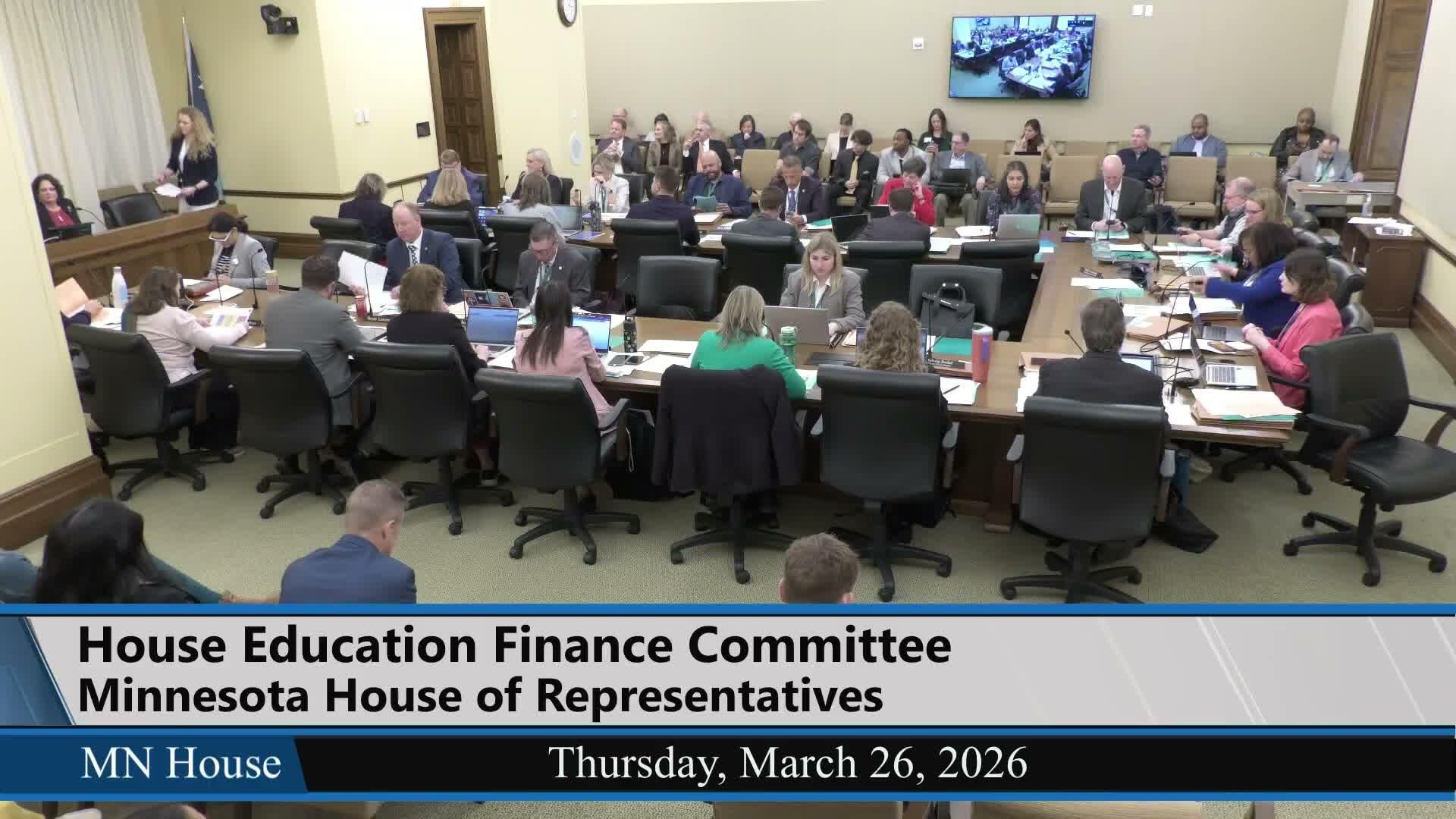
Summary
Lawmakers laid over House File 41‑98, a bill to create a competitive grant framework at MDE for community organizations that provide after‑school and summer nature‑based mental‑health programming. Testimony came from Camp Fire Minnesota, youth board members and community partners advocating for equitable scholarship support.
The House Education Finance Committee advanced discussion of House File 41‑98 on March 26 and laid the bill over for possible inclusion in the education finance omnibus.
Sponsor Representative Joaquin framed the bill as a start toward moving some funding to competitive grants administered by the Minnesota Department of Education to support youth mental‑health programming outside school hours. He noted prior appropriations to student support personnel but said additional community partnerships are needed.
Aida Mejia, senior development manager at Camp Fire Minnesota, told the committee Camp Fire delivers nature‑based programming to more than 11,000 youth annually on a 103‑acre site in Excelsior and enforces a strict no‑screens policy. Mejia said scholarship support is critical because “over 50% of the youth we serve at Camp Fire rely on scholarship support.”
Youth board member Alexa Flipsak shared personal experience as a camper and counselor, saying camp environments helped students disconnect from social media and rebuild social connections. John Fanning of the Education Partnerships Coalition presented community‑led data showing high local rates of anxiety and other mental‑health markers among youth and urged legislative support.
During member questions, lawmakers asked whether scholarship‑granting organization (SGO) tax credits could be a funding source; the chair said SGOs determine recipients and public schools generally do not accept scholarship payments. Members also asked about grant oversight and whether MDE management costs would be charged; the chair and author referenced an existing statute that allows a 5% holdback for legislatively directed grants and 10% for competitive grants.
The committee laid House File 41‑98 over for further discussion and possible inclusion in the education finance bill.
What’s next: Sponsors will continue to refine funding sources and oversight details when the bill is considered as part of the broader education finance process.