House committee advances bills to let state agencies accept cryptocurrency and to let retirement funds invest in digital assets
Loading...
Summary
The House Ways and Means Committee returned two related bills — one allowing agencies to accept virtual-currency payments and another permitting state retirement funds to invest in digital assets up to a set cap — and advanced a related concurrent resolution encouraging retirement systems to study digital-asset ETFs.
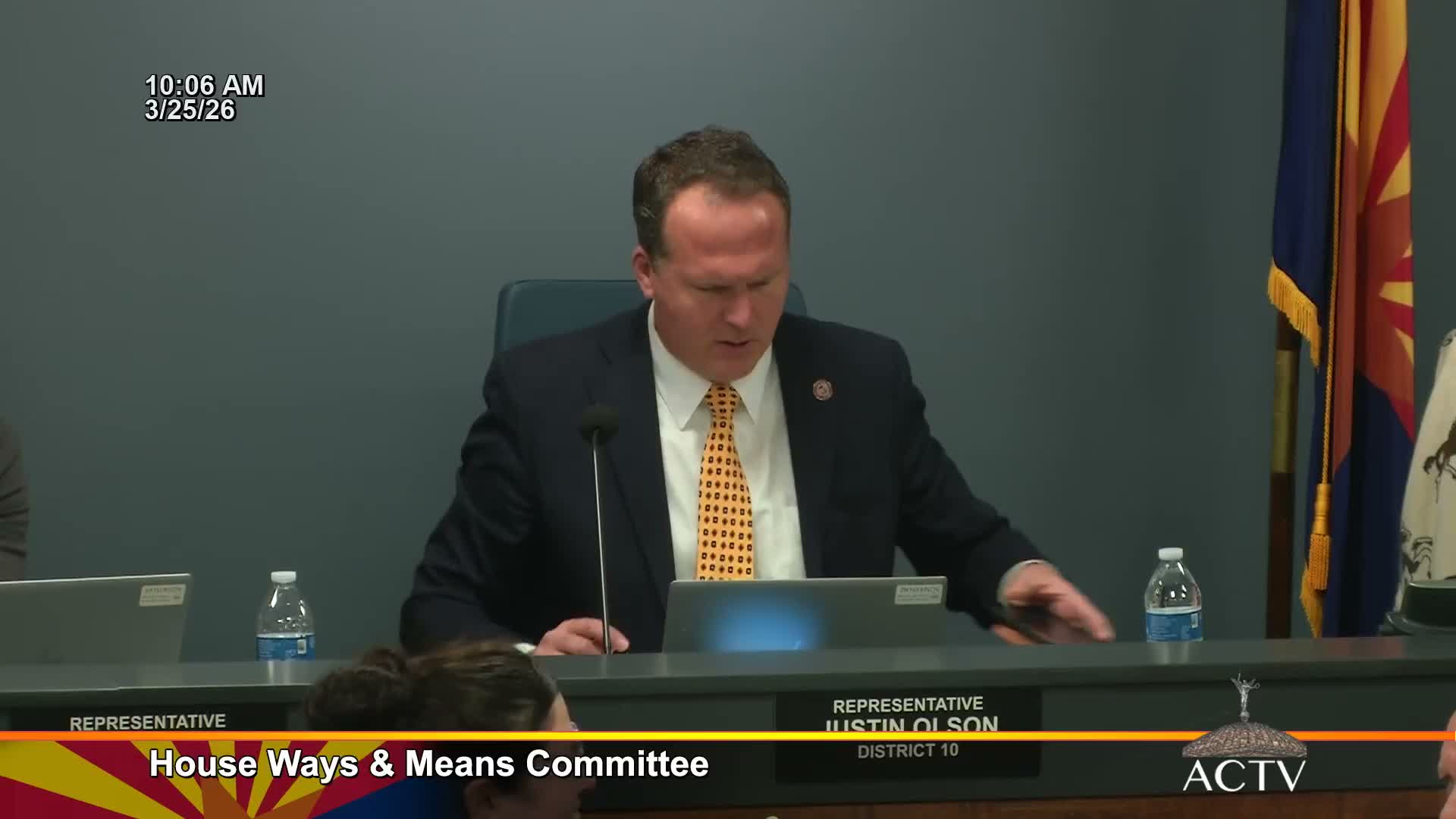
The House Ways and Means Committee on March 20 voted to return two related measures to the House with due-pass recommendations that would let state entities interact with virtual currencies while leaving decisions to the funds and agencies themselves.
A staff presenter described Senate Bill 10 42 as authorizing the state treasurer or a state retirement system “to invest in virtual currency holdings” and said the bill would be permissive rather than mandatory. Staff also explained Senate Bill 10 43 would provide a mechanism for a state agency to accept virtual currency as a method of payment, noting an agency would have to enter an agreement with a virtual-currency provider to handle transactional conversion.
Committee members repeatedly emphasized that the bills were permissive. Representative Livingston confirmed during questions that the measures “allow, it does not mandate.” Vice Chair Cuppert acknowledged personal hesitation about government involvement in virtual currency but said he would vote to advance the bills “to see where this goes.”
Advocates for study of digital-asset investments also won committee approval for Senate Concurrent Resolution 10 33, which “encourages” the Arizona State Retirement System and Public Safety Personnel Retirement System (PSPRS) to monitor digital-asset ETFs and report on feasibility, risks and potential benefits before the 2058 legislative session. Chairman Olsen said the resolution asks the funds to “closely monitor the development in Bitcoin exchange-traded funds and other digital exchange-traded funds and consider the implications of including such assets in their investment portfolio.”
Votes: SB 10 42 and SB 10 43 were returned with due-pass recommendations by roll calls recorded in committee. Members expressed a mix of caution and support: recorded tallies on the two bills were 5 ayes and 3 nays. The concurrent resolution passed by a 5–3 margin as well.
Why it matters: The measures would enable state agencies and public pension funds to explore cryptocurrency-related tools and investments without mandating them. Supporters said the permissive design preserves fiduciary discretion and could create efficiency for taxpayers who prefer to pay with digital assets; skeptics raised concerns about volatility and the risk to retirement funds.
What’s next: All three measures proceed with due-pass recommendations to the full House. Committee members said they expect to continue work and clarifying conversations before floor action.