Get Full Government Meeting Transcripts, Videos, & Alerts Forever!
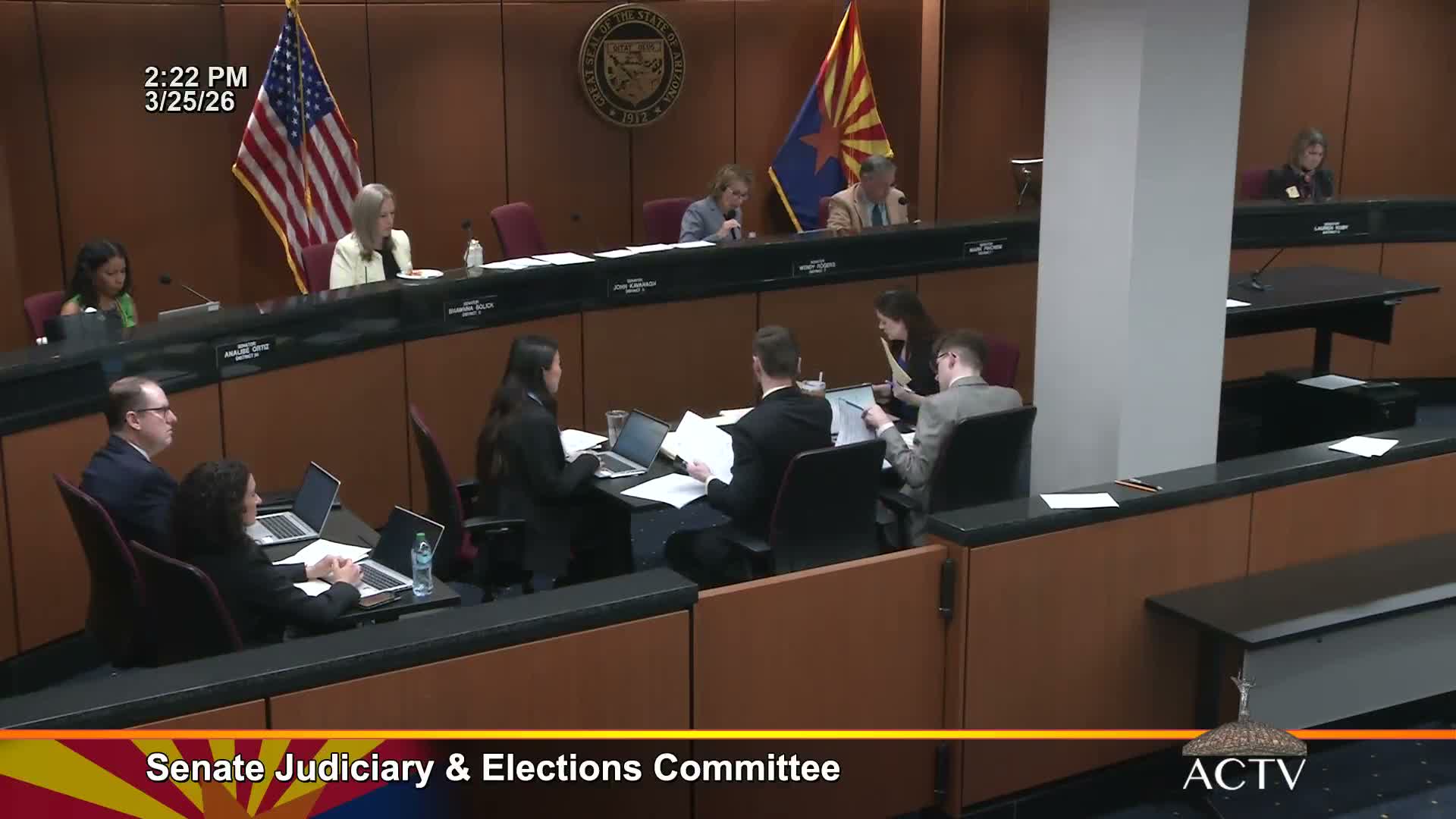
Panel backs bill raising penalties for buyers of sex and sealing records for trafficking victims; enforcement, victim‑protection tradeoffs debated
Summary
HB 2720, which increases penalties for buyers of sex to deter demand and allows trafficking victims convicted of prostitution to petition to seal records, received a do‑pass recommendation after supporters including law enforcement and survivors argued it deters exploitation while opponents warned that without guardrails victims could be swept into felony prosecutions.
House Bill 2720, presented to the Senate Judiciary and Elections Committee, would expand the crime of prostitution to include paying or offering to pay for sex, create minimum sentencing requirements for buyers, levy a $200 assessment per conviction to an anti‑human‑trafficking fund, and allow trafficking victims whose convictions are vacated to petition immediately to seal records related to the offense.
Representative Selena Bliss, the sponsor, described the bill as a mirror of earlier legislation…
Already have an account? Log in
Subscribe to keep reading
Unlock the rest of this article — and every article on Citizen Portal.
- Unlimited articles
- AI-powered breakdowns of topics, speakers, decisions, and budgets
- Instant alerts when your location has a new meeting
- Follow topics and more locations
- 1,000 AI Insights / month, plus AI Chat