
Senate HHS advances bill to strengthen kinship foster care; DCS flags reporting timing concern
Get AI-powered insights, summaries, and transcripts
Sign Up Free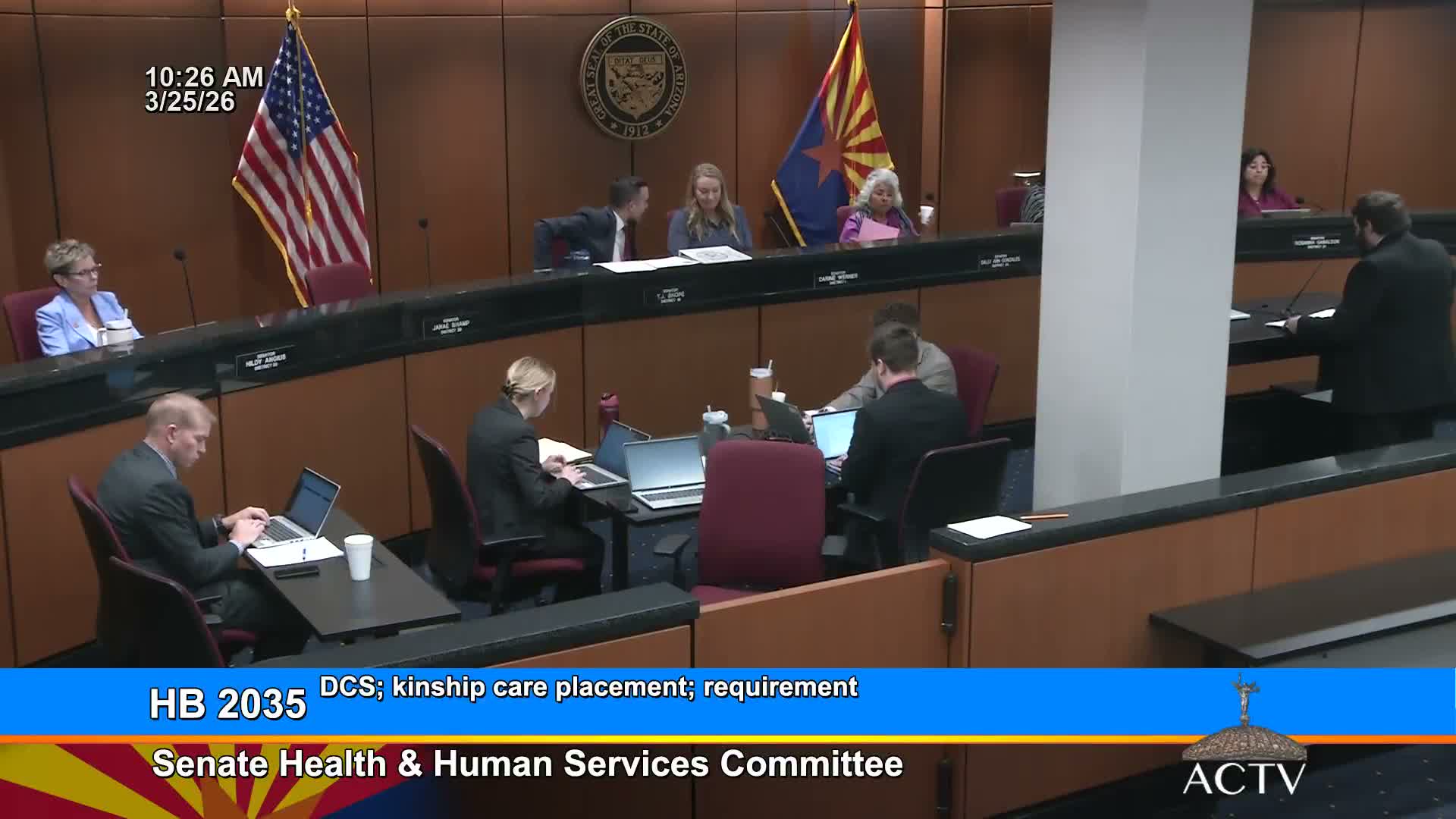
Summary
HB 2035, which would presume extended family members be considered for kinship foster placement and require written findings when kinship is denied, received a due‑pass recommendation after proponents described benefits for children and Department of Child Safety staff said one implementation provision may create timing conflicts with protective hearings.
The Arizona Senate Health and Human Services Committee gave House Bill 2,035 a due‑pass recommendation after proponents and the Department of Child Safety discussed how the measure would change kinship placement rules.
Rep. Lisa Fink's bill would add extended family members — including great‑aunts, cousins and godparents — to the list of people who qualify as kinship foster‑care placements and would create a presumption in favor of placing children with kin when it is in the child’s best interest. The bill also requires written explanations when kinship placement is denied and aligns state policy with federal priorities under the Family First Prevention Services Act, according to the sponsor statement read for the record.
Multiple advocates testified in support. Roy Dawson, executive director of the Arizona Center for African American Resources, said low kinship payment rates and inconsistent DCS practice discourage families from taking on kinship care. Jordan Dancy, a parent aide for a third‑party DCS provider, said the shift from 'promote' to 'presume' could keep siblings and extended relatives together and reduce trauma. Former foster youth Corey Swint described personal experience that, he said, underscores the need for stronger kinship placement policies.
Selena Moreno, chief legislative liaison for the Department of Child Safety, said the department is neutral on the bill’s intent and already promotes kinship placements in policy, but raised a practical concern: the bill requires certain written reports be submitted five days before a preliminary protective hearing, while statute typically requires those hearings within five to seven days, making the 'five days prior' deadline difficult to meet in some cases.
Committee members discussed the operational issue. Chair members then moved the bill and the committee recorded a due‑pass recommendation (committee tally recorded on the record).
The committee's recommendation advances the bill to the next legislative stage; DCS and the sponsor indicated ongoing discussions on timing language for implementation.