Committee backs bill to bar incorporation by officers convicted of trafficking; ACLU raises constitutional concerns
Loading...
Summary
The committee recommended HB 4070, which would prevent corporate formation when an officer, director or trustee has a trafficking conviction and extend civil liability to facilitators; survivor advocates supported the change as a prevention tool while the ACLU warned the definitions could ensnare victims or innocent actors.
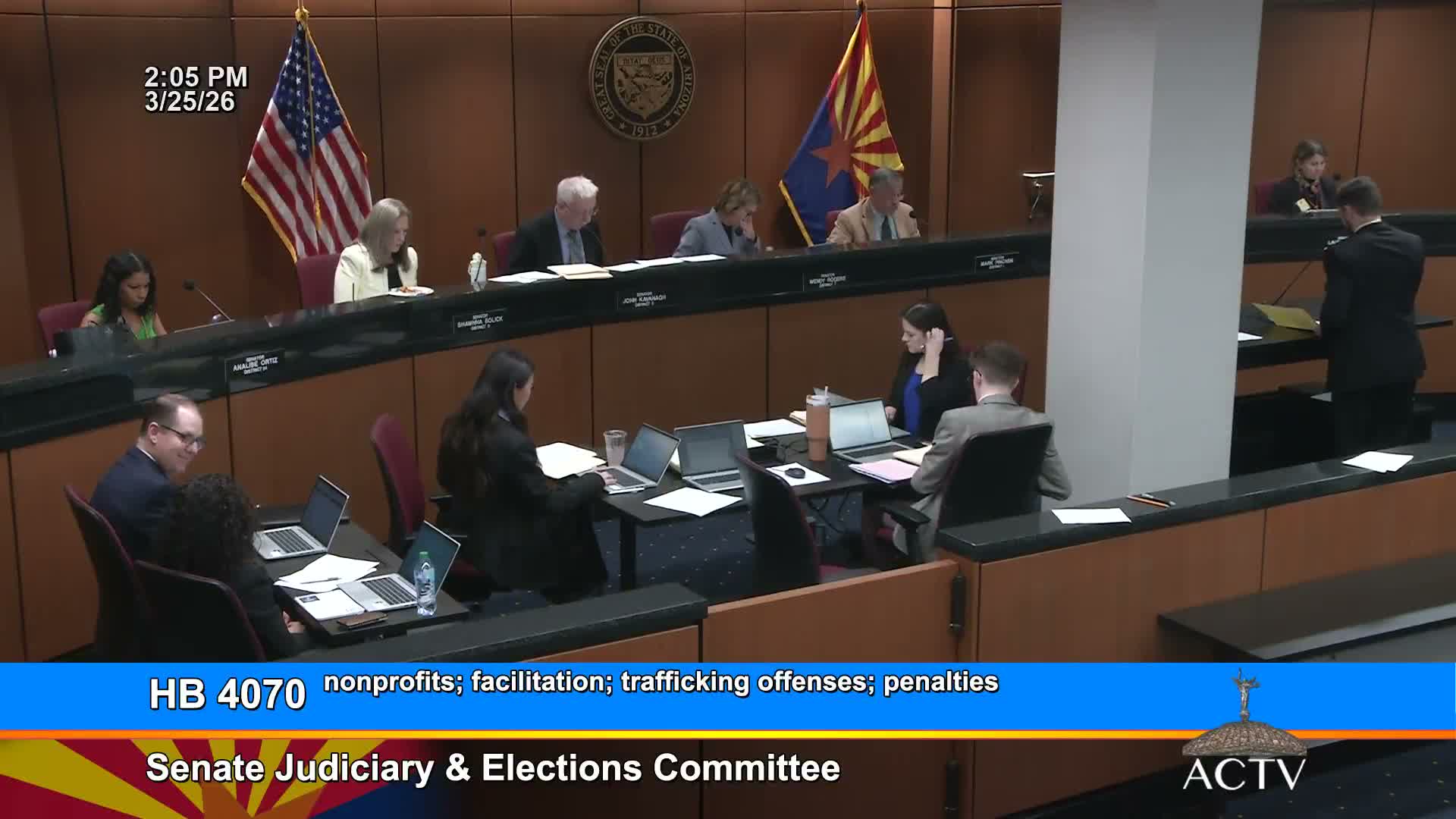
The Senate Judiciary and Elections Committee voted to give House Bill 4070 a due‑pass recommendation after adopting a two‑page amendment in the chair's name that adds a definition of "facilitate" (requiring knowledge and provision of means or opportunity).
Sponsor remarks framed the measure as a "corporate death penalty" aimed at stripping governance privileges from individuals who have been convicted of human trafficking offenses and deterring organizations from enabling trafficking. The sponsor said using corporate governance mechanisms — disallowing incorporation or other protections for officers with trafficking convictions — is a way to remove resources and incentives that could enable exploitation.
Survivor testimony supported the proposal. Sherry Lopez, president of the Arizona Human Trafficking Survivors Coalition, said removing access and opportunity protects people who might otherwise be exploited: "When you remove access, you remove opportunity. When you remove opportunity, you protect people."
The ACLU of Arizona's Jean Woodbury opposed the bill as written, saying its boundaries are "fuzzy" and that people who have been trafficked may at times be charged with trafficking offenses; she warned the bill could drag in unintended categories of individuals and chill lawful conduct. Committee members debated the scope of the facilitator definition and the potential for overbreadth; the adopted amendment narrowed the definition to require knowledge that another person is committing or intends to commit an unlawful act and that the facilitator provided a means or opportunity.
Committee roll call recorded a 5–2 recommendation to send the amended bill forward. Sponsors and opponents said they were open to further technical changes on the floor.