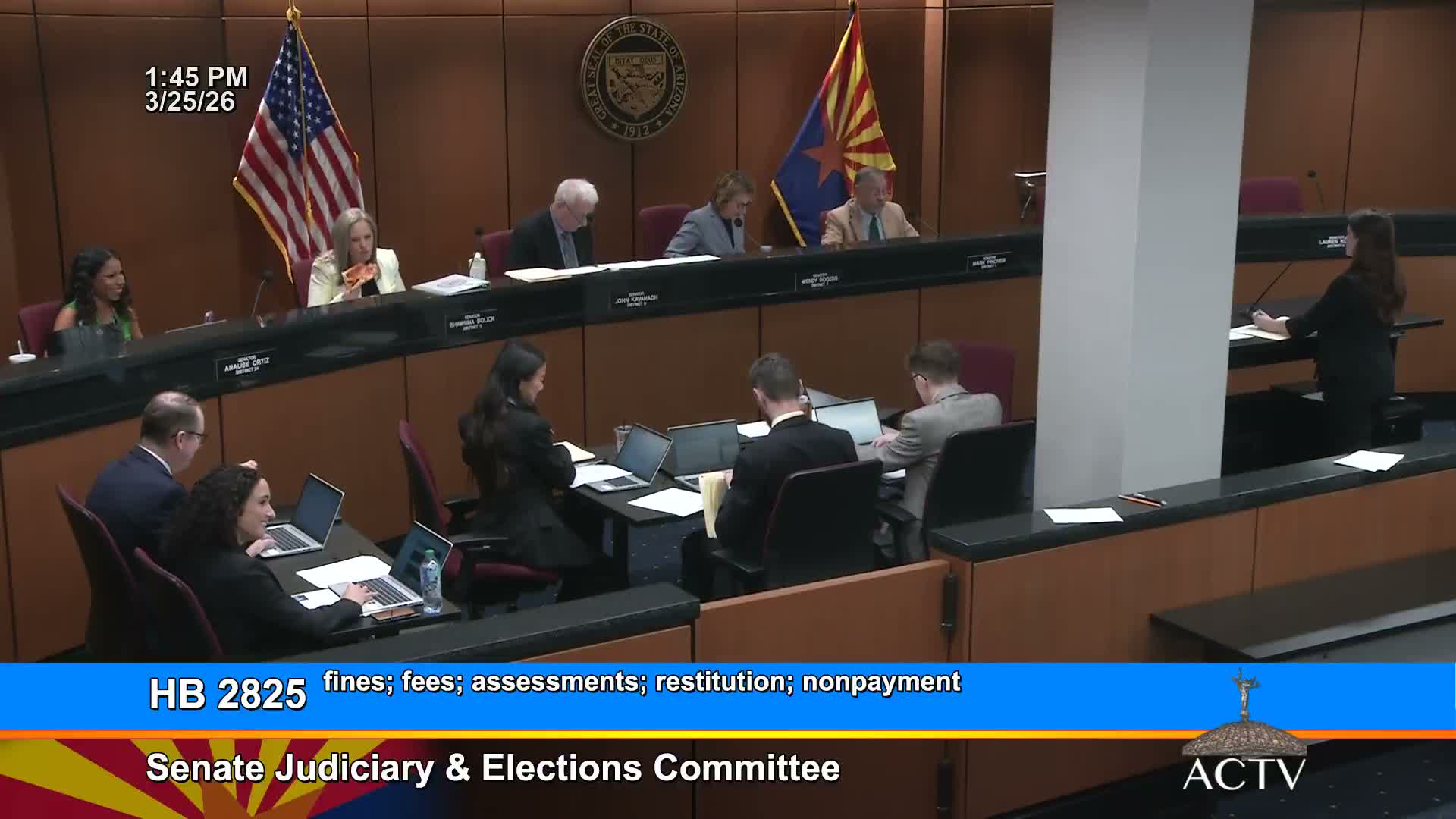
Senate committee advances bill shifting some restitution enforcement from criminal to civil process; victims' advocates warn of lost tools
Loading...
Summary
The Senate Judiciary Committee gave HB 2825 a do‑pass recommendation after adopting an amendment that mandates courts issue summonses before civil default findings; victim‑rights attorneys and some county attorneys said the change removes key criminal enforcement tools and could hinder restitution.
The Senate Judiciary and Elections Committee advanced House Bill 2825 on a 5–2 committee vote after adopting a four‑page amendment from Senator Rogers that requires courts to issue summonses to defendants before entering civil default determinations for unpaid fines, fees and restitution.
Supporters said the bill streamlines collection and reduces the fiscal and personal harms of jailing people who cannot pay. Representative (sponsor) Lopez told the committee the bill "would streamline collections for restitution through a civil process" and was designed to "help improve collections on restitution for defendants with resources, therefore, making victims whole in a more streamlined way." She said the measure passed the House unanimously and that she remained open to working with stakeholders.
Opponents — including victim‑rights attorneys, county attorney offices and several judges — argued the bill removes potent criminal remedies that incentivize payment and protect victims. Randall Udelman of the Arizona Crime Victim Rights Law Group testified, "At the end of the day, it does not advance victims' rights. It takes them away. It claws them back and requires victims to pursue civil remedies." Maricopa County trial‑court judge Jennifer Germaine and pro‑bono victim attorney Jamie Balsam described scenarios in which removing warrants or contempt tools would leave victims with fewer practical options to secure restitution and could impede enforcement in cases involving serious fraud against elderly victims.
Committee discussion emphasized data and implementation. Sean Reeve of Justice Action Network, who supported the bill, cited examples from license‑reinstatement programs and an Oklahoma rural county study he said showed little benefit from incarceration for payment. Senators who voted no asked the sponsor to consider separating criminal restitution cases from civil enforcement or return with additional guardrails before floor consideration.
By committee rule, the amendment clarified that the statute's procedures "may not be interpreted as limiting the rights and remedies available to victims as prescribed by the constitution of Arizona." The committee record shows the bill, as amended, received a do‑pass recommendation by a 5‑2 vote. The measure will move to the full Senate where sponsors and opponents indicated they expect further amendments and debate.