
Tennessee House advances bills on out‑of‑state abortion‑pill liability, paid‑protester liability and nonprofit claims
Get AI-powered insights, summaries, and transcripts
Sign Up Free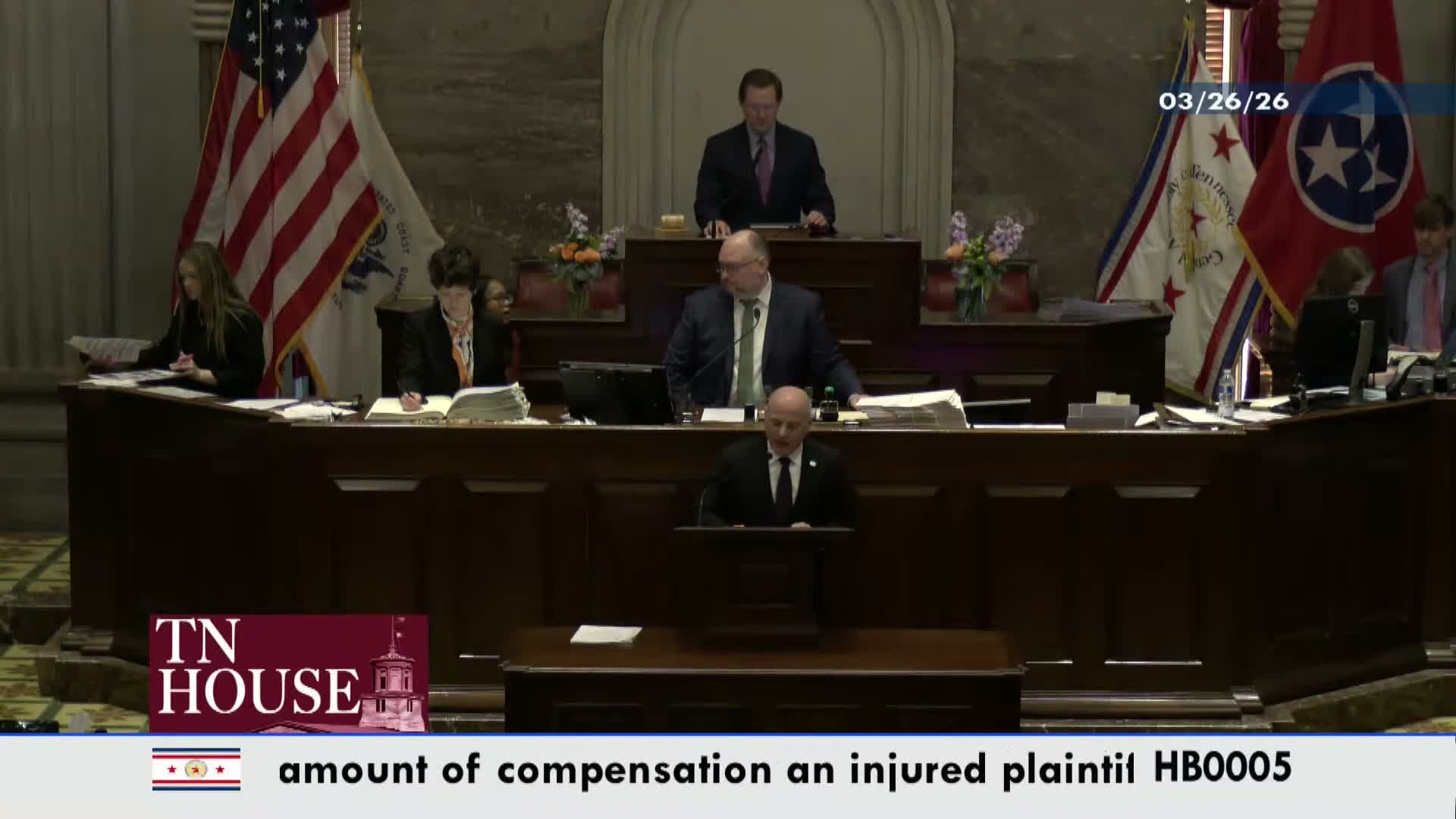
Summary
During a March 30 floor session, the Tennessee House passed a set of bills including a civil‑liability measure targeting out‑of‑state abortion‑pill providers, a law allowing civil claims against financiers of paid protesters, and expedited procedures for charities to recover nonprobate assets. Several measures drew extended debate and recorded roll‑call votes.
The Tennessee House on March 30 passed a series of bills after several hours of debate, approving measures that create a civil wrongful‑death cause of action tied to out‑of‑state abortion‑pill providers, extend civil liability to entities that pay demonstrators who commit certain offenses, and streamline how charities recover nonprobate assets held by financial institutions.
The most contentious measure, Senate Bill 419 (substituted on the floor), was described by the sponsor, Chairman Boso, as a tool to "deter those out‑of‑state actors" who send abortion pills into Tennessee. "This is a pro‑life bill," Chairman Boso said on the House floor, arguing the legislation would complement existing criminal statutes and provide a civil remedy for families that lose an unborn child.
Representative Lance Behn, who objected to the bill, countered that the proposal raises federal constitutional concerns. "As this bill clearly violates the federal interstate commerce clause by preventing prescription drugs from interstate travel, I move that this house bill be recommitted to the judiciary committee for further consideration," Representative Behn said. The motion to recommit failed, and the House proceeded to a roll‑call vote; the clerk announced a recorded tally as reported on the floor.
Another high‑profile measure, enacted as Senate Bill 22‑22 (substituted for HB 2109), allows civil suits against a person or entity that provides compensation to demonstrators who later engage in certain criminal acts during a protest, such as aggravated rioting, disorderly conduct, or property damage. Sponsor Chairman Boyd said the bill targets those who "finance" violent or criminal conduct at demonstrations. Opponents warned about vagueness and potential effects on lawful, paid staff of organizations; supporters said the bill is meant to hold accountable outside actors who orchestrate or profit from violent demonstrations.
On a separate track, the House unanimously approved Senate Bill 26‑42, which creates a streamlined affidavit process for charities and nonprofits to obtain nonprobate assets from financial institutions and imposes timelines and guardrails to speed payments to intended nonprofit beneficiaries.
Votes at a glance
- Senate Bill 419 (as substituted): creates a civil cause of action tied to out‑of‑state abortion‑pill delivery; moved by Chairman Boso; recorded vote announced on the floor (tally reported on the record). (See provenance below.)
- Senate Bill 22‑22 (substitute for HB 2109): permits civil liability for persons/entities providing compensation to demonstrators who commit listed criminal offenses; moved by Chairman Boyd; passed on recorded vote.
- Senate Bill 26‑42: creates a uniform affidavit process for charities to claim nonprobate assets from financial institutions; passed (ayes reported on the floor).
Context and next steps
Sponsors said the bills respond to problems they said are pressing in Tennessee — from deterring out‑of‑state delivery of abortion pills, to holding accountable organizers who profit from violent demonstrations, to getting funds more quickly into the hands of nonprofits. Opponents raised constitutional and due‑process questions about the first two measures and warned about vague definitions that could sweep in lawful activity or paid staff.
Where debate produced legal or enforcement questions, sponsors noted the role of courts and future implementation guidance. Following passage, affected parties and attorneys could challenge portions of the measures in court; legislators also left open the possibility of technical fixes in future sessions. The House recessed after completing the day's calendar and announced committee schedules for the coming days.
(Quotes are drawn from floor debate and are attributed to speakers who spoke on the record.)