
Senate approves fund to funnel tourism property proceeds into park maintenance
Get AI-powered insights, summaries, and transcripts
Sign Up Free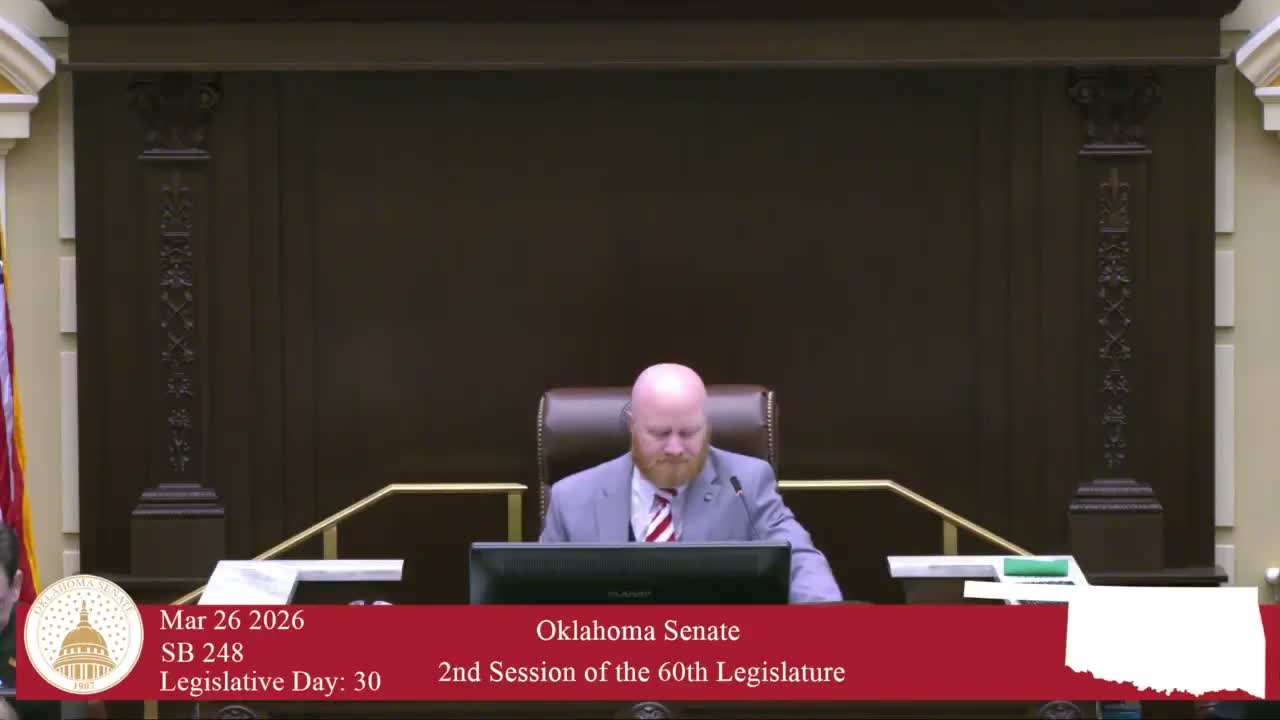
Summary
Senate Bill 248 creates a real‑property proceeds revolving fund to direct proceeds from Department of Tourism property sales into state parks maintenance and capital improvements; the measure passed after extended questioning about oversight and whether agencies could use proceeds to buy additional property.
Senator Logan presented Senate Bill 248 as a mechanism to ensure proceeds from the sale, transfer or lease of Department of Tourism real property are reinvested into state park maintenance and capital improvements, tying the use of proceeds to the agency's five‑year plan. "This will make sure that the sale of the property is insured, that it goes to deferred maintenance on this particular language," Logan said when introducing the floor substitute.
Several senators pressed the author on practical and governance questions. Minority leader Kurt questioned whether the change would reduce legislative oversight by returning proceeds outside the annual appropriations process; Logan said the bill earmarks proceeds for deferred maintenance and, in his view, increases transparency. Senator Devers repeatedly asked what would prevent an agency from selling assets primarily to generate internal funding or from buying additional property with proceeds; Logan replied the bill limits use to deferred maintenance and that the language did not create an apportionment scheme.
Supporters including Senator Board and Senator Murdoch called the measure "common sense" to address roughly $200 million in deferred maintenance needs at tourism facilities and to make agencies use existing assets responsibly. Opponents argued the bill could shift accountability and worried about who decides capital projects. After debate the Senate advanced the measure and, on final reading, the clerk recorded 30 aye votes and 14 nays; the bill was declared passed.
Senator Logan said the intent is not to enrich agencies but to give them a path to maintain the lodges and facilities they already own; he told senators the auction requirement would aim for market value and that proceeds would be used only for deferred maintenance rather than operations.