
Senate approves state model for campus free-speech policies after heated exchange
Get AI-powered insights, summaries, and transcripts
Sign Up Free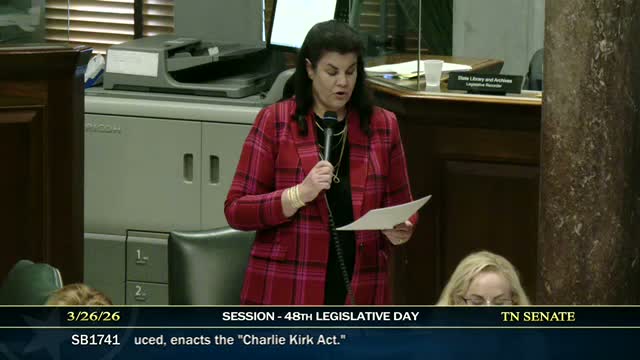
Summary
SB 17 41 requires public colleges and universities to adopt 'freedom of expression' and neutrality policies; sponsors said it protects student speech, critics said it constrains campus responses to safety and civil-rights issues. The bill passed (Ayes 26, Nays 6).
The Tennessee Senate passed SB 17 41 on third and final consideration after extended debate over the role of public colleges in managing speech and campus safety.
Senator Rose, the bill's sponsor, said the measure — modeled on the University of Chicago's statement on free expression — "swings both ways," protecting the right of invited speakers and the right of students to hear diverse viewpoints. The amendment adopted on the floor requires institutions to adopt policies prohibiting disinvitation for protest threats, protecting viewpoint diversity and restricting institutional discrimination based on religious or political viewpoints.
Opponents, including Leader Ackberry and Senator Yarbrough, argued the bill could tie universities' hands during safety incidents and suppress counter‑speech. Leader Ackberry questioned whether neutrality provisions would prevent institutions from taking moral or civil‑rights stands during major incidents and warned neutral posture can translate into silence.
Senator Rose said the law permits campuses to bar speakers who pose a legitimate public-safety risk or have a record of encouraging violence. "It absolutely would allow them to prohibit someone that had expressed a desire to harm," Rose said in response to a question about violent actors.
The Senate adopted the education committee amendment and passed the bill by recorded vote: Ayes 26, Nays 6. Supporters argued the change would protect open debate; critics said it may limit universities' discretion to respond to local circumstances.
What’s next: The bill, having passed the Senate, will be transmitted according to enrollment procedures; higher-education institutions may need to revise campus policies and guidance once the statute is finalized.