Bill creating civil remedy for excessive marijuana smoke moves forward after heated debate
Loading...
Summary
SB 17-25 would give residents a way to sue when marijuana smoke or odor drifting from a neighbor’s property ‘‘substantially interferes’’ with use and enjoyment. Supporters cited school and home exposure problems; opponents raised legal concerns under Arizona’s voter-protection rules and warned it could criminalize medical patients.
Sen. Mesnard presented SB 17-25 as a narrowly tailored civil remedy for cases where marijuana smoke or odor drifting onto another property ‘‘substantially interferes’’ with use and enjoyment. The sponsor said the bill was intended to balance private-property and public-health interests, provide a civil path when municipal nuisance ordinances don’t exist, and avoid criminalizing ordinary conduct except for willful defiance of a court abatement order.
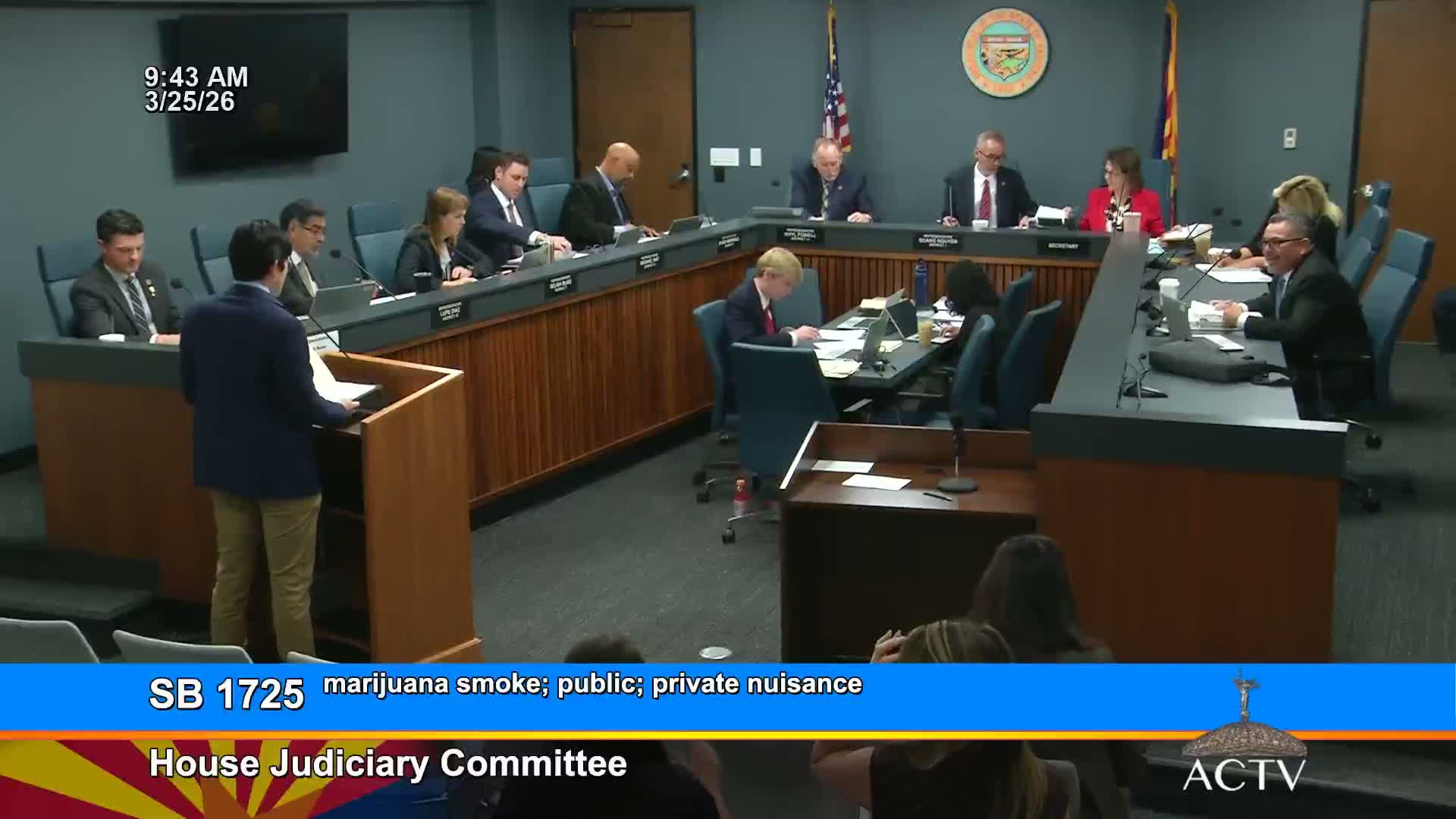
Public commenters included a 13-year-old student who described recurring marijuana smoke drifting onto school grounds that made classmates feel nauseous and distracted, saying students "should not have to deal with the distraction and discomfort of marijuana smoke while we are trying to learn and pray." Medical-marijuana patients and advocates (including NORML and Arizona NORMl counsel) opposed the bill, arguing there are existing civil remedies, that the bill could disenfranchise cardholders and renters, and that parts of the draft may conflict with the Voter Protection Act (Prop 207). ACLU and other civil-rights advocates questioned whether criminal penalties in the bill would be consistent with Prop 207's limits.
Committee members discussed mitigation for medical-card holders, what constitutes 'excessive' smoke, and whether cities should remain the primary forum for nuisance disputes. The sponsor responded that the bill includes mitigating language for medical use and does not override municipal ordinances; he said litigation risk exists but that policy makers should not be paralyzed. After debate, the committee returned SB 17-25 with a do-pass recommendation.
Votes and next steps: the committee recorded an 8–1–1 result in favor of the bill; members signaled likely floor amendments and further stakeholder work on definitions and voter-protection concerns.