
Senate bars local school districts from using public funds to sue over accountability measures
Get AI-powered insights, summaries, and transcripts
Sign Up Free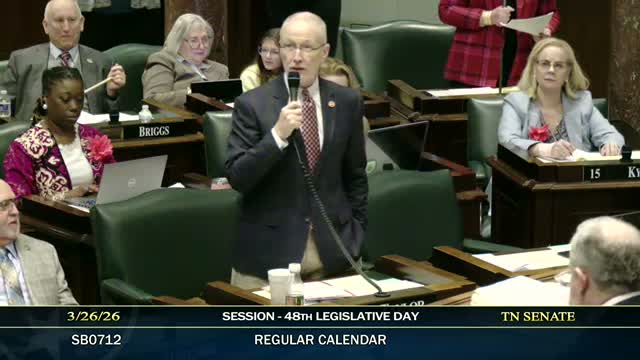
Summary
SB 712 passed after contentious debate. The bill prevents LEAs and public charter schools from using public funds to initiate or maintain civil actions against the state to contest accountability measures, while allowing private or alternative funding sources for litigation.
The Tennessee Senate narrowly approved SB 712 on third and final consideration, a bill that prohibits local education agencies and public charter schools from using public funds to file civil actions against the state or a state officer seeking to challenge accountability measures established under state law.
Senator Taylor, sponsor of the education committee amendment, said the bill aims to ensure that educational dollars are spent for classroom purposes rather than to fund lawsuits that would undermine accountability. "We want educational dollars to be spent for the purposes of educating a child and not engaging in a lawsuit against the state," Taylor said.
Opponents, including Senator Yarbrough, argued the prohibition could strip LEAs of a practical enforcement tool and warned it risks frustrating statutory remedies. "A law that can't be enforced is a suggestion," Yarbrough said, urging caution about restricting legal remedies built into the system.
The language leaves open the ability of districts to sue using private funding or nonprofit representation, but the floor debate centered on whether that option is a practical substitute for public funding in smaller or poorer districts. Leader Ackberry asked whether the bill targeted a specific situation and warned about unintended consequences for small districts that lack access to private counsel.
After extended questioning and debate, the Senate passed the bill on third reading: Ayes 25, Nays 6. Supporters said the bill only prevents use of public funds for suits over accountability measures and does not bar private litigation; opponents said it narrows the enforcement options available to districts seeking to vindicate rights created by statute.
What’s next: The measure proceeds through enrollment and transmittal steps; floor sponsors said districts could still bring suits using private funds or third-party representation.