Committee advances nursing‑board reform after testimony from nurses and board officials
Loading...
Summary
House Bill 2408, which sets time frames for Board of Nursing investigations and allows limited expungement of disciplinary records, received a do‑pass as amended recommendation after sharp debate. Board officials warned removal of board authority over education could harm patient safety; nurses urged faster complaint resolution and expungement options.
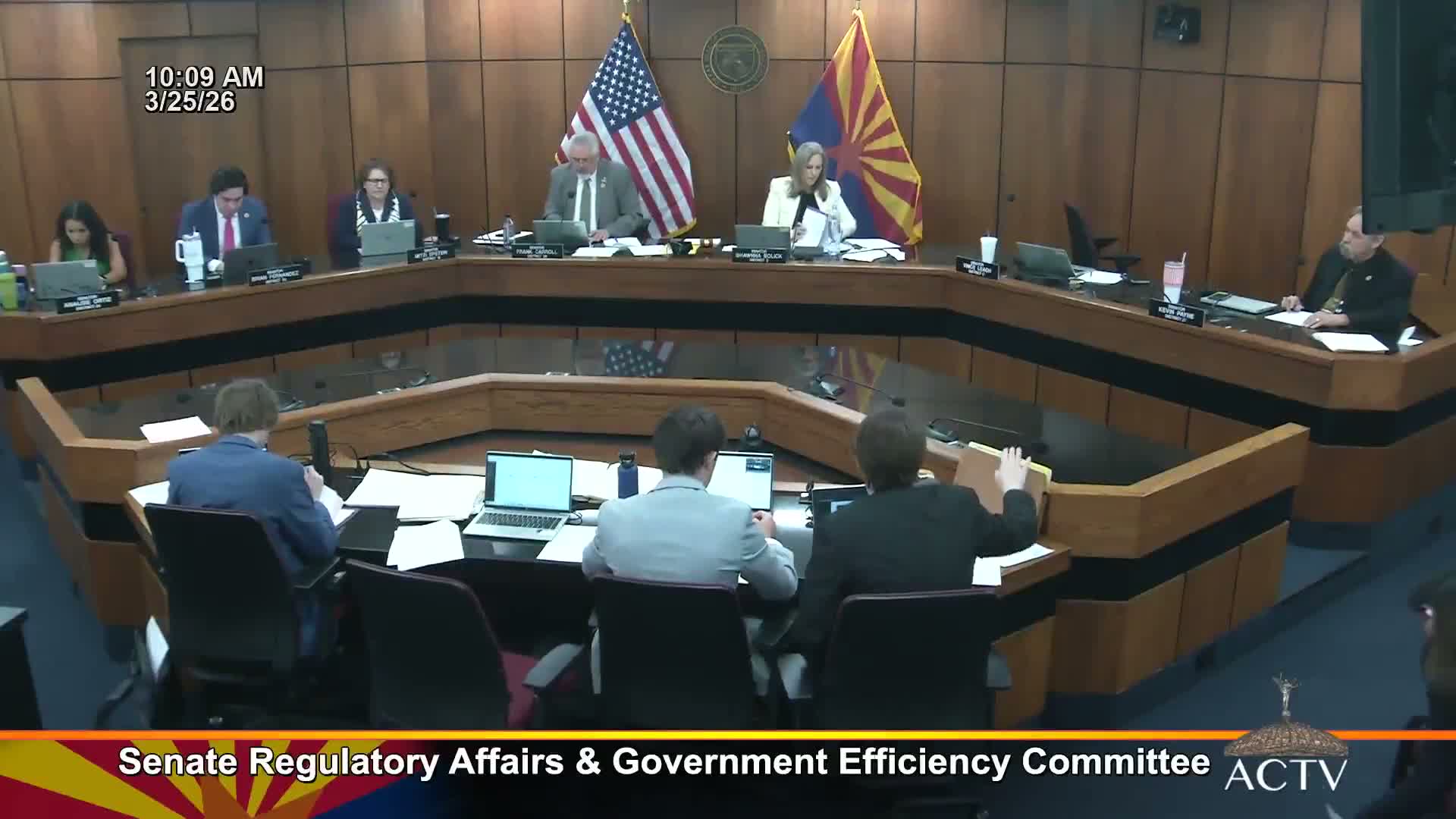
The Senate Regulatory Affairs Committee voted to advance House Bill 2408 with amendments after hours of testimony from nursing regulators, educators and practicing nurses.
Representative Willoughby, the bill sponsor, said the measure updates complaint investigation procedures at the Arizona Board of Nursing, prioritizes complaints that pose risk to patients, allows the board to keep complainants’ confidentiality in certain circumstances, and creates an expungement pathway for disciplinary actions that meet specified conditions. The committee considered and adopted a 20‑page Bullock amendment that reinstated and clarified board authority in multiple places and removed a proposed private right of action for civil damages.
Board officials and educators urged caution. Shannon Bitza, Associate Director of Education for the Arizona Board of Nursing, warned that stripping board oversight of nursing education would shift focus from clinical safety to ‘‘mass production’’ of graduates and could invite fraudulent programs. Dr. Lisa Smith, the board secretary and nursing educator, and Dr. Carol McCormick, Board of Nursing president, described risks to patients and cited the 2023 Operation Nightingale scandal as an example of consequences when oversight weakens. Dr. McCormick cited a fiscal estimate that meeting an aggressive 180‑day investigation deadline would require roughly $2.9 million in additional resources and could produce litigation risks for good‑faith staff decisions.
Nurses and nurse leaders who supported the bill said prolonged investigations have real harms for both the public and the accused. ICU nurse Chelsea Valdez and others described long delays in removing disciplinary notations that, they said, prevented nurses from advancing training and careers despite remediation. Supporters said adding timeframes and an expungement pathway is a necessary step toward fairness and transparency.
The committee adopted the Bullock amendment and moved the bill with a do‑pass recommendation as amended (transcript reports a committee tally of 5 ayes, 2 nays). The record shows continuing disagreement about the education‑oversight language and about resources to meet investigation deadlines; proponents said nurse‑fee revenues can support staffing increases while opponents urged caution about unintended consequences for public safety.
What’s next: The bill moves forward with the adopted amendment; floor negotiations are likely to center on funding to meet investigation timeframes and the precise division of authority between the Board of Nursing and education regulators.