
Bill to let victims request destruction of weapons used in violent crimes stalls amid evidence and due-process concerns
Get AI-powered insights, summaries, and transcripts
Sign Up Free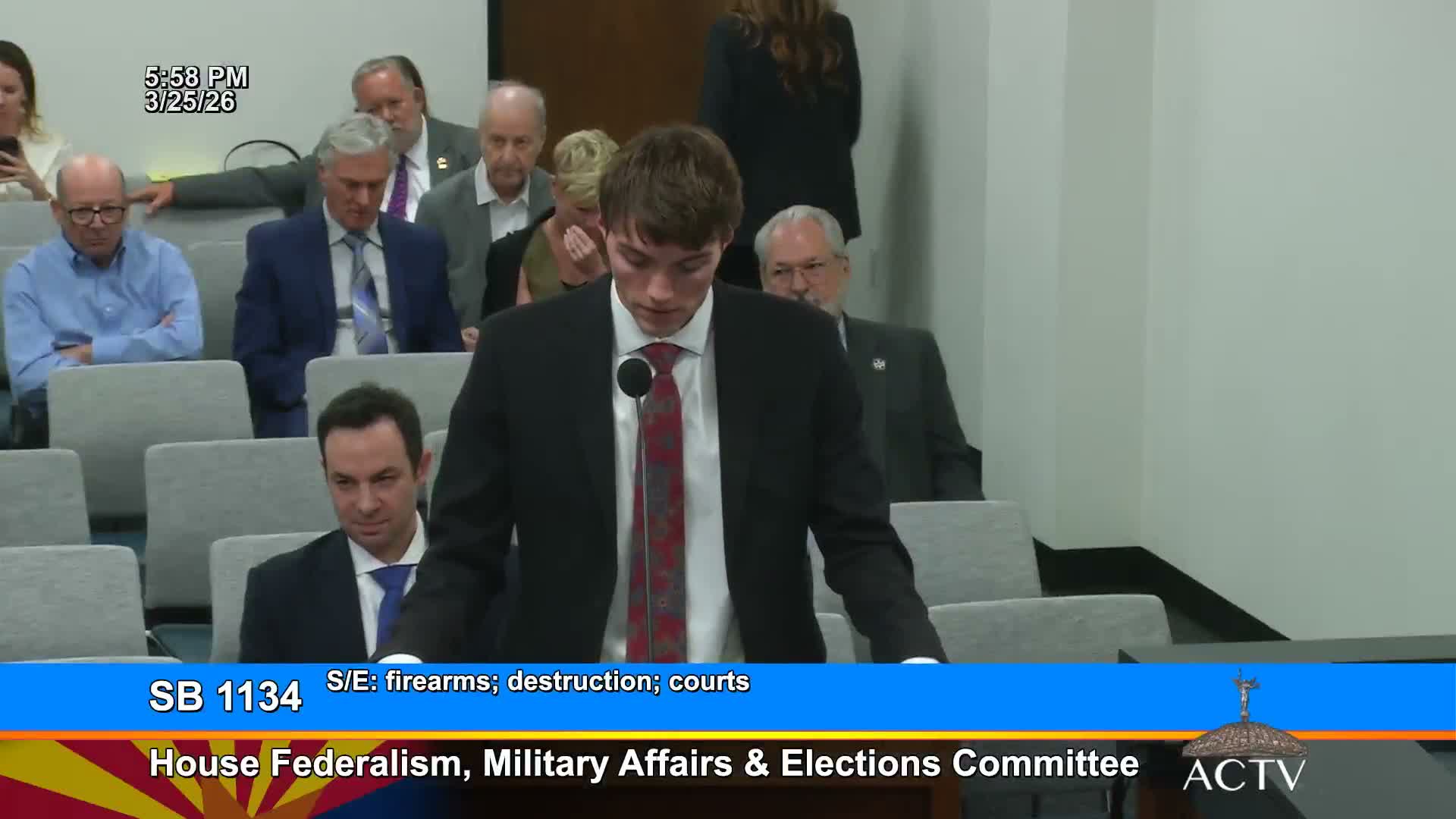
Summary
An amendment that would allow victims to request destruction of weapons used in homicides or offenses causing serious physical injury prompted emotional testimony from victims and law-enforcement supporters but also raised concerns that destroying evidence could impair appeals or exculpatory review; the committee adopted an amendment but the final amended bill did not pass the committee vote.
A strike-everything amendment to Senate Bill 11-34 would permit victims of homicide or serious-injury offenses to request destruction of the deadly weapon or dangerous instrument once a prosecutor certifies it is no longer needed for evidentiary purposes. Families and victim advocates, including Julie Earthley (widow of Phoenix Police Officer Nick Earthley), testified they do not want weapons that killed their loved ones to be sold or re-enter the market; Earthley said she had learned the weapon that killed her husband remained in city possession and was slated for auction.
Law-enforcement representation (Joe Clurey, Arizona Police Association) and county attorneys supported a narrowly tailored mechanism that would allow transfer on paper to the victim's family and destruction by a licensed firearms dealer, while leaving evidentiary hold periods and appellate protections intact.
Other members and witnesses cautioned that destruction before appeals or remands could eliminate potentially exculpatory evidence, raise spoliation issues and create legal exposure; committee counsel and the sponsor discussed language to require a prosecutor notice that appeals are exhausted before destruction. The committee adopted the strike-everything amendment but the amended measure failed to pass the committee roll-call later in the hearing.