Arizona panel backs licensing, stiffer penalties for alternative nicotine products after divided testimony
Loading...
Summary
The Senate Regulatory Affairs Committee gave House Bill 4001 a do‑pass recommendation after testimony from retailers, health advocates and border‑security groups. The bill would require manufacturers and distributors of alternative nicotine products to be licensed, ban youth‑appealing marketing and raise penalties for sales to under‑21s; opponents warned of enforcement gaps without additional resources.
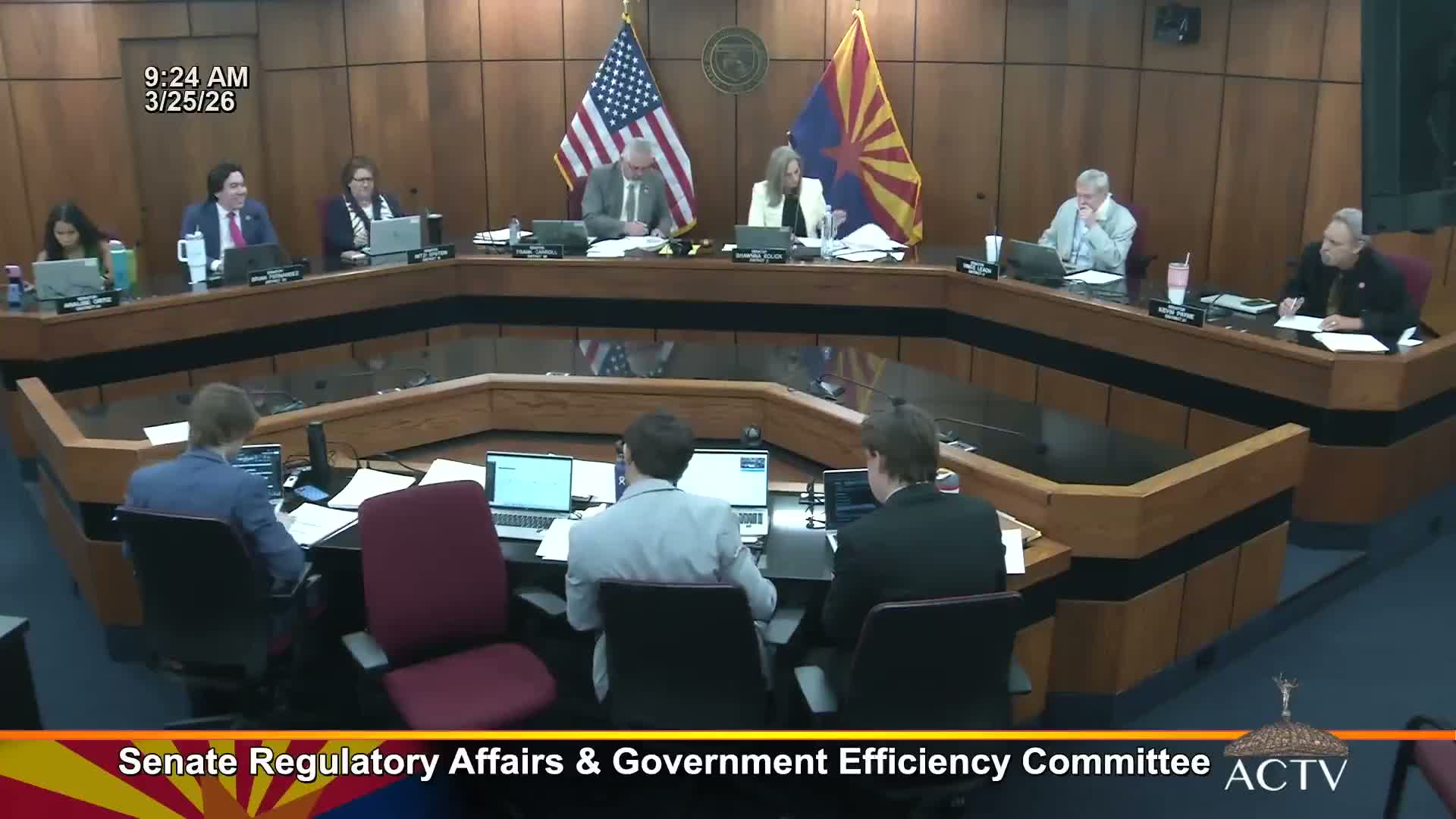
The Senate Regulatory Affairs and Government Efficiency Committee voted to give House Bill 4001 a do‑pass recommendation after hearing hours of testimony for and against the measure.
House Bill 4001 would require manufacturers and distributors of ‘‘alternative nicotine products’’ to obtain licenses beginning Jan. 1, 2028; ban advertising and device designs that appeal to minors; require retailers to verify age at point of sale; and substantially increase penalties for selling to anyone under 21, with a narrow exemption for active duty military 18 or older. Sponsor testimony described the changes as a supply‑chain fix that would let the state trace imported products and remove illicit stock from shelves.
Supporters included retailers and industry stakeholders who said the bill brings order to a market they described as a ‘‘Wild West.’’ John Paul Willett, a manufacturer and president of Arizona Innovates, said the measure creates ‘‘supply chain transparency’’ and requires manufacturers to provide product lists, liability insurance and toxicology reports so regulators can verify that products entered the U.S. legally. Joe Dickinson of the Border Security Alliance told senators the bill gives Arizona ‘‘teeth’’ to get illegal, mislabeled nicotine products off store shelves and protect children targeted by flavored or novelty items.
Public health groups expressed mixed views. Brian Hummel of the American Cancer Society Cancer Action Network said the bill ‘‘ignores proven solutions’’ such as a full tobacco retail licensing scheme that would generate enforcement revenue, and warned that the bill’s new category for alternative nicotine could leave gaps. Hummel and others said the tiered penalties in the bill are only meaningful if the Attorney General’s office or other enforcement agencies receive additional inspection resources; without them, they argued, habitual violators could evade the highest penalties.
Mark Osborne, testifying for Delta Dental, opposed provisions that would prohibit nonprofit dental insurers from acquiring and running dental clinics for indigent care; he said Delta Dental reinvests profits into services for underserved populations and that the bill’s current divestiture language would block beneficial nonprofit arrangements.
Sponsor advocates said the committee’s adopted amendment clarified technical drafting and that increased penalties, coupled with distributor/manufacturer licensing, will improve enforcement. The transcript records a committee vote that gave the bill a do‑pass recommendation (committee tally in the transcript: 6 ayes, 1 nay). The bill now moves to the next chamber stage with the sponsor and stakeholders continuing negotiations on enforcement resources and definitions.
What’s next: The bill carries an effective date for the licensing provisions of Jan. 1, 2028; supporters and opponents said they expect further negotiations on enforcement funding and the statutory definition of covered products as the measure proceeds through the Legislature.