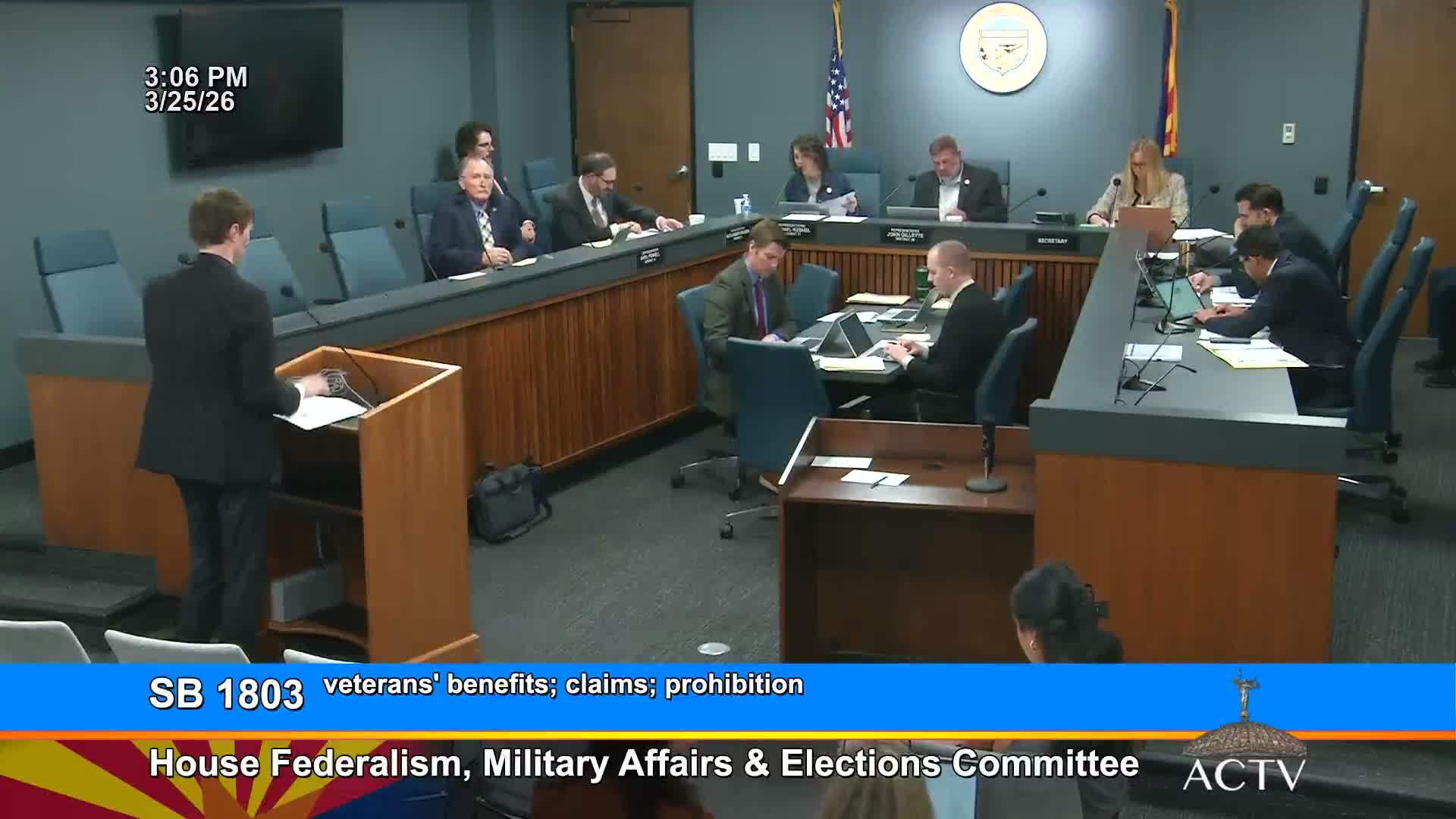
Veterans-benefits consultant bill collapses after heated committee fight over fee caps and practice-of-law risks
Loading...
Summary
Senate Bill 18-03, which would have regulated private veteran-benefits consultants with disclosure and fee caps, failed in committee after extensive testimony from industry witnesses who support guardrails and from VA-accredited attorneys and veterans who warned of consumer-protection and constitutional problems; the committee recorded 1 aye and 6 nays on the final motion.
The committee spent several hours on Senate Bill 18-03, a measure seeking to regulate unaccredited private companies that assist veterans with VA disability claims. The bill would have required public filing of standard fee agreements, capped contingency fees (a figure discussed in the hearing as "five times the increase" or $12,500, whichever was lower in stakeholder drafting), required disclosures about available free services, banned in-house medical exams, and created filing and enforcement mechanisms overseen by the attorney general.
Sponsor testimony argued the measure would add consumer protections for veterans and limit predatory practices. Matt Magnus, who identified himself as a registered lobbyist for Veterans Guardian and a Marine Corps veteran, testified the bill reflects industry practice and that the fee cap and disclosure requirements were developed with stakeholders and some veterans groups. He said the model was meant to prevent veterans from paying excessive upfront fees and to increase transparency.
Derek Divas, a VA-accredited attorney who practices for disabled veterans, testified neutral to opposed. Divas argued the bill as written did not create protections comparable to federal accreditation and that the businesses at issue sometimes engage in activities that amount to the unauthorized practice of law. He urged prohibitions on document preparation and higher-level reviews and said the bill must preserve safeguards available when accredited representatives or attorneys are involved.
Committee members pressed witnesses on litigation and regulatory history: representatives read from a 2019 VA cease-and-desist letter and a federal civil complaint alleging fraudulent practices by a named company; witnesses acknowledged litigation and said disputes were pending. Members also queried whether the bill would conflict with federal preemption for federally accredited representatives.
After extended debate and several offered amendments (including a Gillette amendment and an oral amendment to strike many regulatory provisions), the committee took the final motion to return the bill with a due-pass recommendation. The chair announced the result as 1 aye and 6 nays; the chair stated "the measure did not carry." No committee-level action advancing the bill was recorded in the hearing.