
Bill to bar state aid for 'low-earning' programs laid over amid concerns about services and enrollment
Get AI-powered insights, summaries, and transcripts
Sign Up Free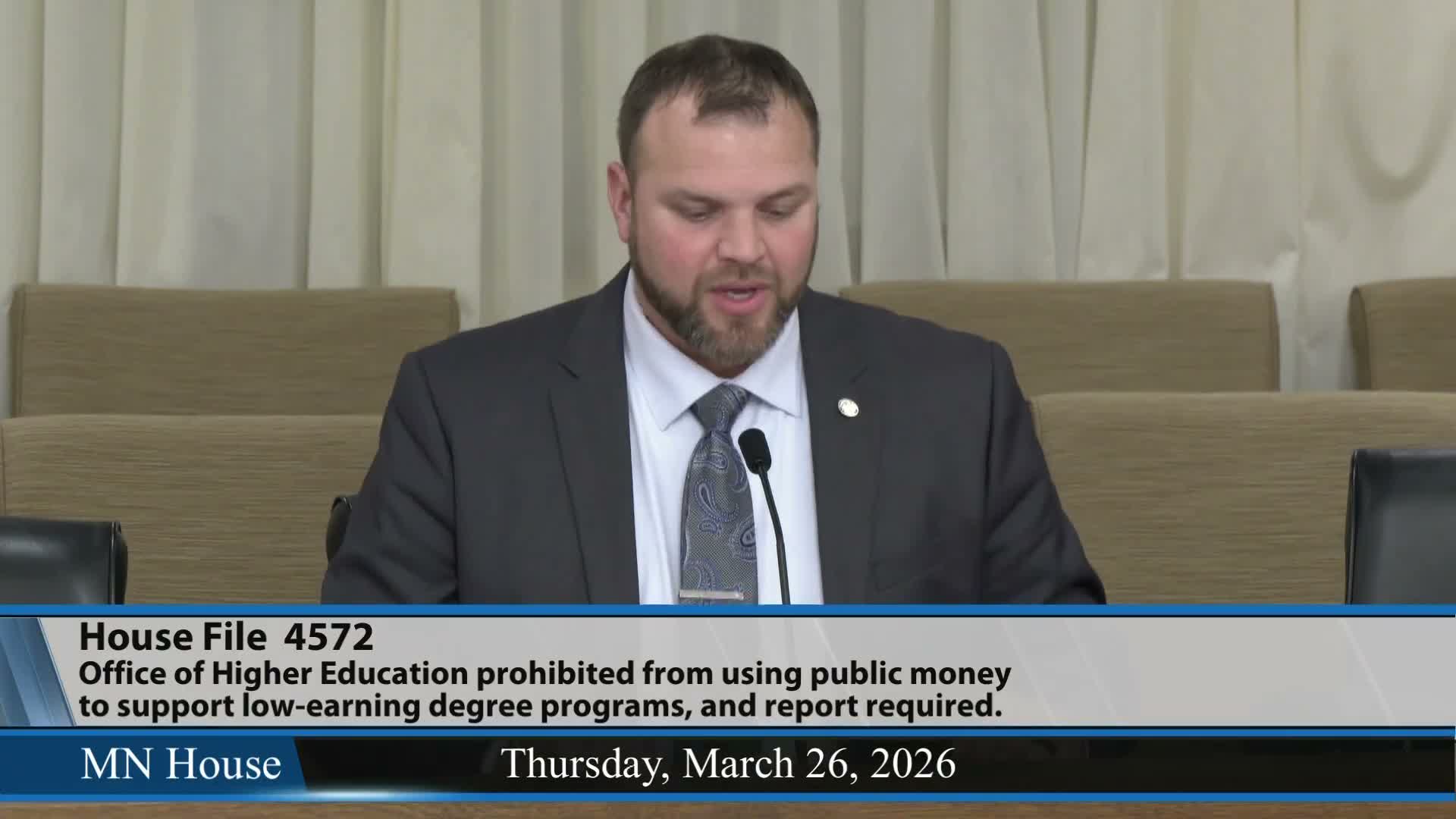
Summary
HF4572 would stop state financial aid from subsidizing postsecondary programs that lose federal eligibility for low graduate earnings. Testimony cited the federal 'do no harm' threshold; members requested more detail on program impacts (including disability-service programs and allied health) and enrollment effects, and laid the bill over.
Representative Duran presented House File 4572 to direct the Office of Higher Education not to allocate state aid to programs that lose federal eligibility under the "do no harm" earnings threshold. A remote testifier summarized that the federal minimum wage-equivalent threshold is a low bar and that only a small share of Minnesota programs are at risk, though some online allied-health master's programs appeared in preliminary federal data.
Members raised concerns about potential unintended consequences. Representative Hicks asked whether occupational-skills programs that serve students with disabilities at Ridgewater and Central Lakes College could be affected; Representative Coulter cautioned that some allied-health and child-care pathways could be labeled "low-earning" under broad federal metrics and that the state should consider whether wage outcomes reflect societal undervaluing of certain critical work rather than program quality.
Committee members requested additional information and the author agreed to work with stakeholders; HF4572 was laid over for further review and possible amendment.