
Bill to require vetted pool for U of M regent appointments sparks debate; laid on table
Get AI-powered insights, summaries, and transcripts
Sign Up Free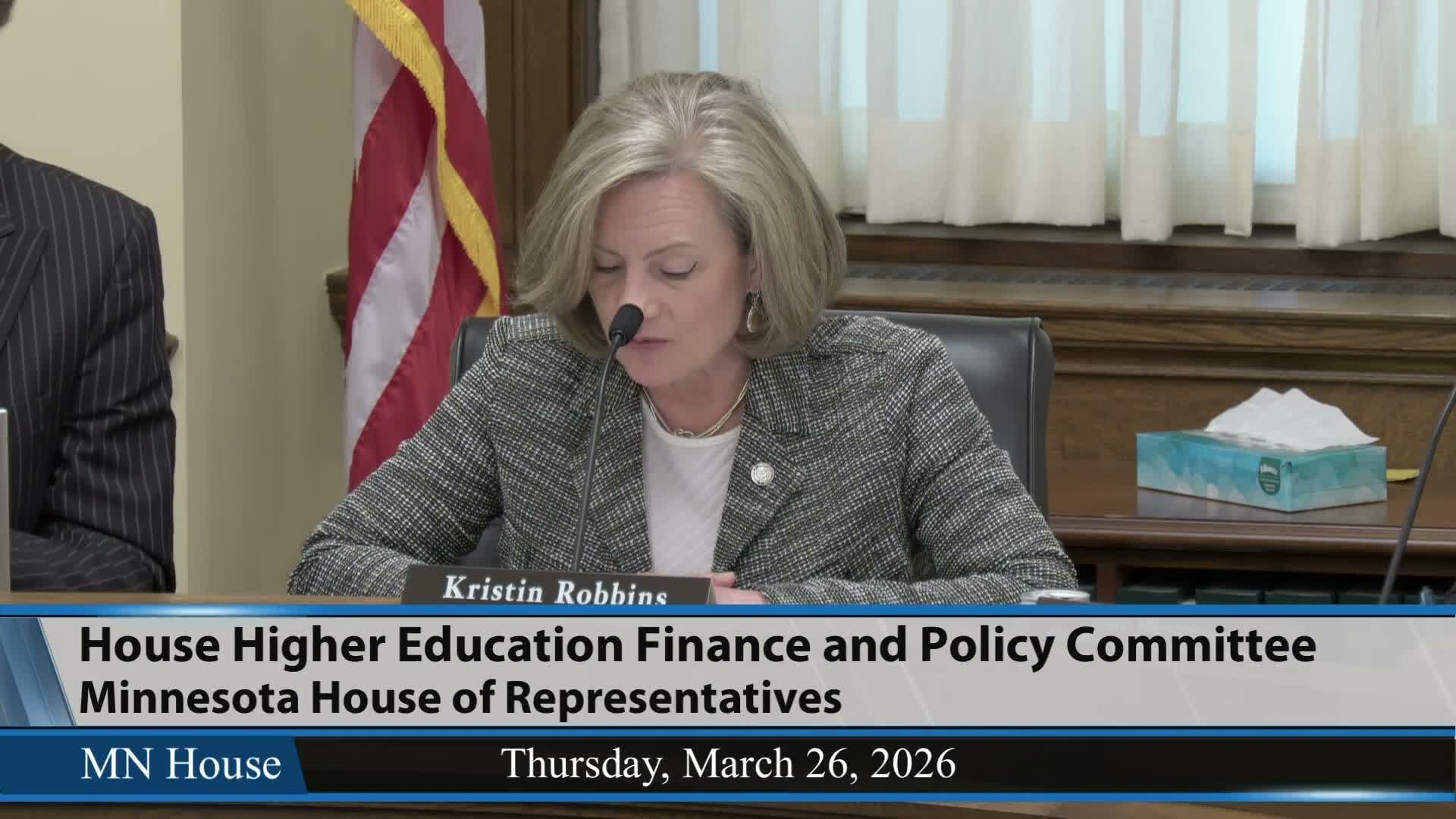
Summary
HF4413 would require that governor appointees to the University of Minnesota Board of Regents come from candidates vetted by the joint legislative committee; student testimony urged broader inclusion and members debated constitutional and practical limits. The committee tied on a roll call and the measure was laid on the table.
Representative Allen introduced House File 4413 to narrow gubernatorial appointment options so that any governor appointments to the University of Minnesota Board of Regents would be selected from candidates previously vetted and recommended by the joint legislative committee and the Regent Candidate Advisory Council (RCAC).
Student testifier William Luther, director of state affairs for the Undergraduate Student Government at the University of Minnesota Twin Cities, said the RCAC and the vetting process provide an important opportunity for students, staff and alumni to question candidates and urged that the bill be broadened so all candidates approved through RCAC—not only those recommended by the legislature—could be eligible for gubernatorial appointment.
Members debated transparency goals, constitutional limits and whether the bill’s language should require or merely constrain the governor’s choices. Nonpartisan counsel Mister Hopkins explained that the bill’s intent is to constrain the governor’s option to select appointees who were never publicly vetted; he noted narrowly written statutory language can have different legal consequences (for example, "may only" vs. "must"). Several members said they support the bill’s transparency goal but asked for amendments to expand the pool, clarify eligibility and ensure constitutionality.
Representative Allen said the bill is intended to close what he described as a gap in the recent regent-selection process and invited collaboration on possible floor amendments. The author moved the bill to the general register but a roll-call vote ended 7–7; the motion did not prevail and HF4413 was laid on the table.