Get Full Government Meeting Transcripts, Videos, & Alerts Forever!
Get email alerts on the Procurement topic
No spam. Unsubscribe anytime.
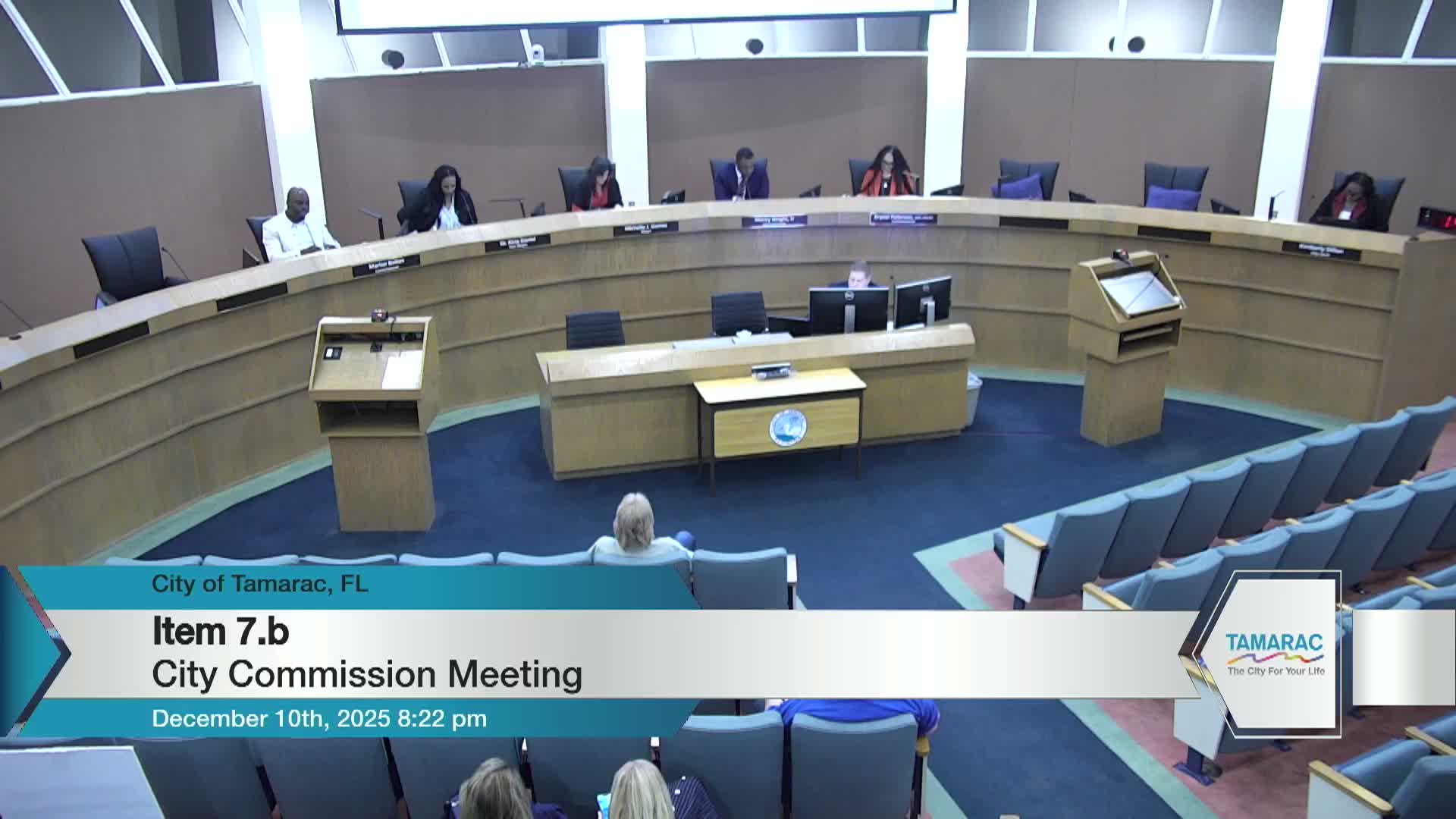
Tamarac commission approves procurement-code changes after heated debate over video contracts and tax‑savings exceptions
Summary
The Tamarac City Commission narrowly approved amendments to its procurement code that expand exemptions for film/video services, disaster relief purchases and a sales‑tax saving procurement method. The 3–2 vote followed public complaints about favoritism toward a recurring video vendor and commissioner concerns about potential loopholes.
The Tamarac City Commission voted 3–2 on Dec. 10 to amend the city’s procurement code to expand exemptions from competitive bidding for selected purchases, including film and video services, disaster‑relief equipment and owner‑direct purchasing for sales‑tax savings.
Supporters said the changes will let the city move faster in emergency response and capture sales‑tax savings on large construction projects; critics said the exemptions risk weakening competitive protections and could be used to favor a small set of vendors.
“This procurement process should not be weakened,” Kate Johnson, a resident who frequently addressed the commission, said during public comment. “Da 1 Film and Video seems to get almost all of the video business, last year alone making around $90,000. Why have there not been bids on a service that gets so much of our money?”
Commission debate split along similar lines. Commissioner Wright argued the amendments were forward‑looking for a growing video economy and for practical tax savings on high‑dollar construction projects. “We’re going to need more video services… we were telling cars to stop, please. We don’t want any more food,” Wright said, citing outreach and outreach metrics to justify investments in digital services.
Opponents raised concerns about safeguards and potential backdoors. Mayor Michelle J. Gomez and Commissioner Wright discussed limits to executive discretion and the need to ensure large projects still face competitive processes. Commissioners ultimately approved the ordinance after the city attorney and procurement director said the exceptions would be applied only in limited, high‑dollar cases and would still be subject to procurement oversight.
Procurement and Contracts Manager Steve Stewart told the commission the sales‑tax saving approach would be applied primarily to large construction projects where materials make up a substantial portion of project cost; he gave an example showing potential savings on multi‑million‑dollar projects by exempting materials from sales tax when procured owner‑direct.
The ordinance passed on a 3–2 roll call. The mayor voted no and expressed concern about possible loopholes; Vice Mayor Marlon Bolton and Commissioner Keisha Daniel voted in favor. The ordinance directs staff to include statutory language and caps as appropriate on the next reading.
What’s next: The ordinance will return for a subsequent reading where commissioners requested additional language to limit discretionary use and clarify caps for purchases that might otherwise circumvent competitive bidding.