Lifetime Citizen Portal Access — AI Briefings, Alerts & Unlimited Follows
Council approves extended juvenile curfew emergency declaration after sharp debate over enforcement and youth services
Loading...
Summary
On Nov. 4 the Council passed a second emergency juvenile curfew extension authorizing the MPD chief to designate curfew zones earlier in the evening and make 11 p.m. curfew hours consistent; the vote was approved but four members recorded no votes amid concerns about federal involvement and racial profiling.
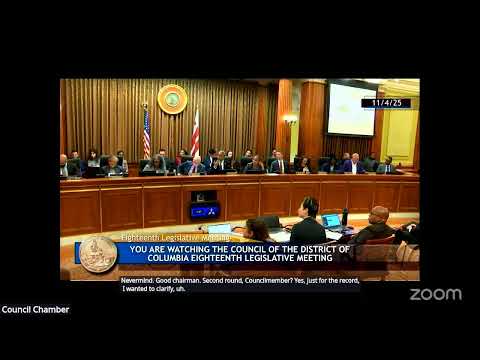
The D.C. Council on Nov. 4 approved a second emergency juvenile curfew measure that authorizes the Metropolitan Police Department chief to declare extended juvenile curfew zones as early as 8 p.m. and standardizes an 11 p.m. curfew across the week.
Council member Pinto, sponsor of the measure, said the prior emergency had allowed MPD to use the tool seven times during a 90‑day period with zero violations and zero arrests and argued the measure gives law enforcement a preventative tool to reduce violent large gatherings. “When the emergency legislation first went into place, it provided MPD a preventative tool that allowed them to prevent violence from happening in the first place,” Pinto said.
Opponents and skeptical members raised constitutional and enforcement concerns and pushed for more investments in youth programs. Council member Lewis George said the decision risks expanding federal law‑enforcement involvement and profiling of Black and brown youth; “This city is occupied,” he said, arguing the council should not expand powers that could lead to harsher enforcement by federal personnel.
Council member Robert White likewise warned that curfews can shift incidents rather than reduce them and called for “precision policing” focused on violent actors and for creating late‑night safe spaces and mentorship programs instead of a blanket approach.
Council members McDuffie, Parker and others urged a complementary youth agenda — jobs, mental‑health resources and expanded recreational access — and several members said they would pursue permanent policy and funding options alongside the emergency authority.
Vote and outcome: The chair called the voice votes and the ayes prevailed; the record shows Council members Lewis George, Robert White, Tran White and Nadeau registered as voting no, and the chair stated the declaration met the two‑thirds threshold required for an emergency measure.
Next steps: Sponsors said a permanent bill and further hearings are planned (the sponsor noted a scheduled hearing on Dec. 3 for related facilities and access bills), and staff will print and report the legislation with technical edits as needed.
(Provenance: topic introduced SEG 785; topic finish SEG 1556.)