
Panel advances bill to require medical examiners to review recent vaccinations in unexplained infant deaths
Get AI-powered insights, summaries, and transcripts
Sign Up Free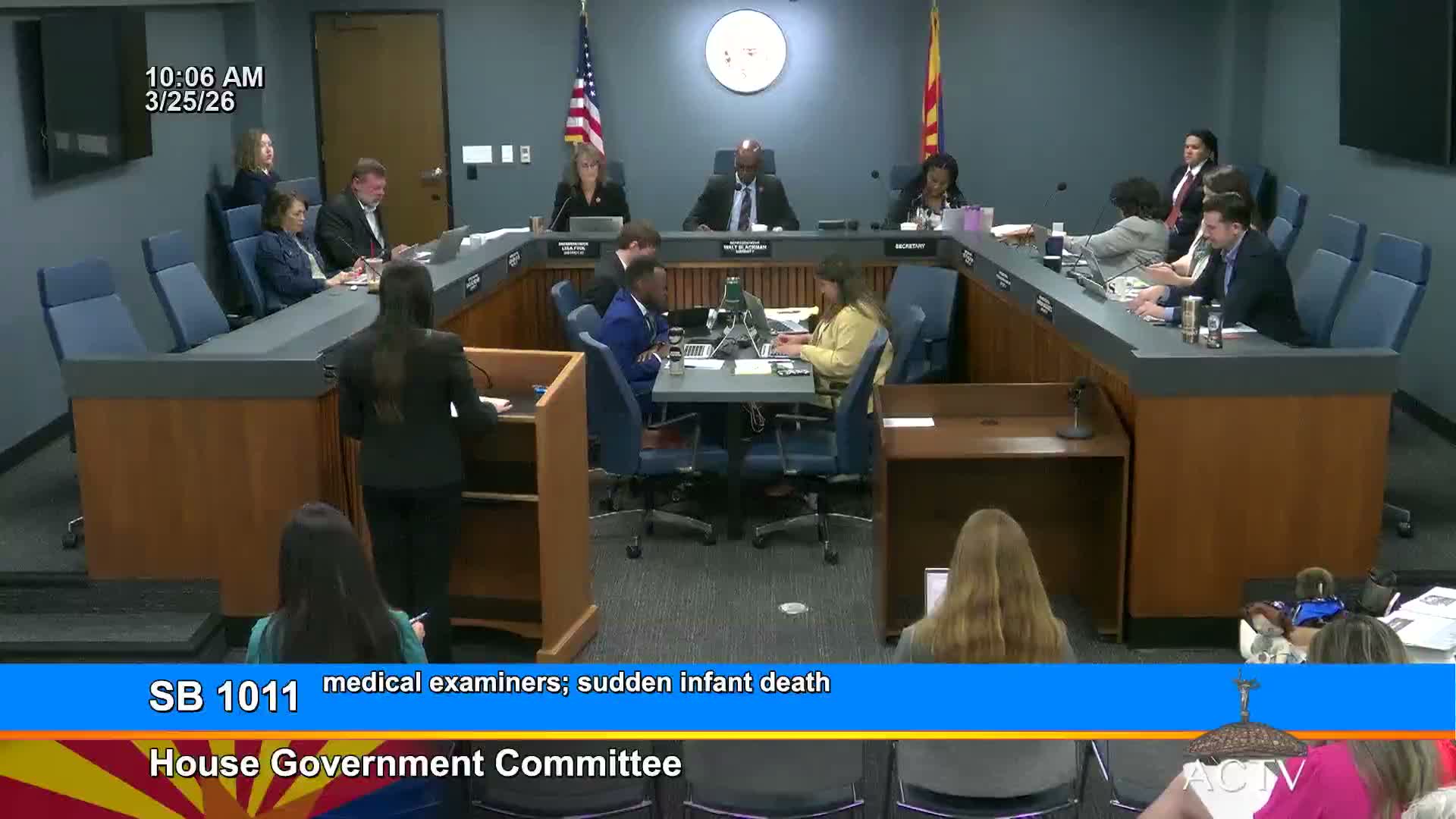
Summary
A committee advanced SB 10‑11 to require county medical examiners to review an infant’s immunization and recent medical countermeasures in cases of sudden, unexplained infant death; proponents called it a data‑collection measure, opponents said existing review forms already gather this information.
Senator Schamp, sponsor of SB 10‑11, described the bill as a narrowly targeted reform to strengthen investigations of sudden and unexplained infant deaths by ensuring medical examiners review immunization and countermeasure history in the 90 days before a death. “Families deserve answers,” the sponsor said, framing the measure as improving data collection rather than assigning blame.
Supporters argued better standardized data can help identify public‑health risks and prevention opportunities. Representative Fink and others noted this aligns with CDC‑recommended practices and could create more timely state‑level data to act on trends more quickly than waiting on federal compilations.
Opponents warned the bill may duplicate existing processes. Ashley Chambers, director of Arizona Families for Vaccines, testified that the state’s child‑fatality review process already includes a four‑page checklist that covers vaccinations and medications for infant deaths, and cautioned that a state database could show correlations (high vaccination rates among most infants) that do not imply causation. Ruthie Goldcorn, an obstetrics/pediatrics practitioner, said SIDS is typically linked to unsafe sleep practices and that expanding investigatory requirements could retraumatize grieving families without preventing deaths.
Sponsor Schamp said the bill is a “simple data collection bill” and pledged efforts to maintain sensitivity to families while collecting standardized information to identify possible preventable causes.
The committee returned SB 10‑11 with a due‑pass recommendation (reported 4 ayes, 3 nays). The sponsor and witnesses agreed to continue discussions about how the data are collected and protected.
Outcome and next step: SB 10‑11 was reported out of committee with a due‑pass recommendation and will go to the full House for consideration.