
Major overhaul of CTE governance moves forward after intense debate over EVIT, audits and funding
Get AI-powered insights, summaries, and transcripts
Sign Up Free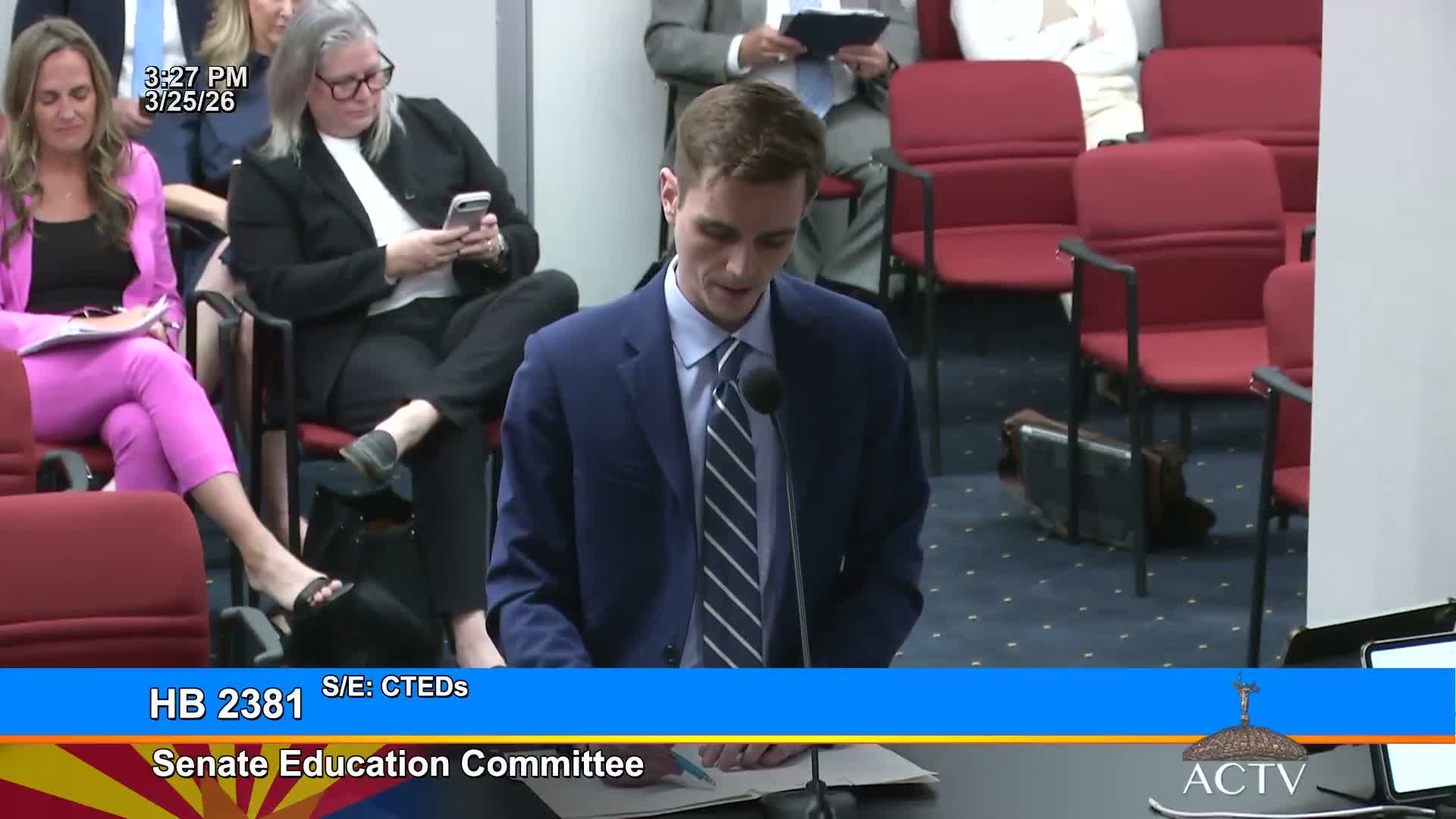
Summary
A strike‑everything amendment to HB 2381 that would change CTED intergovernmental agreements, apportionment and mediation requirements passed the Senate Education Committee amid dispute between EVIT and member districts. Sponsors said the bill addresses Auditor General findings; opponents warned it could complicate ongoing litigation.
The Senate Education Committee on March 24 gave House Bill 2381 a due‑pass recommendation after lengthy stakeholder debate over career technical education (CTED) governance, the allocation of a 0.25 ADM share for satellite programs and mediation procedures for intergovernmental disputes.
Representative Matt Gress, sponsor of the strike‑everything amendment, said the changes respond to auditor findings and long‑running friction between CTEDs and member districts. The amendment would require clearer IGAs, create mediation procedures before lawsuits, adjust ADM apportionment between CTEDs and districts, and place reporting and oversight requirements on CTED boards (Representative Matt Gress, SEG 2145–2162; SEG 2465–2471).
Chandler Unified CFO Lana Berry and a coalition of nine districts described concerns that they were not fully informed about CTED finances and that dollars generated at local sites should "follow the student" or remain under strong local oversight. "We want to make sure that the dollars follow the students," Berry said, arguing for local control of funds that districts generate (Lana Berry, SEG 2745–2754).
EVIT Superintendent Chad Wilson defended the CTED model as a district with taxing authority and argued the dollar should stay with EVIT as the entity responsible for the program, while also acknowledging EVIT must improve outcomes and accountability in light of an Auditor General performance report that criticized some practices. "We believe the dollar should stay with the district with the student...and we also believe in local control," Wilson said, pressing that CTEDs have responsibilities and oversight authority (Chad Wilson, SEG 2949–2976).
John Kelly, counsel for the CTED consortium, said stakeholders had engaged through extensive meetings and that the sponsor’s draft incorporated many CTED suggestions. The sponsor and stakeholders said they would continue conversations; the committee adopted the strike‑everything amendment and gave the bill a due‑pass recommendation (move and roll call, SEG 3247–3268).
What happens next: Sponsors said they will continue stakeholder meetings and invited additional legislative participation to resolve remaining disputes over reporting, supplanting rules, and ADM calculations before floor action.