
Committee advances bill letting local governments post legal public notices online; six‑month newspaper transition required
Get AI-powered insights, summaries, and transcripts
Sign Up Free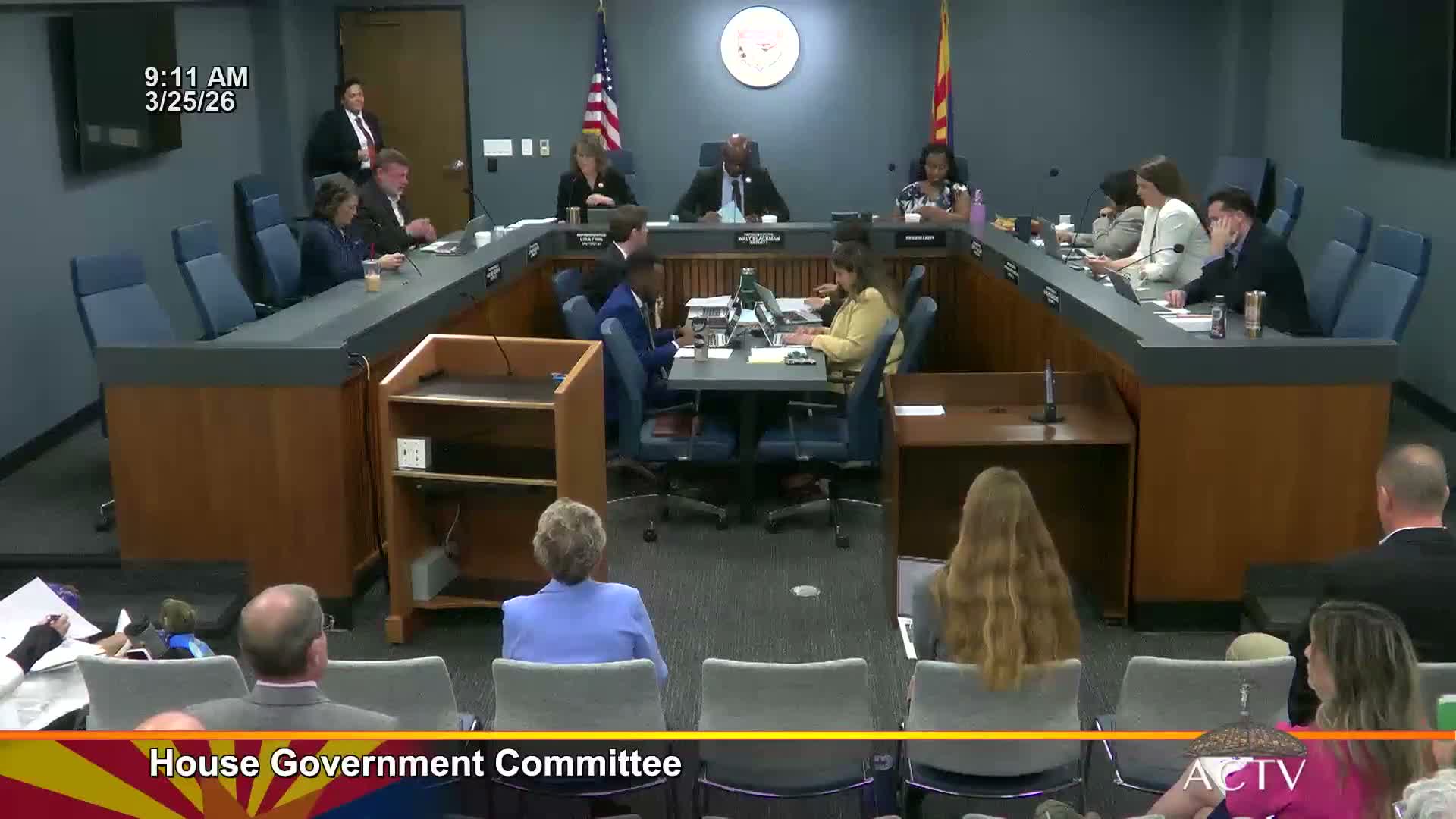
Summary
A House committee advanced SB 11‑67, which allows counties and municipalities to satisfy statutory public‑notice requirements by posting notices on official websites; an amendment requires newspapers to continue printing notices for six months after the law’s effective date and a phone contact for public input.
Senator Hilde Angus, sponsor of SB 11‑67, told the committee the bill would give local governments a choice to post statutorily required public notices on their official websites instead of relying solely on newspapers, while remaining permissive: “It just gives local government options,” she said, adding that the bill is not a mandate but a modernization to reflect how constituents find information today.
The committee adopted a Blackman amendment that requires municipalities and counties to continue publishing notices in a newspaper of general circulation for six months after the act’s effective date and to include a transition ad directing readers to the government website and a phone number. Staff explained the amendment as a session‑law provision to alert the public to the change and provide a transition window.
Testimony at the hearing highlighted the trade‑offs between accessibility and modernization. Lisa Simpson, senior vice president of the Arizona Media Association, urged members to vote no, saying newspapers provide “a permanent legal, independent and historical record” and that some underserved and tribal communities rely on print because of limited internet access: “Allowing municipalities to choose to publish solely on their website can alienate underserved and tribal communities that don't have access to reliable Internet,” she said. Doug Bauer, publisher of the Arizona Daily Sun, also opposed the bill and said circulation declines mean some readers still “can’t or don’t want to access the Internet” for public notices.
Tribal and rural witnesses echoed equity concerns. Tanya Lewis of the White Mountain Apache Scribe said broadband gaps and transportation or physical limitations make print notices essential for elders and rural residents. Caitlin King, representing the County Supervisors Association, and Michael Rossi of Pima County supported the bill’s flexibility, noting statutory deadlines that counties sometimes cannot meet because of declining print publication frequency. King referenced specific statutes—citing ARS 42‑17107 as an example—that create strict publication timing in statute.
Committee members debated whether the change would leave some residents behind or give local governments a useful tool to meet statutory deadlines. One member noted that where federal requirements for newspaper publication remain, those would be unaffected. After discussion the committee adopted the amendment and returned SB 11‑67 as amended with a due‑pass recommendation. The committee reported the motion as passing 4 ayes and 3 nays and moved the bill to the floor for further consideration.
The committee left the bill open to negotiations between local governments and media stakeholders; staff and witnesses said they would continue discussions on hybrid approaches and transition outreach during the six‑month window.
Outcome and next step: SB 11‑67 as amended was given a due‑pass recommendation by the committee and will proceed to the House floor for further action.