Get Full Government Meeting Transcripts, Videos, & Alerts Forever!
Get email alerts on the Wetland Monitoring topic
No spam. Unsubscribe anytime.
City staff: Monitoring shows overall gains at Blaine Wetland Sanctuary; ISG to present final report in January
Summary
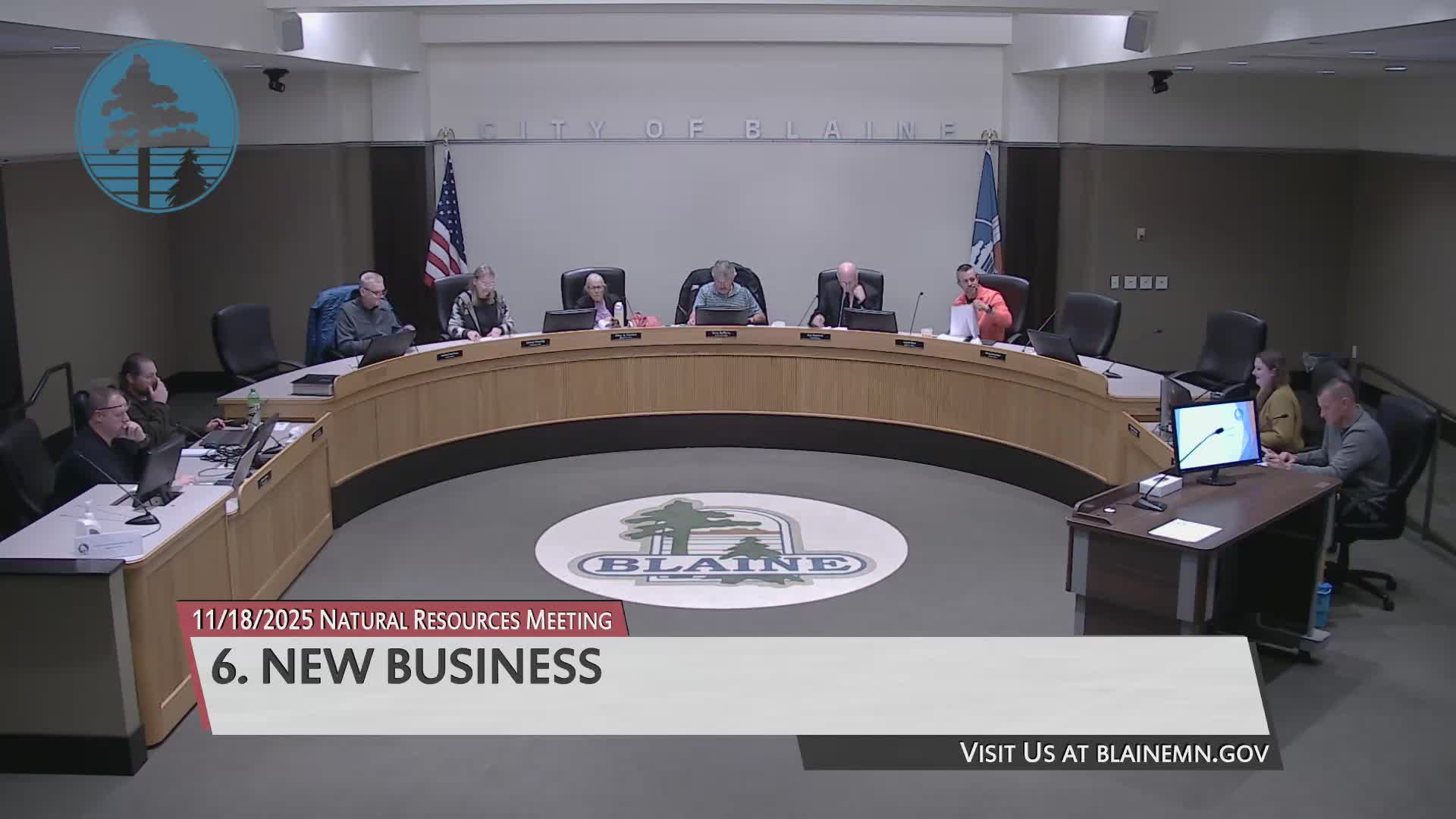
City staff told the Natural Resource Conservation Board that most monitoring plots at the Blaine Wetland Sanctuary are trending upward, with prescribed burns and targeted treatments planned; ISG will present a detailed final monitoring report at the board's January meeting.
City staff briefed the Natural Resource Conservation Board on preliminary monitoring results for Blaine Wetland Sanctuary Site 7 and said the consultant ISG will present a final monitoring report at the board's January meeting.
The staff presenter said most monitoring plots "are still trending upwards" compared with prior surveys and that fen areas have generally improved, although progress has slowed where scheduled burns have not occurred. The presenter said forested plots are showing regrowth of buckthorn saplings and the spread of smooth brome, and recommended a prescribed burn and targeted treatments next year to control invasives.
"So all of our monitoring plots this year, most of them are still trending upwards based on our last monitoring," the presenter said. The presenter said ISG's field staff provided photos and that agency reviews and a final draft will be circulated to agencies around mid-December and discussed in detail at the January meeting.
Staff also reported continued on-site records of state-listed species and other locally uncommon plants. The presenter described observed populations and said that prior plant-relocation work with the conservation district has shown signs of success; the presenter indicated ISG will provide technical species-level detail in January.
Board members asked for specifics about herbicides and alternative methods to be tested. The board requested advance notice of which herbicides would be piloted and of any emerging techniques; staff said they will share that information with the board and the consultant ahead of the January presentation.
Separately, the board asked whether recent mowing observed near the boardwalk was part of ISG's contract. Staff said the mowing likely resulted from public-works access related to boardwalk repairs rather than ISG monitoring work.
Why it matters: The monitoring update frames planned restoration actions (burns, targeted herbicide trials and test plots) that will affect the sanctuary's ecological trajectory and the timing of trail construction decisions tied to wetland-bank credits and available funding.
Next steps: ISG will attend the board's January meeting to present the final monitoring report and a proposed work plan for the coming year.