Legislators back ban on vendors who recently paid UC executives; UC warns of operational risks
Loading...
Summary
SB 1141 would bar businesses from contracting with the University of California if a UC executive was paid by that business within the previous year and impose a one‑year prohibition after compensation; supporters cited examples of executive board ties to vendors while UC warned the bill’s breadth could disrupt essential contracts.
Sen. Wahab introduced SB 1141, which would prohibit a business from bidding on or entering into contracts with the University of California if a UC executive has been paid (as a paid director, consultant or advisor) by that business within the previous year, and would bar contracting for one year after compensation to an executive or immediate family member.
Katherine Lybarger, executive vice president at AFSCME 3299, testified that the bill targets conflicts that have harmed public trust and cited reported instances in which UC executives served on vendor boards (for example, CareDx and Welltower) while those companies did business with UC. Lybarger said the bill ‘‘does not prevent any company from doing business at UC’’ but would ‘‘establish and enforce clear prohibitions against conflicts of interest.’’
Tyler Aguilar, speaking for the University of California, said UC shares the goal of ethical contracting but opposed the bill as written. Aguilar argued the measure could unintentionally cause operational and instructional crises across UC’s 10 campuses and five medical centers, would apply more stringent prohibitions to UC than to other state agencies, and could sweep in routine passive investments or unpaid advisory roles. He said existing frameworks—including public contract law, Political Reform Act provisions, and UC policies—use recusal and other remedies and that the bill’s breadth would impair essential procurements.
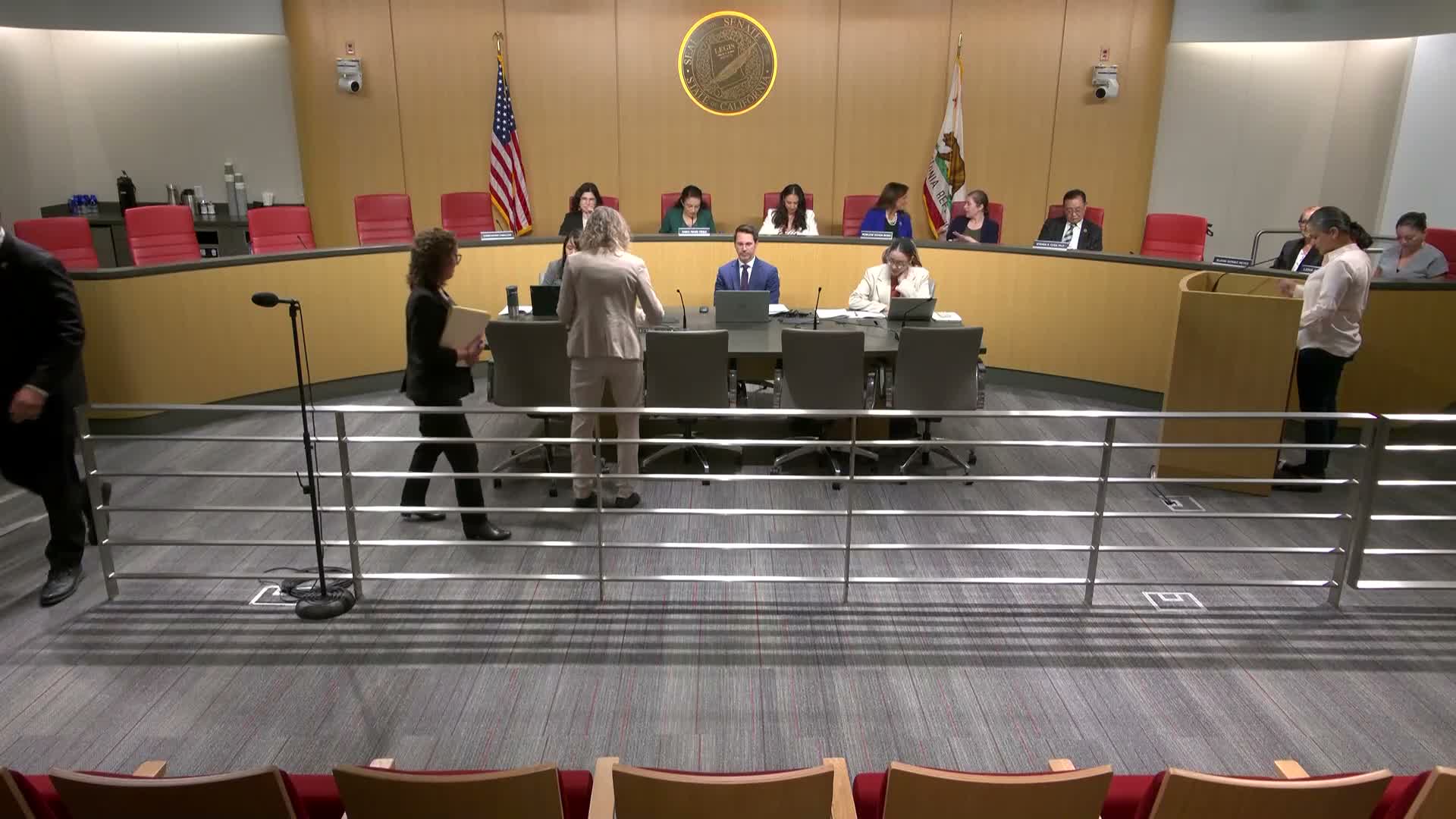
Committee members debated whether the bill fills a gap in enforcement and transparency or instead improperly outsources ethics enforcement to private vendors and unnecessarily bars nonprofits and small businesses. Some senators expressed strong support for additional guardrails and transparency; others warned the bill’s definitions could be overbroad and asked for clearer language about passive investments, unpaid service and exempt nonprofit partners.
After extended debate and offers to work on clarifying language, the committee voted on a motion to send SB 1141 to the Senate Judiciary Committee. The roll call recorded four ayes and two noes; the bill was reported out of committee.