Sen. McNerney’s bill would let schools weigh quality and local sourcing over price in nutrition contracts
Loading...
Summary
SB 1058 would clarify California education code so districts can make price a secondary factor in school-nutrition procurement, allowing local sourcing and dietary/cultural considerations while maintaining financial checks. Supporters said it costs the state nothing; members asked about safeguards against favoritism.
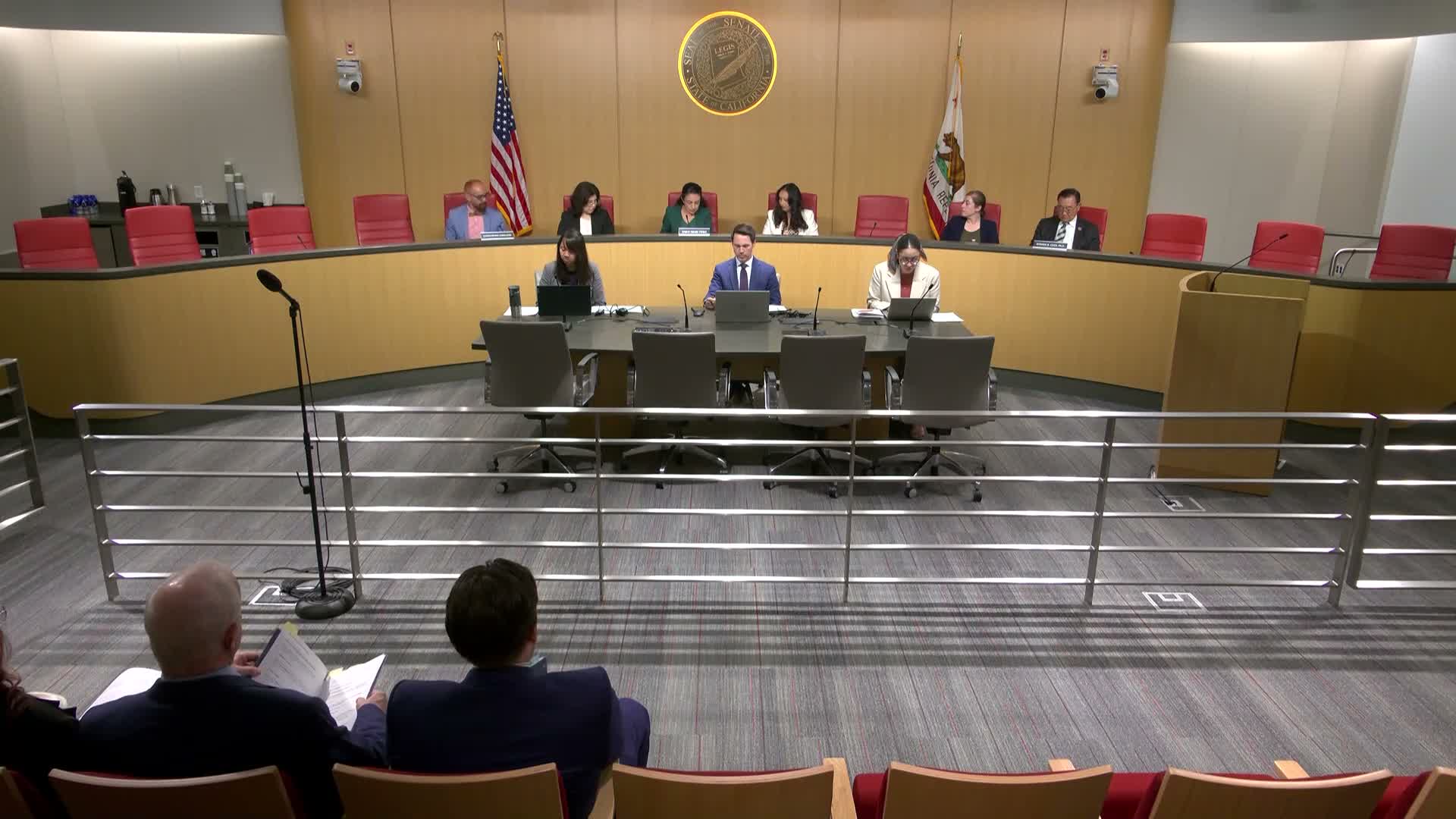
Sen. McNerney introduced SB 1058 to the Senate Education Committee, saying the bill removes price as the primary consideration in awarding school-nutrition grants so districts can prioritize healthier, culturally appropriate and locally sourced meals.
Dr. Betty Crocker, director of nutrition services for Lodi Unified School District and chair of the public policy committee of the California School Nutrition Association, testified that the change is a technical clarification of current procurement rules that ‘‘empowers districts with the clarity needed to ensure students receive the highest quality as well as more locally sourced, minimally processed, and sustainable food.’’ She said the bill ‘‘allows diverse criteria to be included in the RFP process beyond just the lowest bid, ensuring that our meals are both culturally appropriate and highly nutritious.’’
Several organizations signaled support in the hearing room, including county education offices and statewide school-business and nutrition associations. Committee members generally voiced support but raised implementation questions. Sen. Choi asked how RFPs would be structured to preserve minimum nutritional requirements and avoid awarding contracts that deliver ‘‘junk food’’ or otherwise fail to meet meal standards. Dr. Crocker replied that districts set RFP requirements (for example, produce-only bids) and that Fund 13 (district nutrition funds) plus statutory responsiveness and responsibility standards provide financial checks against impractical or exorbitant bids.
Sen. Cabaldon noted the need to monitor related federal rules and definitions—such as those that could affect classifications of processed foods—and asked that the Legislature and administration remain ready to adopt or clarify definitions if federal language shifts.
Sen. McNerney closed by saying the bill gives districts the flexibility to support local farmers and tailor meals to students’ needs ‘‘at no increased cost to our state’’ and asked for an aye vote. The committee moved the bill and recorded a roll call; the item was placed ‘‘on call’’ and later reported out of committee on a unanimous tally.
The committee did not adopt text changes on the floor during this hearing; members asked staff to ensure the RFP framework retains statutory safeguards against fraud and ensures every student receives entitled meals. The bill will proceed according to the committee’s referral and scheduling procedures.