
Oklahoma Senate advances package of PBM and pharmacy-reimbursement measures after contentious floor debate
Get AI-powered insights, summaries, and transcripts
Sign Up Free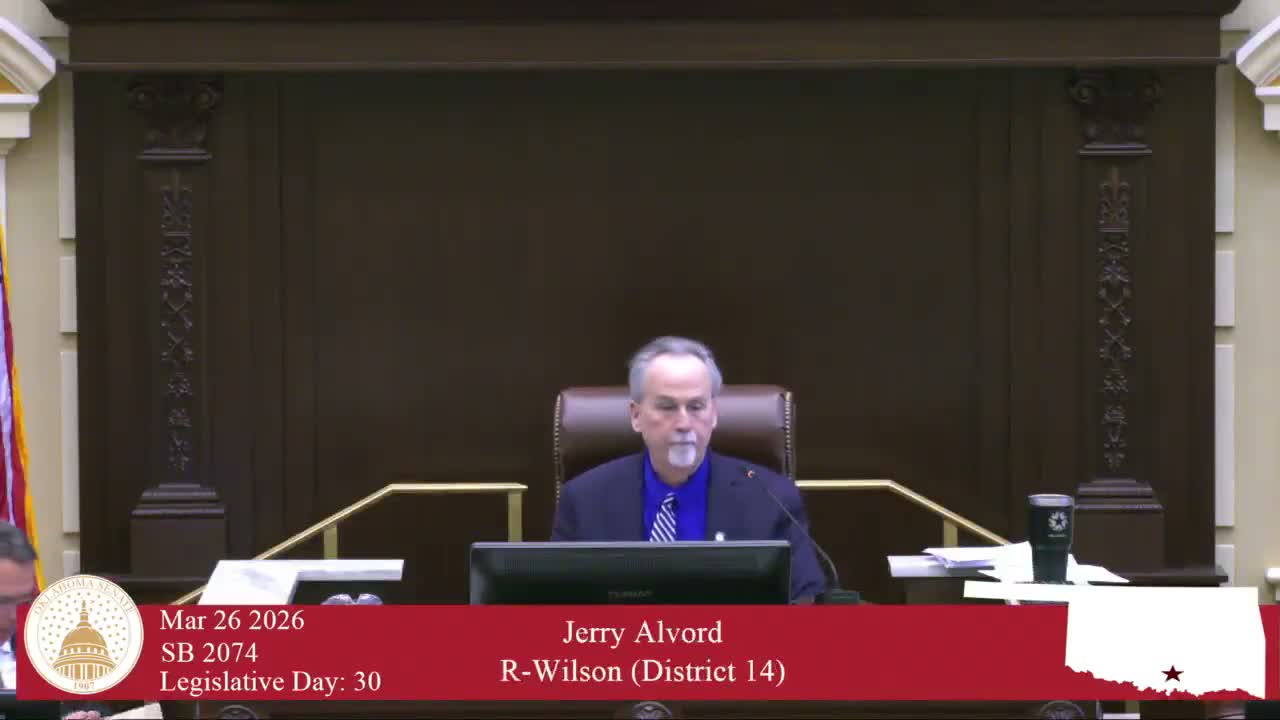
Summary
Lawmakers passed multiple bills aimed at pharmacy benefit managers and pharmacy reimbursement, with proponents saying the measures will protect community pharmacies and critics warning of higher costs for employers and consumers. Debate cited audits and cost figures; SB 20-74 and related bills passed on the floor. (Example vote: SB 20-74, 34–3.)
The Oklahoma Senate voted this session to advance a package of bills targeting pharmacy benefit manager (PBM) practices and to set new transparency and reimbursement standards for prescription dispensing.
Senator Alberts, the primary sponsor of SB 20-74, told the chamber that PBMs have become vertically integrated — owning pharmacies, insurers and negotiating infrastructure — and that the structure has squeezed independent community pharmacies. ‘‘PBMs have become vertically integrated over the years. They now own manufacturing. They own the insurance company...They now own their own pharmacies,’’ Alberts said, arguing the bills would restore fair reimbursement and protect patient access to local pharmacies.
Alberts and other supporters pointed to audits and state examples. On the floor he cited a Tennessee audit that, according to his remarks, found PBMs reimbursing affiliated pharmacies at much higher rates than independent community pharmacies. Supporters said that discrepancy leaves community pharmacies dispensing drugs at a loss and diminishes local access.
Opponents and some senators raised fiscal and market concerns. Floor Leader Daniels and other skeptics said the bills could raise costs for plan sponsors or employers that currently pay lower prices under PBM contracts; Daniels noted fiscal-impact estimates associated with some measures and urged caution. ‘‘This comes at a cost to others because those costs are gonna be passed along somewhere,’’ Daniels said.
The Senate approved several PBM- and pharmacy-related measures and amendments during the session: examples include SB 20-74 (pharmacy reimbursement/transparency), SB 2,007 (administrative fee on PBM underfunding), and bills to tighten PBM contracting and payment practices. Recorded votes on major participants in the package were in the transcript (for example SB 20-74 passed on third reading with a roll call tally of 34 ayes and 3 nays). Sponsors said the measures do not add appropriations but set reimbursement floors and reporting obligations to ensure fair pay to community pharmacies.
What supporters say: The bills will require transparent benchmarks for reimbursement, an explicit dispensing fee, and auditing authority so state health plans and employers can ensure pharmacies are not forced to dispense at a loss. Senators who run or who represent areas with rural pharmacies said protecting local dispensing is a public-access issue: when local pharmacies close, other health services in the community often follow.
What critics say: Opponents warned some employers were presented with modeled cost increases and that plan sponsors and consumers could face higher insurance costs if PBMs adjust contracts or shift costs. Several senators urged more actuarial and fiscal analysis before changes are implemented.
Next steps: The bills that passed on third reading will move on to enrollment and any subsequent steps required (transmission to the other chamber or to the governor) per normal legislative procedure. Implementation details, including the benchmarks and reporting formats, will be developed in administrative rules or statute language already included in the bills.