Oklahoma Senate orders constitutional vote to slow assessed-value growth, approves SJR 39
Loading...
Summary
The Oklahoma Senate voted to send SJR 39 to voters, a proposed constitutional amendment that would lower caps on annual assessed-value growth (homesteads/agriculture from 3% to 1%; other property from 5% to 3%). Sponsors said it slows growth to help longtime owners; critics warned of fiscal consequences for counties and schools. (Vote: 38–8.)
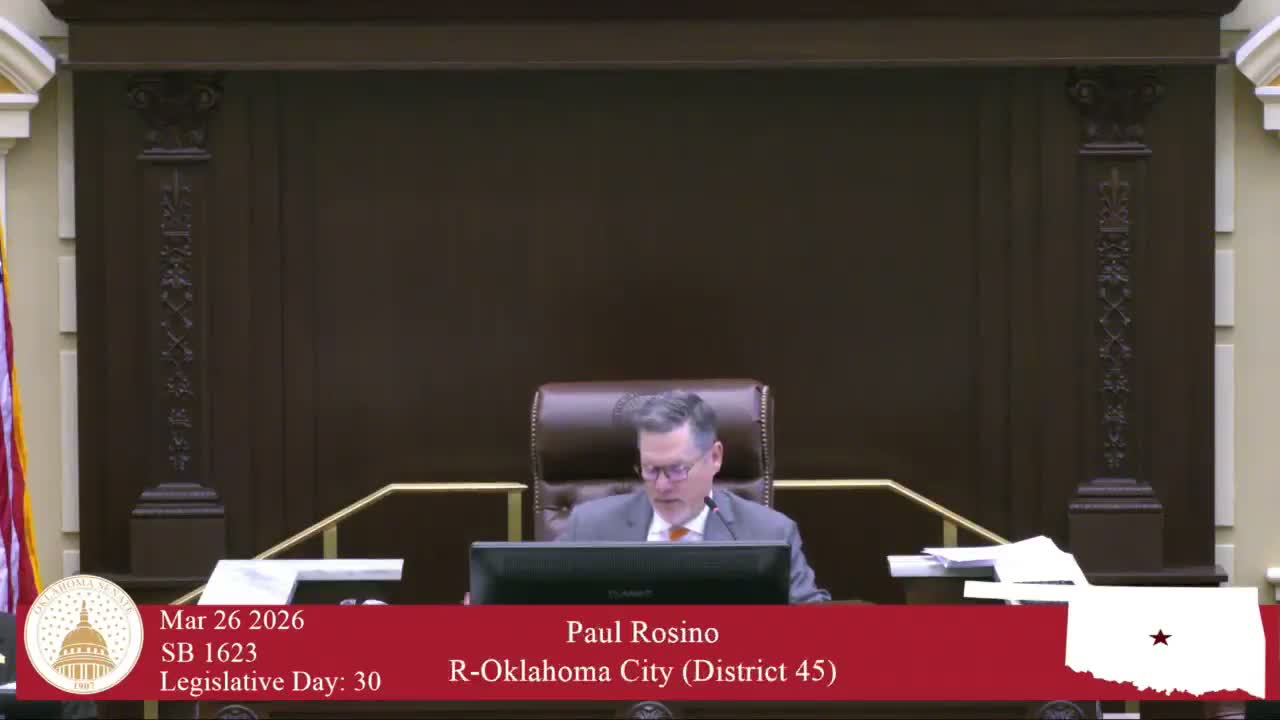
The Oklahoma Senate voted to send a proposed constitutional amendment to the ballot that would slow the annual growth of property assessed value for tax purposes, approving Senate Joint Resolution 39 on third reading after floor debate.
Pro Tem Paxton, the bill sponsor, told colleagues the change is meant to ease the burden on longtime homeowners and businesses by ‘‘slowing the growth’’ in assessed values that feeds property tax bills. ‘‘It just slows down the growth of their budgets,’’ Paxton said, arguing the measure would let people ‘‘stay in their homes, let people not be priced out of their businesses.’’
Supporters framed the amendment as a long-term measure to moderate rising assessed values that, they said, compound over decades and can push fixed-income owners to sell. Senator Grilner, who spoke in favor, said the ultimate decision belongs to voters and described constituents who can no longer afford to remain in long-held family homes.
Opponents warned the measure will reduce the rate at which local governments and school districts can capture revenue from rising property values. ‘‘This measure doesn’t target relief to seniors on fixed incomes,’’ Senator Hicks said, adding that it ‘‘locks in a structural limit that will compound year after decade after decade’’ and could undercut funding for classrooms, roads and public safety. Minority Leader Kurt argued the change is effectively a cut in future revenue and noted possible consequences for local bonding capacity.
Senators pressed the sponsor for fiscal specifics; Paxton said the measure ‘‘simply slows down the growth’’ rather than cutting existing revenues and that local governments would still receive higher revenue over time as market values grow or properties transfer and are reassessed. Questions about exact fiscal projections went unanswered on the floor; some senators said a detailed fiscal analysis was not available during debate.
On the roll call, the Senate recorded 38 ayes and 8 nays. Under Article 24, Section 1 of the state constitution the measure also required and won a two-thirds vote to order a special election, and senators approved that procedural provision as well.
What happens next: Because the Senate ordered the special election provision, the joint resolution will go to voters on the date specified in the resolution unless a different timeline is later set by a two-thirds vote of the legislature or by statute. The constitutional change would take effect only if a majority of voters approve it.
Why it matters: Supporters say the measure reduces long-term displacement pressure on homeowners and small-business owners by slowing compound assessed-value increases; critics say it creates persistent fiscal pressure for local governments and schools, and they urged more detailed fiscal analysis before voters are asked to decide.
The Senate concluded debate and moved to the next set of items on the calendar.