
House backs amendment to let long‑term care residents designate up to three visitors during emergencies
Get AI-powered insights, summaries, and transcripts
Sign Up Free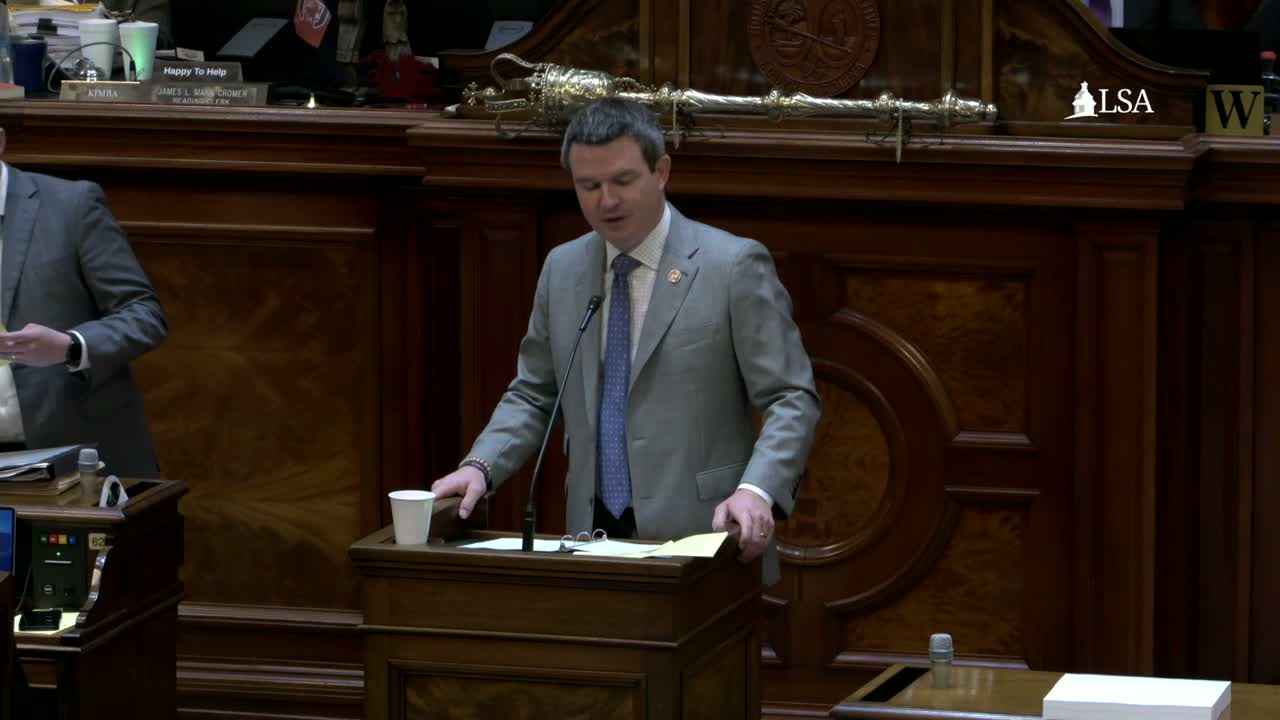
Summary
Lawmakers adopted amendments to Senate Bill 146 to let residents of long‑term care facilities designate up to three visitors during declared emergencies (with an amendment excluding clergy from the cap), and advanced the bill with sponsors stressing the statute doesn’t itself change facility visiting-hour rules.
The House adopted amendments to Senate Bill 146, legislation that would allow residents of long‑term care facilities to designate up to three people authorized to visit them during a declared emergency or public‑health crisis.
Mr. Sessions explained the bill on the floor and said the measure "allows residents of long term care facilities to choose up to 3 specific people who are allowed to visit the resident during a declared emergency or public health bridal," adding that the bill permits only one visitor at a time during regular visiting hours. An amendment (moved by Miss Edgerton) was adopted to exclude clergy and other spiritual leaders from the three‑visitor limit and to name the bill the Roger A. Nutt Act in honor of the late senator.
Representative Cromer and others pressed sponsors on whether the bill would require facilities to maintain their current visiting hours. Sponsors clarified on the record that the text pertains to designating visitors during emergencies and does not itself regulate the facility’s management of visiting hours or permit rules that contradict facility policies; a facility’s operational decisions would still govern whether any visits occur if the facility suspends visiting altogether.
The House adopted the amendments and advanced the bill to second reading. Sponsors framed the measure as ensuring residents retain a defined set of visitors in future declared emergencies, while opponents sought clarification about the interplay with facility operational authority.
Next steps: the bill will return for a third reading after the body’s procedural scheduling.