
Senate AG subcommittee carries over dog-breeding licensure bill after testimony on puppy mills
Get AI-powered insights, summaries, and transcripts
Sign Up Free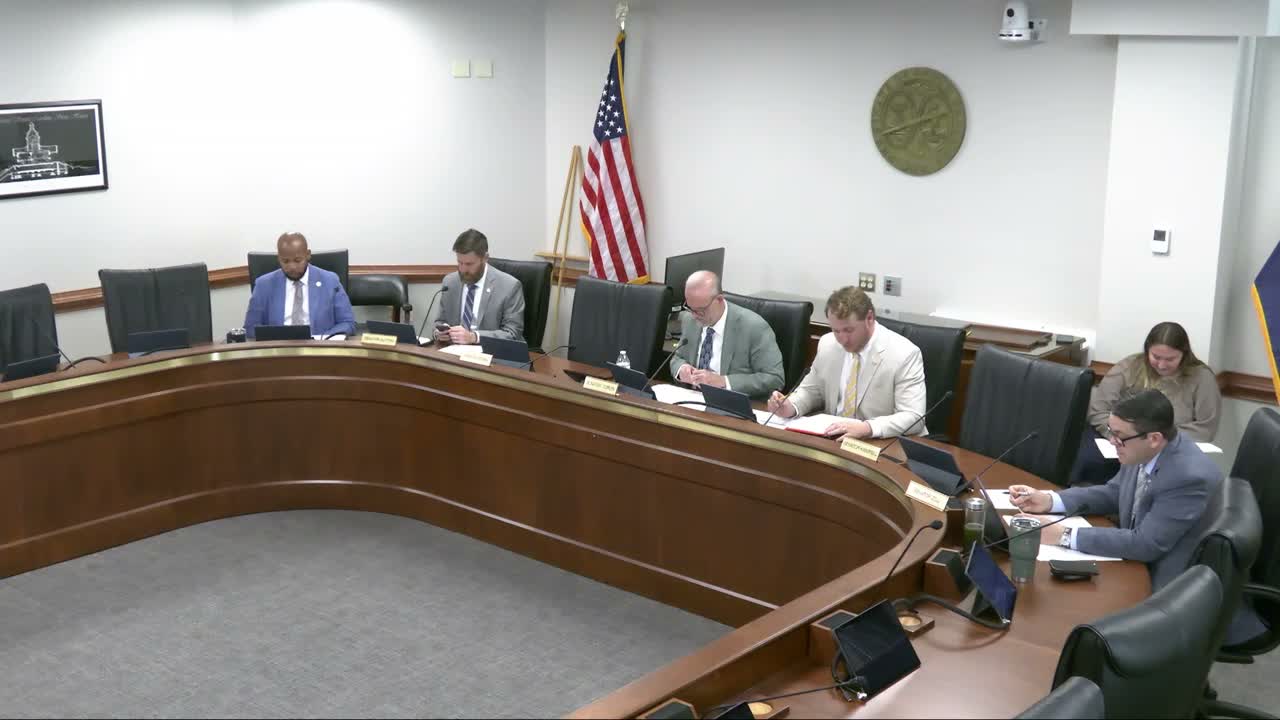
Summary
A Senate Agriculture subcommittee heard testimony supporting S.720, a proposal to require licensing, veterinary records and inspections for commercial dog breeders to curb ‘puppy mills.’ Sponsors and advocates urged work with stakeholders; the subcommittee voted 4–1 to carry the bill for further drafting and stakeholder review.
A Senate Agriculture Committee subcommittee heard testimony and carried over S.720, a bill that would establish a state licensure and inspection program for commercial dog breeders, after advocates described living animals seized from unregulated operations and stakeholder groups asked for clearer carve-outs.
Legislative staff attorney Mr. Waddell told the panel that “S.720 would establish a dog breeding licensure program requiring professional dog breeding to be conducted in accordance with state regulations,” including licensing, maintenance of veterinary records, facility inspections and records of transfers, and authorizing the South Carolina Department of Agriculture to promulgate rules and conduct inspections. He noted sponsors had an amendment on the desk that could change details of the measure.
Bill sponsor Senator Tedder said the legislation is aimed at “puppy fraud” and consumer protection, not to regulate ordinary pet owners. “This is not an intent to come after hunting dogs or anything like that,” he said, and pointed to language that would exempt farm-working and sporting dogs. Senator Zell also voiced support, calling animal mistreatment a statewide concern and saying he favored proceeding with careful drafting.
Several witnesses described the human and fiscal costs the bill aims to address. Janelle Gregory, South Carolina state director for Humane World for Animals, said her organization has “seen firsthand, the puppy mills in our state” and that licensure would give regulators and law enforcement visibility into facilities before they grow into larger operations. Gregory cited past large seizures and described how abused animals often arrive without vaccinations or veterinary care.
Constituent witness Bridgette Rowley told the panel she adopted a dog rescued from a large puppy-mill bust and described sellers who advertise healthy, breed-specific puppies but in some cases repackage animals from large, overcrowded operations. “I was living in North Carolina. I adopted a dog named Scarlet and she had just come out of a puppy mill that had been busted,” Rowley said, urging the panel to require business licenses and veterinary records at point of sale.
Volunteers and rescue groups also testified about the strain on shelters and budgets in rural counties and the practice of transferring animals to northern rescues for adoption. Paul Sperry, an attorney and volunteer with Bridge Between Animal Rescue, said rural shelters are overwhelmed and estimated some well-run county-level shelter budgets at roughly $1,000,000 a year; he argued statewide regulation could reduce recurring costs driven by large-scale seizures.
Representatives of sporting- and working-dog communities urged clear carve-outs so long-standing hunting, sporting and working dog traditions would not be unintentionally restricted. A representative speaking for the Cyclones Sporting Dog Association asked the committee to make exemptions “clear, complete and airtight” to protect sporting-dog owners while supporting strong animal-care standards.
Committee members and sponsors agreed to work with stakeholders on amendments and scheduling. With the legislative calendar tight, one member recommended carrying technical changes into full committee; sponsors said they would prepare omnibus amendments and meet with stakeholders.
Senator Zell moved to carry the bill over for further work and Senator Young seconded. The subcommittee recorded a 4–1 vote to carry S.720 over, with the chair noting proxies for Senators Young and Kimbrell were counted in favor. The subcommittee did not take a final vote on the bill’s substance; sponsors said they plan additional drafting and stakeholder meetings before the next hearing.
The subcommittee adjourned and invited witnesses who had not yet testified to return at the next meeting.