
Constitutional Law Subcommittee adopts amendment to add circuit judges and convert several at‑large seats to resident seats
Get AI-powered insights, summaries, and transcripts
Sign Up Free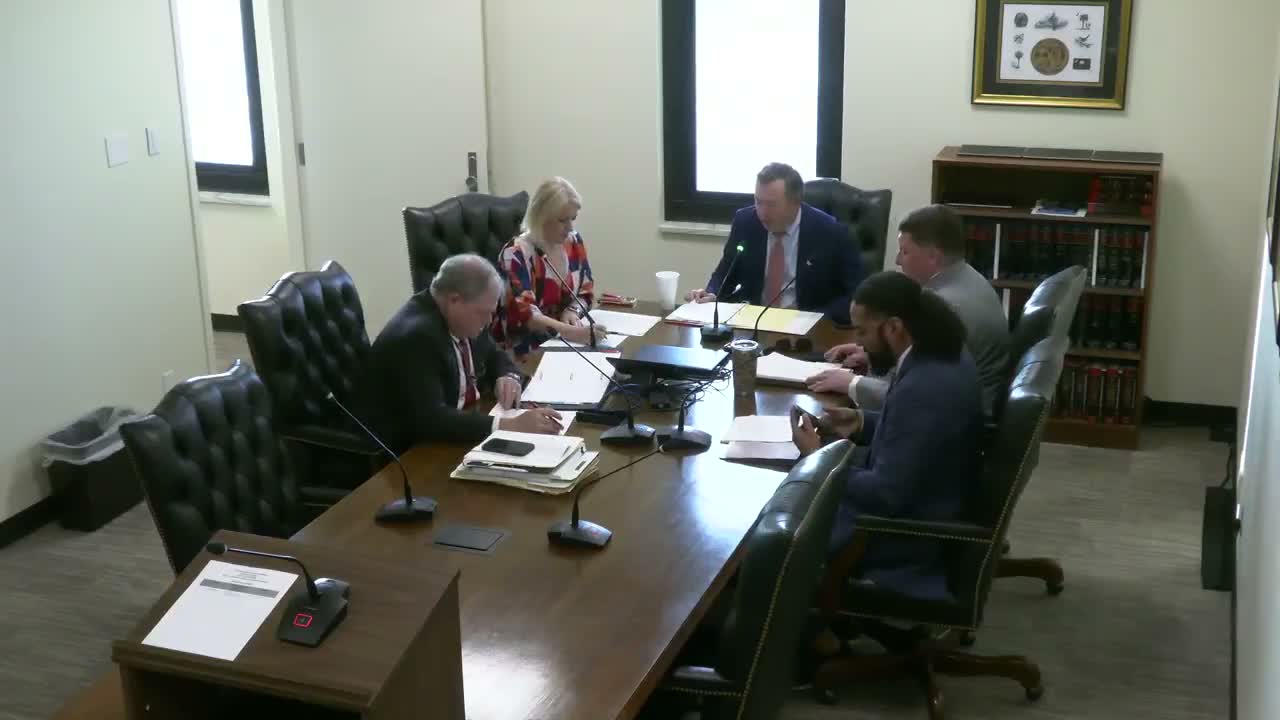
Summary
The Constitutional Law Subcommittee voted to adopt an amendment combining bills 4711 and 4805 to add new circuit court judges, convert multiple at‑large judicial seats to resident seats, stagger the new seats' implementation and change judicial retirement vesting timelines.
The Constitutional Law Subcommittee voted to adopt an amendment that combines bills 4711 and 4805 to expand circuit court capacity and convert certain at‑large judicial seats to resident seats.
The amendment, introduced by Chairman Newton, combines both measures to avoid conflicting provisions on the number of at‑large versus resident circuit judges and adds an additional Tenth Circuit seat based in Oconee County alongside the judgeships already proposed in bill 4711. “The amendment adds a new circuit court judge in the Tenth Circuit,” Chairman Newton said, saying the change, when combined with the 4711 provisions, results in four new circuit seats overall and converts four of seven at‑large seats to resident seats.
Mr. Roberts, a representative from the South Carolina Supreme Court testifying for the chief justice, told the subcommittee the chief justice supports the combined approach. “Simply put, South Carolina needs additional circuit court judges,” Mr. Roberts said, noting population growth and court staffing shortfalls. He cited a National Center for State Courts figure of about 2.8 judges per 100,000 citizens as an average and said South Carolina’s current ratio is below one per 100,000.
The amendment staggers when the new seats will be filled: the sixth and tenth circuit seats were described as opening this summer to be filled in the next judicial election, while the fifth and fifteenth circuit seats would be filled in the following year. The amendment also includes language aligning judicial retirement vesting for circuit judges with solicitors and public defenders, reducing the vesting period from 10 years to 8 years, the chairman said.
During discussion the chair noted the measure continues a previous, incremental effort to convert at‑large seats into resident seats without displacing sitting judges; staff pointed to Act 50 (a prior conversion of seven at‑large seats enacted last year) as precedent for the approach.
Procedurally, the subcommittee adjourned debate on bill 4711 by voice vote and then voted to adopt Chairman Newton’s amendment to 4805. A roll‑call was requested for the amended 4805; the clerk reported four in favor and one not voting. After the vote the chair closed the meeting.
The measure will proceed under the amended form as adopted by the subcommittee; the transcript records no formal objections or amendment proposers by name beyond adoption of the Newton amendment. Future steps include placement on the next legislative calendars and the scheduled elections that will fill the newly staggered judicial seats.