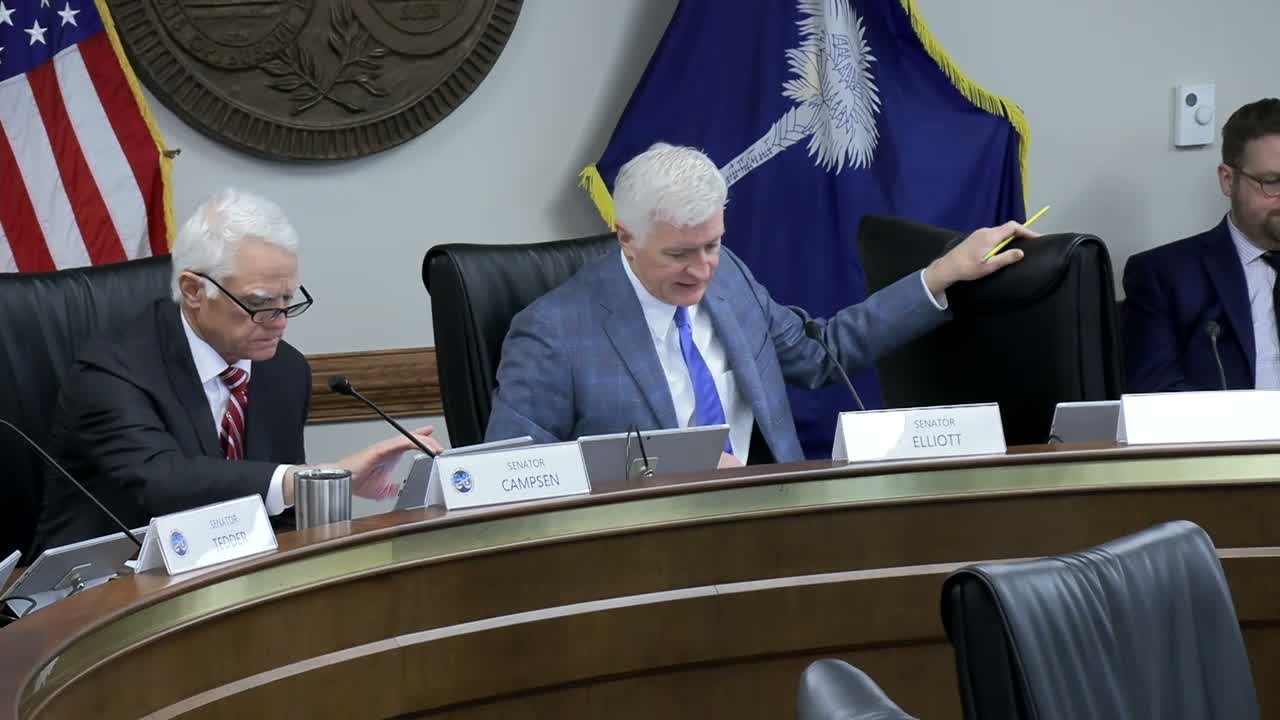
Subcommittee carries SB 818 over after heated testimony over who should regulate fiduciary services
Loading...
Summary
Lawmakers carried over Senate Bill 818 after extended testimony from the Board of Financial Institutions, lawyers, bar sections and service providers about whether narrowing the statutory definition of "trust business" would deregulate corporate fiduciaries or preserve critical guardianship services.
The Subcommittee of Judiciary carried over Senate Bill 818 after lengthy testimony and follow-up questions about whether narrowing the statutory definition of "trust business" would strip regulatory oversight from entities that administer fiduciary services.
Sean Eubanks, general counsel for the state treasurer's office and the Board of Financial Institutions (BOFI), warned the committee that defining "trust business" to cover only "provision of services related to the investment in or management of a common trust fund" would significantly narrow BOFI's authority under Title 34 and "would be a complete deregulation of fiduciary, corporate fiduciaries in in the state of South Carolina." He said the phrase "trust business" appears across the code and urged a holistic review of how the proposed definition would interact with other statutes and enforcement responsibilities. Eubanks noted a pending Supreme Court case over the definition and cautioned that the narrow wording could leave vulnerable people without oversight.
Several members of the South Carolina Bar and practitioner witnesses echoed concerns. Marshall Minton, chair of the legislative committee for the Probate, Estate Planning and Trusts Section of the South Carolina Bar, said his committee is "not in favor of the bill as written" because it could remove regulation from traditional trust companies even as it acknowledged a service gap for agents, guardians and conservators. Ben Barnhill, chair of the Corporate Securities and Banking Section, said common trust funds are rarely used now and that the bill "did not seem to fix a problem" but that his section was willing to work on revisions.
Representatives of private fiduciary providers argued the bill preserves a regulatory status quo that lets them serve vulnerable clients. Todd Carroll, an attorney with Womble Bond Dickinson, said his client Steven Mantel's companies provide conservatorship and guardianship services for people with addiction, mental illness and elderly residents without family. Carroll said licensing under BOFI could impose "tens of thousands of dollars in actual hard cost" and reserve requirements that would impair access to care. Steven Mantel testified he currently has "89 active cases" with roughly "$6,000,000" in aggregate client assets and said a requirement for large cash reserves would limit or eliminate his ability to serve those clients.
Neil Rashley, speaking for the South Carolina Bankers Association, said banks remain regulated but noted that state-chartered banks rarely operate common trust funds today; if the bill were passed as drafted, it could remove registration requirements for many banks for trust activities. Committee members concluded that stakeholders should continue negotiations; the committee voted to carry the bill over for further stakeholder work and refinement.