
State session: new ALPR law pauses Richland’s license‑plate readers; city secures $3.2M for tire pile
Get AI-powered insights, summaries, and transcripts
Sign Up Free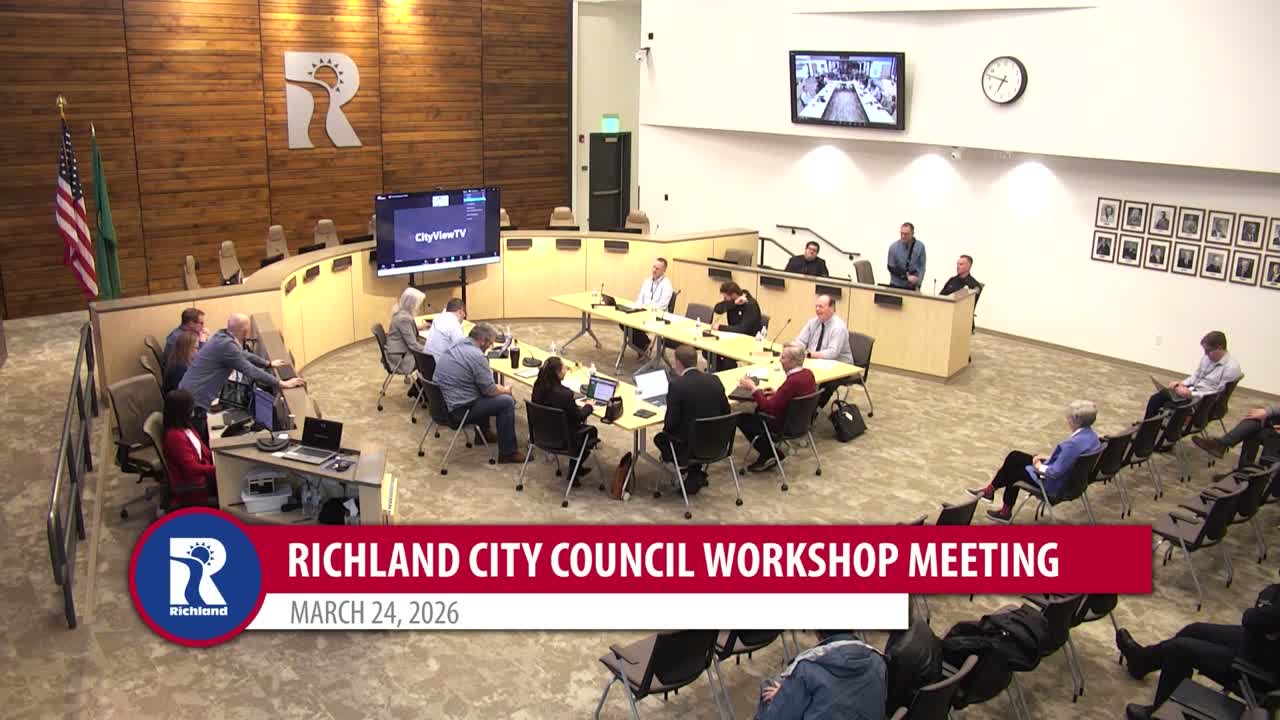
Summary
Richland’s legislative liaison briefed the council on the short session, highlighting that Senate Bill 6002 limits some uses of automated license‑plate readers and will require registration and new retention rules; Chief Pilcher said the city will shut ALPR systems when the governor signs the bill. Director Rizzitello reported $3.2M for tire‑pile removal and $600K for HVAC/fiber work.
Dave Arbois, Richland’s legislative liaison in Olympia, told the council that the short 2026 session produced a mix of budget adjustments, housing legislation and energy and climate debates, and that the city’s delegation and coalition work yielded several wins for local priorities.
The most immediate local impact described was the passage of Senate Bill 6002 (03/05/2026), which Chief Pilcher summarized for the council. The law expands the categories ALPR systems can be checked against (stolen vehicles, missing persons lists and certain warrants including gross misdemeanors), prohibits ALPR use for immigration enforcement and restricts collection around protected locations such as healthcare facilities, schools, houses of worship and courts. Chief Pilcher said the new statute requires registration of ALPR systems with the Attorney General’s Office within 180 days, shortens standard retention to 21 days (with exceptions for probable‑cause investigations) and makes ALPR data exempt from the Public Records Act. “As soon as [the bill is] signed, we will be shutting down both of our ALPR systems,” Chief Pilcher said; he added vehicle‑mounted ALPRs will likely remain disabled longer because the department cannot geo‑fence restricted locations with current vendor technology.
Council members asked how long systems will be offline and whether fixed cameras could be reactivated. Pilcher said the AG must provide registration forms and guidance within 180 days; once registered, fixed cameras that do not collect data at restricted sites could be turned back on, but mobile units lack a reliable geo‑fencing solution today. Staff said they have begun contract termination steps with the current fixed‑camera vendor and will consider replacement systems and locations that comply with the new law.
On capital funding, Director Rizzitello reported two funded projects from the short session: $3.2 million for removal/cleanup of the city’s tire pile and $600,000 for HVAC and fiber‑hut repairs. He said other projects were submitted and that short‑session wins lay groundwork for the long session next year; partial budget language exists for SR‑240 work but full federal or state funding will require additional action and possibly a future resolution for congressional directed spending.
Arbois and staff recommended the city continue to develop clear objectives for the long session and keep working the delegation during the interim. Council members thanked presenters; no action or votes were taken at the workshop.