
Sonora Quest tells Arizona committee its AI systems speed diagnosis and keep people in the loop
Get AI-powered insights, summaries, and transcripts
Sign Up Free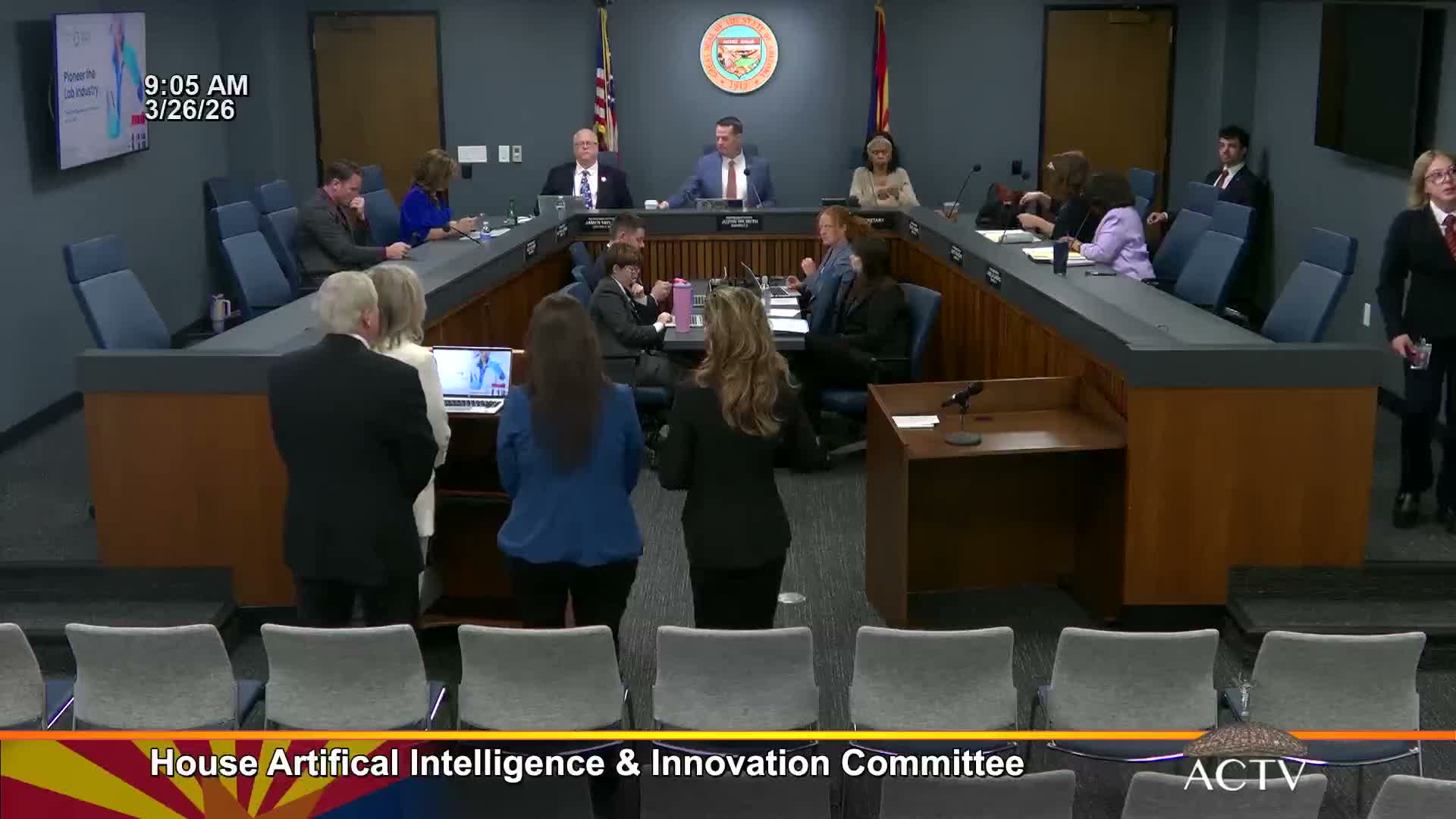
Summary
Sonora Quest Laboratories told the Arizona Artificial Intelligence and Innovation Committee it has used AI for about a decade in lab workflows, described safeguards including human review and an FDA‑cleared cytology platform, and said its cyber audits and governance protect patient data.
At a March 25, 2026 meeting of the Arizona Artificial Intelligence and Innovation Committee, Sonora Quest Laboratories executives described years of internal use of artificial intelligence in clinical laboratories and said the technology is already improving diagnostic speed and productivity while keeping humans “in the loop.”
Dave Dexter, chief executive officer of Sonora Quest Laboratories, told lawmakers the company has ‘‘about 10,000,000 patients per year’’ encounter points in Arizona and emphasized the importance of internal governance and cybersecurity. ‘‘We just had a cyber audit again, and we had a score of 95,’’ Dexter said, citing the firm’s security investments as a guardrail for clinical AI deployments.
Dexter and Sonora Quest staff described several operational uses of AI in the laboratory environment. They said digital pathology—where slides are scanned and presented on a screen—lets pathologists work with AI‑flagged regions of interest; Dexter characterized pathologist accuracy nationally at roughly 94% and said AI improves both speed and the detection rate. Jen Amschei, a Sonora Quest clinical laboratory leader, outlined use cases including predictive analytics to prioritize colorectal cancer screening and algorithms to identify early sepsis markers.
Company presenters repeatedly stressed human oversight. Amschei said the lab uses an FDA‑cleared cytology platform (Hologic) and that ‘‘we validate within that system’’ and maintain human confirmation steps so that flagged cells are reviewed by qualified cytologists before results are issued. Committee members pressed whether AI could miss abnormal findings that go unflagged; presenters replied that the lab maintains screening processes, cytotechnologist review and continuous quality monitoring (including six‑sigma style metrics) to detect variances.
Presenters also discussed future plans: a three‑year roadmap to deploy ‘‘enterprise lab AI’’ across administrative and clinical functions—citing an internal productivity target of at least a 20% improvement over three years—and the use of ‘‘digital twin’’ models to speed drug trials and personalize therapy. Dexter said the cost of some pharmacogenomics panels has fallen sharply—he stated they cost roughly $5,000 five years ago versus about $250 today—and predicted such tools, paired with AI, could reduce inappropriate prescribing.
The presentation concluded after roughly 50 minutes of remarks and questions. Lawmakers thanked the company for the briefing and several members asked to tour Sonora Quest’s facilities to see the systems in operation.
What’s next: The session moved from the presentation to committee business on a separate bill. The committee did not take formal action related to Sonora Quest’s presentation; the discussion was informational and aimed at understanding how clinical‑grade AI is validated and governed.