
Senate repeals Cesar Chavez namesake day after heated debate over victims and history
Get AI-powered insights, summaries, and transcripts
Sign Up Free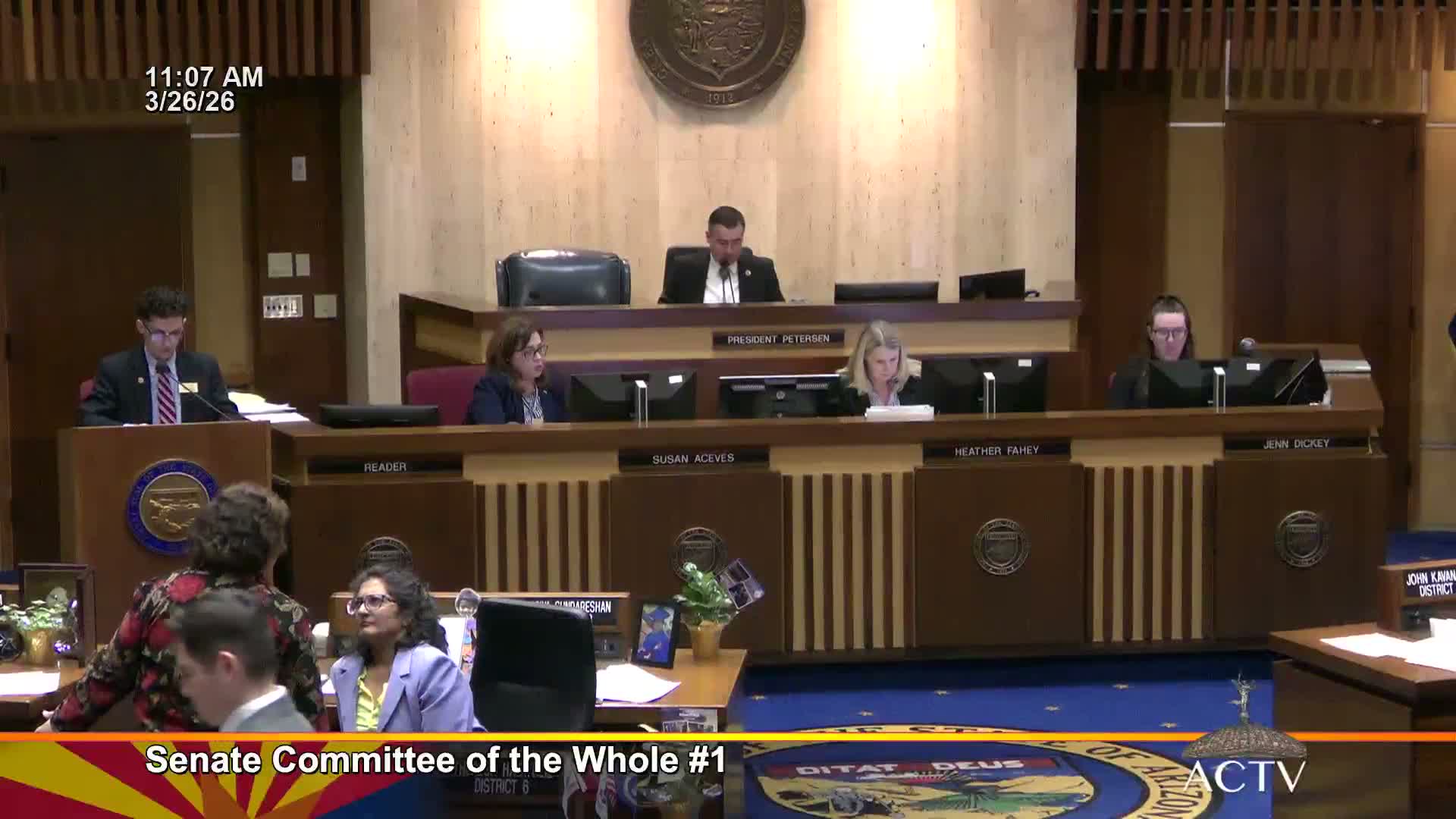
Summary
After hours of debate over whether to rename or repeal the holiday, the Arizona Senate voted to repeal the state holiday that honored Cesar Chavez; supporters said repeal honors survivors, while opponents said repeal erases the farm workers' movement. The measure passed with the emergency clause and was transmitted to the House.
The Arizona Senate voted to repeal the state day bearing Cesar Chavez’s name after an extended floor debate over survivors’ accounts and the historical role of the farm workers movement. Senators approved House Bill 20-72 on third reading with an emergency clause; the secretary announced the vote as 29 ayes, 1 nay and 1 not voting.
Proponents framed the repeal as accountability for alleged historic abuse. Senator Miranda, sponsor of a floor amendment that would have renamed the holiday to honor the farm workers movement, told the Senate that the amendment was meant to "keep the movement alive and recognized," and said the movement—not a single individual—should be the focus of any commemoration. Miranda argued survivors deserve to be centered in the debate and invoked recent survivor testimony as a reason to remove the namesake.
Opponents said repeal wiped out the public recognition of decades of farm worker organizing and recommended renaming rather than erasing the holiday. "This holiday has always been about honoring the sacrifices made by the farm workers movement," Senator Epstein said on the floor, calling for a renaming rather than repeal. Several senators—including Senator Dunn and Senator Gonzalez—offered personal histories about farm work in Arizona and urged preserving the movement’s memory while removing any honor for an alleged predator.
Debate on the floor included repeated procedural objections and several division votes after members requested standing verification of counts. Minority members said they were denied opportunities to offer additional floor amendments; multiple senators objected to the process and the rapid pace with which the repeal and the emergency clause were handled.
Senator Ortiz, who described the vote as deeply personal, said survivors should be heard and urged accountability while also emphasizing the movement’s historical contributions. "Accountability for all predators should be swift," Ortiz said during her remarks.
The Senate adopted the committee (RAGE) amendment and then passed HB 20-72 as amended. The measure, as announced on the floor, includes an emergency clause that makes the repeal effective immediately upon enactment. The clerk was instructed to transmit the signed resolution and the bill to the House for further action.
The vote concluded one of the session's longest single‑topic floor debates, which included personal testimony from multiple senators about family experience in agricultural labor, sustained back-and-forth over germane debate rules, and repeated appeals from both sides to honor survivors while preserving historical memory.
Next steps: The action will be transmitted to the Arizona House of Representatives for any further administrative steps; because an emergency clause was adopted, sponsors said the repeal would take effect immediately upon final enrollment if the House returns the enrolled bill.