
Austin council advances missing‑middle zoning and a suite of parking reforms after hours of public comment
Get AI-powered insights, summaries, and transcripts
Sign Up Free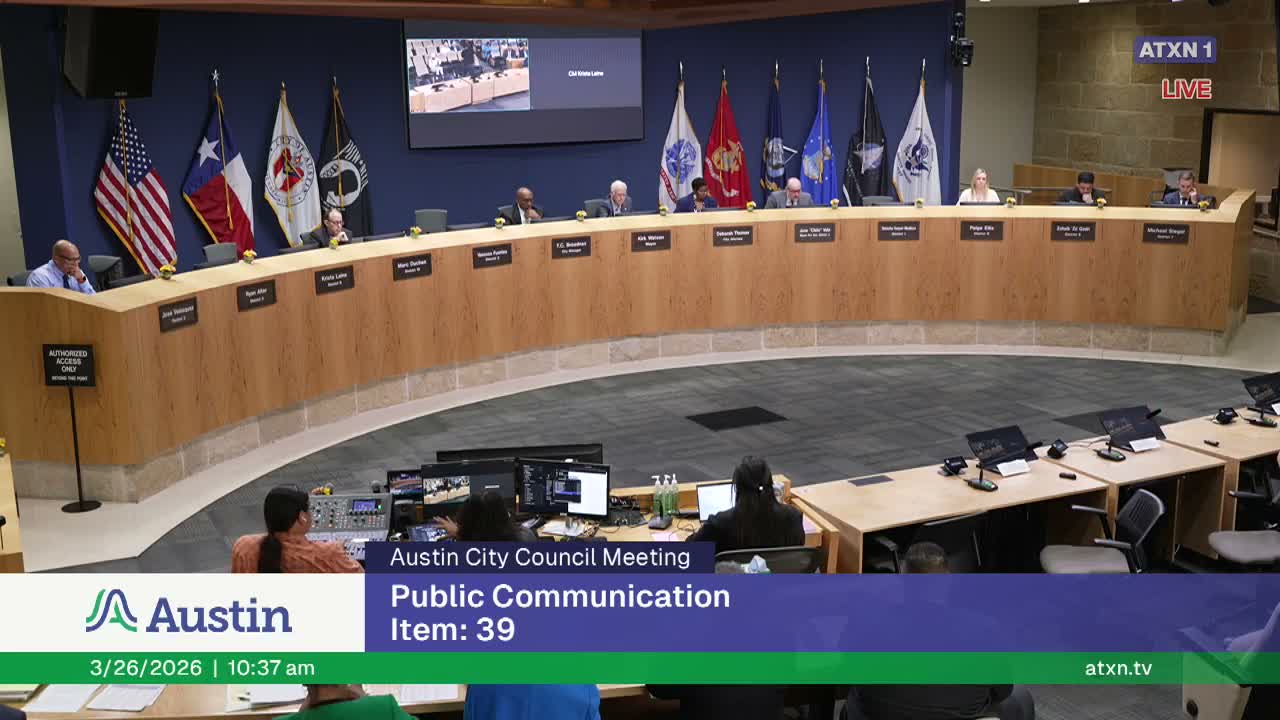
Summary
Council moved a package of housing and parking measures aimed at expanding 'missing middle' housing and managing parking near future light‑rail stations, after hours of testimony from residents, developers and advocacy groups.
Austin’s City Council on March 26 approved a package of measures intended to increase smaller-scale housing options and change how the city regulates parking around transit and in multifamily developments.
The council adopted a resolution to initiate “missing middle” zoning that would create new districts aimed at allowing townhomes, four‑plexes and small multifamily buildings in parts of the city where they have been largely absent. Supporters, including students and housing advocates, testified that the change would help families afford to stay in Austin. “Limiting parking around our future light rail stations is really, really essential to meeting our city goals,” said Josh Goldenberg while speaking for the Austin Youth Council.
At the same time, the council approved measures to cap excessive parking in transit‑oriented areas and to unbundle parking costs from rents so tenants can choose whether to pay for dedicated parking. At the public hearing on the parking caps, Jeff Dickerson told the council that the proposed resolution “sets up parking maximums without defining what a maximum is in measurable terms” and urged staff to include clear metrics and neighborhood protections. Advocates from the Austin Parking Reform Coalition, including Miriam Schonfield, argued that parking caps and unbundling help keep housing affordable by reducing the cost developers pass on to tenants.
Council members debated tradeoffs on the dais. Some lawmakers expressed concern that parking caps and unbundling could create spillover into neighborhoods or disproportionately affect residents who must drive because transit options are limited in their areas. Councilmember Mark Duchen (speaking in his role on the dais) emphasized the need to pair parking reforms with investments in transit and first‑/last‑mile connections before broad implementation.
The measures approved by council do not automatically change zoning by right; several items were placed on the consent agenda and adopted with direction to staff for implementation details, including timelines and studies to address neighborhood impacts.
The council’s action follows months of staff work and public outreach, and it sets a path for additional rulemaking and neighborhood‑level mapping over the coming year. The council directed staff to return with details and safeguards, and to consider metrics and mitigation for low‑income residents and essential workers as the policies are refined.