Get Full Government Meeting Transcripts, Videos, & Alerts Forever!
Get email alerts on the School Finance topic
No spam. Unsubscribe anytime.
Board hears breakdown of ASB accounts; Camas High holds majority of student funds
Summary
District staff told the board that Associated Student Body (ASB) accounts are student-controlled and that Camas High School held about $580,000 in ASB funds as of July 31, 2024; staff outlined how those funds are organized, how inactive-club balances are repurposed as seed money, and why some large subaccounts persist.
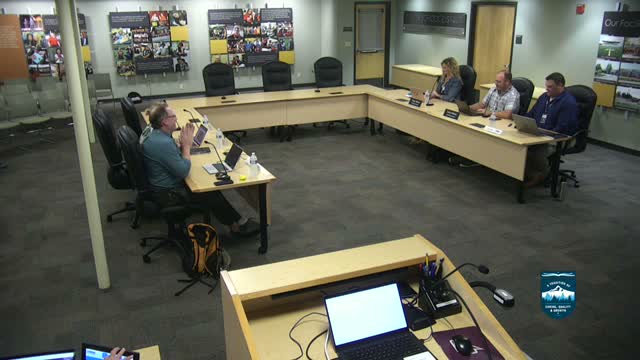
At a Sept. 9 Camas School District board workshop, staff reviewed the district’s Associated Student Body (ASB) fund structure and balances, saying ASB accounts are student-owned and used to support clubs, performances and nonessential athletics costs.
Derek (CTE director) opened the presentation by reading a portion of Policy 3510 and emphasizing that "these ASB funds are definitely the students' money." He said the district provided a snapshot of balances as of July 31, 2024, showing Camas High School holding roughly $580,000; Sky Ridge and Liberty accounts were reported in the $83,000–$88,000 range, and many elementary student funds are controlled through parent-teacher organizations.
Steven (district staff) described common subaccounts and how funds are used. "Referees comes out of ASB. Transportation does not," he said, explaining that athletic user fees typically cover officials, uniforms and post-season expenses while transportation for athletics is paid from other budgets. Staff noted athletic costs can spike when teams advance to extended postseason travel, and that large balances often reflect timing: some accounts accumulate before major purchases such as $30,000-yearbook deposits or drama set construction.
Board members asked whether ASB balances historically reached about $1 million districtwide; staff said the aggregate was lower than some remembered and reiterated two reasons for persistent balances: (1) some large, district-wide programs (for example robotics and DECA) raise and hold money at Camas High because of district-wide participation; and (2) timing—revenues collected in one year are often applied to activities in the following year. Staff also described a constitution change that moves funds from inactive clubs into a seed fund for new clubs; the seed fund was reported at approximately $8,000–$10,000.
During questions, staff confirmed every approved club that requests a budget has access to a subaccount; Derek said the administration’s intent is to reduce prolonged dormant balances so student-raised money is spent on current student experiences. No motions or votes on ASB policy or accounting practices were taken during the workshop.
Looking ahead, staff suggested closer monitoring and clearer communication with student ASB councils to ensure funds are deployed during the school year for student activities and to surface opportunities for targeted spending (for example, event sound systems or post-season travel support).